







In an era where federal budgets strain under the weight of escalating demands from housing affordability to national security every dollar misspent represents a missed opportunity for American families. Enter the Department of Government Efficiency (DOGE), a bold initiative spearheaded by Elon Musk and Vivek Ramaswamy to slash bureaucratic waste. One of its early triumphs? The doge software licenses audit hud, a deep dive into the U.S. Department of Housing and Urban Development’s (HUD) sprawling IT ecosystem. Conducted in early 2025, this audit uncovered tens of thousands of unused software licenses, spotlighting inefficiencies that cost taxpayers millions annually.
Why does this matter? Software licenses aren’t just line items on a spreadsheet; they’re the backbone of government operations, powering everything from data analysis to legal research. Yet, as the doge software licenses audit hud revealed, agencies like HUD often procure licenses in bulk without rigorous tracking, leading to overpayments and vulnerabilities. This isn’t isolated it’s symptomatic of a broader federal IT sprawl estimated by the Government Accountability Office (GAO) at over $100 billion yearly. By exposing these gaps, DOGE isn’t just saving money; it’s fostering a culture of accountability that could ripple across all agencies. In this article, we’ll unpack the audit’s findings, implications, and actionable lessons for both government and private sectors.
What is the Department of Government Efficiency (DOGE)?
DOGE isn’t your typical government body it’s a temporary, advisory task force launched in January 2025 under President Trump’s second administration. Co-chaired by Musk and Ramaswamy, its mandate is straightforward: identify and eliminate waste, fraud, and abuse across the federal government. With a sunset clause by July 2026, DOGE operates with surgical precision, embedding teams in agencies to audit operations from procurement to personnel.
The acronym “DOGE” nods to the internet meme and cryptocurrency, but its mission is deadly serious. DOGE has already targeted high-impact areas like credit card misuse (deactivating 146,000 unused government P-cards) and redundant contracts. In IT alone, DOGE’s audits have flagged billions in potential savings, emphasizing software asset management (SAM) as a low-hanging fruit. Unlike traditional oversight bodies like the GAO, DOGE leverages real-time data analytics and public transparency via X posts, turning audits into viral calls for reform. This approach has drawn praise for its speed but criticism for its lack of formal authority recommendations are advisory, relying on agency buy-in for implementation.
For HUD, DOGE’s involvement marked a pivotal shift. As the agency overseeing $60 billion in annual housing programs, HUD’s IT spend pegged at around 5% of its budget demands scrutiny. The doge software licenses audit hud wasn’t punitive; it was diagnostic, revealing how unchecked licensing erodes efficiency in an agency already stretched thin by legacy systems and evolving mandates.
Background on HUD’s Software Licensing Practices
HUD, established in 1965, manages critical programs like public housing vouchers and fair lending enforcement. Its IT infrastructure supports over 8,000 employees and thousands of contractors, relying on a mix of proprietary tools for analytics, compliance, and collaboration. Software licenses agreements granting usage rights form the core of this setup, but federal procurement rules complicate matters.
Under the Federal IT Acquisition Reform Act (FITARA) and the MEGABYTE Act, agencies must inventory licenses and negotiate cost-effective deals. Yet, HUD’s practices, like many peers, leaned on bulk enterprise agreements. These contracts with vendors like Adobe, ServiceNow, and Oracle offer volume discounts but often result in over-provisioning. A 2024 GAO report highlighted that none of nine major agencies, including HUD, fully assessed whether their top licenses were over- or under-purchased.

Pre-DOGE, HUD’s Office of the Chief Information Officer (OCIO) centralized some management, but silos persisted. Departments bought independently, leading to duplicates. Legacy systems—think outdated servers running unpatched software exacerbated risks, as unused licenses went unmonitored. Enter the doge software licenses audit hud: DOGE’s team, augmented by HUD’s OIG, conducted a comprehensive review in February 2025. Using automated scanning tools, they cross-referenced procurement data with usage logs, uncovering a stark mismatch between paid and active licenses.
This audit built on prior efforts, like HUD’s 2023 SAM policy, which mandated training on intellectual property and compliance. But DOGE’s intervention added urgency, aligning with Trump’s executive order for zero-based budgeting. The result? A blueprint for reform that’s now influencing audits at the GSA and DOL.
Key Findings from the Doge Software Licenses Audit HUD
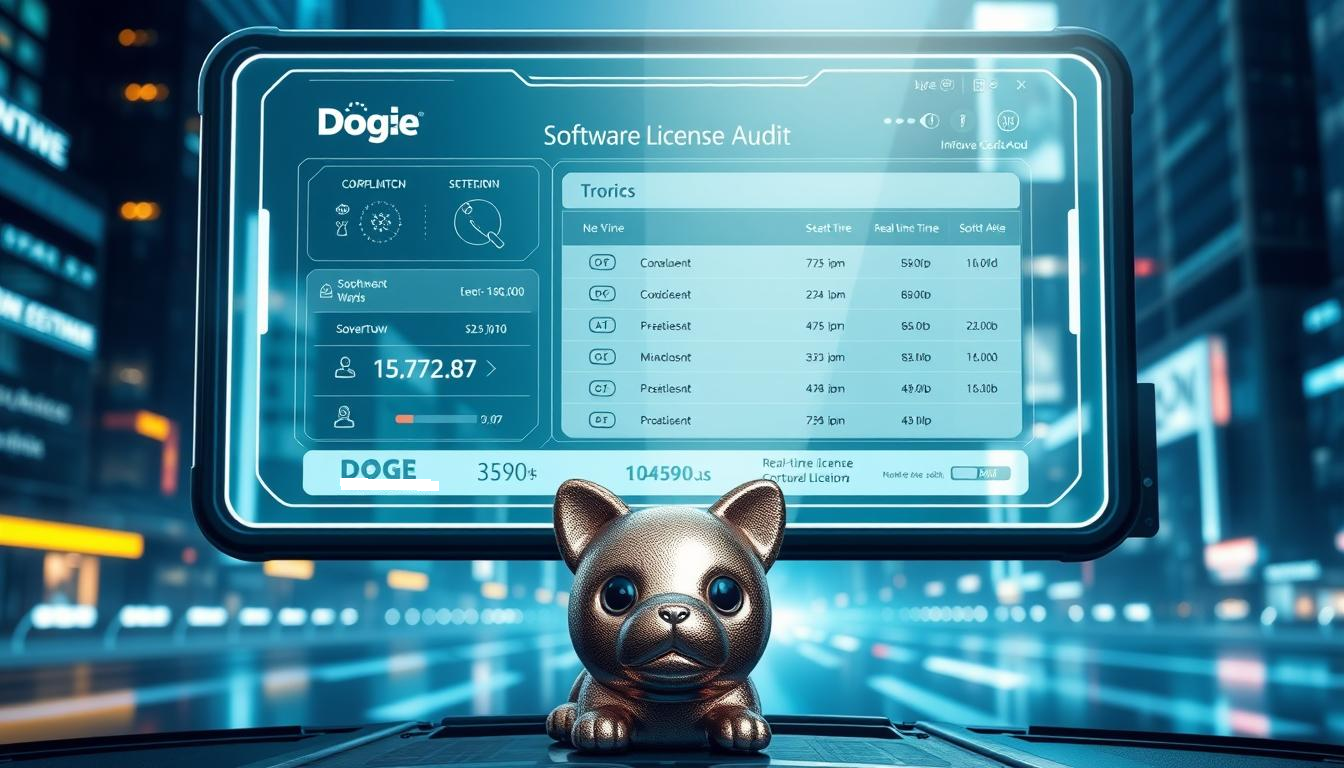
The doge software licenses audit hud, announced via DOGE’s X account on March 6, 2025, painted a picture of systemic oversight lapses. HUD had procured licenses far exceeding its needs, with utilization rates dipping below 1% in some cases. Here’s a breakdown of the most glaring discrepancies:
| Software Product | Licenses Purchased | Licenses in Use | Utilization Rate | Estimated Annual Cost (Pre-Audit) |
|---|---|---|---|---|
| ServiceNow (3 products) | 35,855 | 84 | 0.23% | $10-15M |
| Adobe Acrobat | 11,020 | 0 | 0% | $2.6M |
| Cognos | 1,776 | 325 | 18.3% | $500K |
| WestLaw Classic | 800 | 216 | 27% | $300K |
| Java | 10,000 | 400 | 4% | $1M |
These aren’t anomalies. ServiceNow, a cloud-based workflow tool, was over-provisioned for hypothetical scalability, but HUD’s actual deployment lagged due to integration delays. Adobe Acrobat’s zero users stemmed from a shift to browser-based alternatives, leaving paid seats idle. Cognos, an IBM analytics platform, saw better uptake but still wasted resources on unused modules. WestLaw Classic, a legal research staple, suffered from overlap with newer tools, while Java licenses bloated from server-side assumptions that never materialized.
DOGE estimated the total waste at $15-20 million annually for HUD alone—peanuts against its $60 billion budget, but emblematic of a government-wide issue. Broader DOGE scans at GSA revealed 37,000 WinZip licenses for 13,000 staff, yielding $9.6 million in savings post-cull. Across agencies, unused licenses could siphon $100 million yearly, per DOGE’s projections.
Critics, including IT experts on Reddit and LinkedIn, argue the numbers lack nuance. Enterprise licenses often cover servers, kiosks, or contractors not just named users. Bulk buys secure discounts (e.g., Adobe’s federal rate is 50% off), and “unused” might mean reserved for surges. HUD’s response? Spokesperson Kasey Lovett affirmed: “The HUD-DOGE taskforce is actively working to remedy this waste… restructuring to best serve the American people.”
Implications of the Audit: Waste, Security, and Beyond
The doge software licenses audit hud transcends dollars it’s a wake-up call on federal IT governance. Financially, overpayments erode funds for core missions. HUD’s $2.6 million on phantom Acrobat licenses could subsidize 500 affordable housing units. Scaled federally, GAO pegs IT waste at 10-20% of spends, or $10-20 billion annually.
Security risks loom larger. Unused software invites unpatched vulnerabilities; idle Java installs, for instance, are prime ransomware vectors. The audit flagged HUD’s legacy sprawl as a compliance gap under FISMA (Federal Information Security Modernization Act), potentially exposing sensitive tenant data.
Operationally, it underscores procurement silos. Agencies buy reactively e.g., post-pandemic remote work spiked Microsoft 365 needs without decommissioning old tools. DOGE’s findings echo a 2024 GAO critique: agencies lack holistic SAM, leading to “zombie licenses” that persist in budgets.
Public trust suffers too. As Musk tweeted, “Agencies often have more software licenses than employees,” fueling perceptions of bureaucratic bloat. Yet, the audit’s silver lining is reform momentum. HUD centralized licensing post-audit, negotiating flexible terms with vendors. DOGE’s transparency—real-time X updates has amplified pressure, with similar probes at SSA and SBA yielding quick wins.
For private sectors, parallels abound. Enterprises face vendor audits (e.g., Oracle’s aggressive pursuits), with non-compliance fines averaging $1 million. The doge software licenses audit hud model real-time dashboards for usage tracking offers a template for cost optimization amid rising SaaS costs.
Lessons Learned and Best Practices for Software License Management
What can agencies and businesses glean from the doge software licenses audit hud? First, prioritize visibility. Implement SAM tools like Flexera or Snow Software for automated discovery, integrating with procurement systems. HUD’s post-audit pivot to a centralized portal cut duplicates by 30%.
Second, adopt usage-based metrics. Shift from seat-based to concurrent licensing, where costs tie to active sessions. DOGE recommends quarterly reconciliations, blending AI analytics with human oversight to flag anomalies.

Third, train relentlessly. FITARA mandates SAM education, but HUD’s lapses stemmed from siloed knowledge. Cross-functional teams IT, finance, legal should simulate audits annually.
Finally, negotiate smarter. Bulk deals save upfront but demand exit clauses. DOGE’s influence prompted HUD to renegotiate with Adobe, reclaiming $1.2 million in credits.
These practices aren’t theoretical. GSA’s response deleting 114,163 licenses saved $9.6 million, proving audits yield ROI. For LSI terms like software asset management and license compliance, the takeaway is clear: proactive governance turns liabilities into assets.
Broader Impact on Federal IT Reform
The doge software licenses audit hud catalyzed DOGE’s IT crusade, expanding to 16 agencies. Savings hit $50 million by mid-2025, with Musk touting “vast numbers of unused licenses in every part of government.” It pressured Congress for FITARA enhancements, including mandatory SAM dashboards.
Controversy lingers unions sued over DOGE’s data access, citing privacy risks. Yet, bipartisan nods emerged; Sen. Gary Peters (D-MI) praised the transparency while urging formal authority.
Privately, the audit spurred vendor shifts. Adobe offered HUD flexible models, while ServiceNow piloted pay-per-use. Globally, it inspired UK’s GDS to audit licenses, underscoring U.S. leadership in efficiency.
FAQ
What exactly is the doge software licenses audit hud?
The doge software licenses audit hud refers to DOGE’s 2025 review of HUD’s software licenses, using a heads-up display (HUD) for real-time insights into usage and waste. It exposed thousands of unused licenses, driving millions in savings.
Why did HUD have so many unused licenses?
Bulk procurement for discounts, siloed buying, and legacy systems led to over-provisioning. For example, ServiceNow licenses were bought for scalability that never scaled.
How much did the audit save taxpayers?
Direct savings at HUD topped $15 million annually, with broader DOGE efforts across agencies exceeding $50 million by late 2025. Exact figures evolve with implementations.
Is DOGE’s audit method reliable?
Yes, it combined procurement data, usage logs, and vendor verification. Critics note context (e.g., server coverage), but HUD validated findings and acted.
Can private companies apply these audit lessons?
Absolutely. Tools like automated SAM dashboards help track licenses, reduce overbuys, and avoid vendor fines mirroring HUD’s centralization gains.
What’s next for DOGE audits?
DOGE targets procurement next, aiming for $2 trillion in total cuts by 2026. HUD’s success paves for deeper dives into cloud spends and AI tools.
Does this audit affect HUD’s housing programs?
Indirectly yes freed funds bolster vouchers and enforcement, aligning IT with mission-critical needs like affordable housing.
Conclusion: A Leaner Government for a Stronger America
The doge software licenses audit hud stands as a testament to DOGE’s disruptive ethos: expose waste, enforce accountability, and redirect resources where they count. From 11,020 idle Acrobat seats to ServiceNow’s 99% underuse, the findings underscore a federal IT landscape ripe for modernization. Yet, they’re more than numbers they’re a blueprint for efficiency, blending technology with transparency to safeguard taxpayer dollars.