

In today’s hyper-connected world, data flows like never before billions of gigabytes generated every minute from smartphones, sensors, transactions, and social interactions. Yet raw data alone holds no value. It’s the combination of data science and artificial intelligence (AI) that turns this digital exhaust into meaningful insight, prediction, and action. This is where Yolosims01 comes in: a dedicated platform exploring how AI and data science decode complex systems, from urban traffic patterns to medical diagnostics and climate modeling.
Understanding these technologies isn’t just for tech experts it’s essential for anyone navigating the modern world. Businesses rely on predictive analytics to stay competitive. Governments use AI to optimize public services. Individuals benefit from personalized recommendations and smarter devices. Yolosims01 breaks down these concepts into clear, actionable knowledge, making advanced technology accessible to curious minds. This article dives deep into the foundations, tools, applications, challenges, and future of AI and data science through the lens of Yolosims01.
What Is Yolosims01? Understanding the Name and Mission
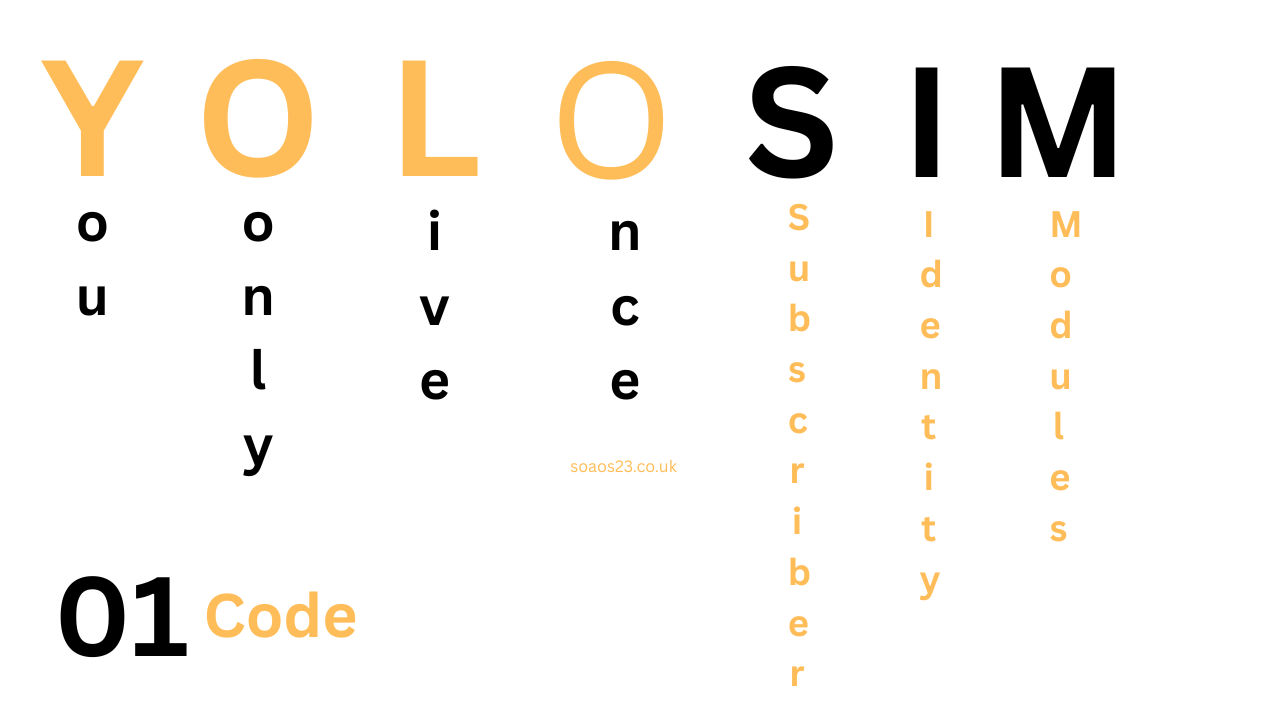
Yolosims01 isn’t just a catchy title it’s a philosophy built on three core ideas:
- YOLO – “You Only Look Once,” the groundbreaking real-time object detection algorithm
- SIMS – Simulations that model real-world scenarios
- 01 – Binary code, the foundation of all computing
Together, they represent a mindset: perceive once, understand deeply, act intelligently.
Launched as a blog and learning hub, Yolosims01 aims to demystify AI and data science. Whether you’re a student, developer, or business leader, the platform offers tutorials, case studies, and thought pieces on how these fields shape our future. The mission is simple: empower readers to not just consume technology, but create with it.
The Rise of AI and Data Science in the Digital Age
The internet gave us access. Smartphones gave us mobility. But machine learning gave us intelligence.
AI has evolved from rule-based systems in the 1980s to deep neural networks that learn from experience. Today, over 80% of enterprises use AI in some form, according to Gartner. Meanwhile, the global data science platform market is projected to reach $230 billion by 2026 .
Why now? Because we finally have three things in abundance:
- Data – More than ever before
- Compute Power – GPUs and cloud infrastructure
- Algorithms – Open-source frameworks like TensorFlow and PyTorch
This trifecta enables machines to detect patterns, predict outcomes, and automate decisions at scale.
YOLO Algorithm: The Heart of Real-Time Computer Vision
At the core of Yolosims01 lies YOLO (You Only Look Once) a family of algorithms that redefined object detection.
Traditional detectors used multi-stage pipelines: propose regions, classify objects, refine boundaries. This was slow. YOLO changed everything by treating detection as a single regression problem, processing the entire image in one forward pass through a neural network.
Key Advantages of YOLO
| Feature | Benefit |
|---|---|
| Single-pass processing | Up to 45 FPS on modern GPUs |
| Global context awareness | Fewer background errors |
| Real-time capability | Ideal for video and live feeds |
| End-to-end training | Simpler pipeline, faster deployment |
Since its first release in 2016 by Joseph Redmon, YOLO has seen multiple iterations:
| Version | Year | Key Improvement | mAP (COCO) |
|---|---|---|---|
| YOLOv1 | 2016 | Introduced single-shot detection | 63.4 |
| YOLOv2 | 2017 | Anchor boxes, multi-scale training | 78.6 |
| YOLOv3 | 2018 | Feature pyramid networks | 82.0 |
| YOLOv4 | 2020 | CSPNet, PANet, Mosaic augmentation | 87.2 |
| YOLOv8 | 2023 | Ultralytics framework, anchor-free | 90.1+ |
Today, YOLOv8 powers applications from self-driving cars to security cameras. For example, Tesla uses similar vision systems (though proprietary) to process camera feeds in real time much like YOLO.
Learn more about implementing YOLO with Python in our guide: YOLOv8 Object Detection Tutorial.
Data Science: Turning Raw Data into Actionable Insights
Data science is the bridge between chaos and clarity.
Every second, we generate:
- 2.5 quintillion bytes of data
- 500 hours of video uploaded to YouTube
- 350,000 tweets sent
- 4.1 million Google searches
But volume isn’t value. Data science follows a structured pipeline:
Cleaning & Preprocessing
Exploratory Analysis
Modeling
Validation
Deployment & Monitoring
Core Skills of a Data Scientist
| Skill Category | Tools & Techniques |
|---|---|
| Programming | Python, R, SQL, Julia |
| Statistics | Hypothesis testing, regression, Bayesian methods |
| Machine Learning | Scikit-learn, XGBoost, neural networks |
| Visualization | Matplotlib, Seaborn, Tableau, Power BI |
| Big Data | Spark, Hadoop, Dask |
| Cloud & Deployment | AWS SageMaker, GCP Vertex AI, Docker, Kubernetes |
“Garbage in, garbage out.” Clean, relevant data is 80% of the battle.
How AI and Data Science Are Transforming Industries
No sector remains untouched. Here’s a breakdown:
Healthcare: From Diagnosis to Prevention
AI now detects diabetic retinopathy with 99% accuracy matching top ophthalmologists . Predictive models forecast patient deterioration hours in advance, reducing ICU mortality by up to 20% (Stanford Medicine).
Finance: Speed, Security, Scale
JPMorgan’s COiN platform reviews legal documents in seconds a task that once took 360,000 hours annually. Fraud detection systems using anomaly detection save banks $10B+ yearly.
Smart Cities: Efficiency at Scale
Singapore uses AI to optimize traffic lights, reducing congestion by 15%. Barcelona’s sensor network cut water usage by 25% through leak prediction.
Autonomous Vehicles
Waymo’s fleet has driven 20 million autonomous miles. Each vehicle processes 1.9 TB of data per day using computer vision models similar to YOLO.
Marketing & E-Commerce
Amazon’s recommendation engine drives 35% of sales. Netflix saves $1 billion annually through personalized content retention.
Challenges in AI and Data Science
Progress comes with responsibility.
1. Bias and Fairness
Amazon scrapped an AI recruiting tool in 2018 after it discriminated against women because it was trained on male-dominated resumes.
2. Privacy and Ethics
The Cambridge Analytica scandal showed how data misuse erodes trust. Regulations like GDPR and CCPA now enforce strict consent and transparency.
3. Explain ability (XAI)
A model might predict cancer but can it explain why? Lack of interpretability hinders adoption in regulated fields like medicine and law.
4. Environmental Impact
Training GPT-3 consumed 1,287 MWh of electricity equivalent to 120 U.S. homes for a year .
Tools and Technologies Powering Yolosims01
Getting started doesn’t require a PhD. Here are the essentials:
| Category | Recommended Tools |
|---|---|
| Programming | Python, R, SQL |
| ML Frameworks | TensorFlow, PyTorch, Ultralytics YOLO |
| Data Processing | Pandas, NumPy, Dask |
| Visualization | Matplotlib, Seaborn, Plotly, Tableau |
| Cloud Platforms | AWS, Google Cloud, Azure |
| Version Control | Git, GitHub, GitLab |
| Datasets | Kaggle, UCI ML Repository, Government Open Data |
The Future of AI and Data Science
We’re moving beyond prediction into causal inference, autonomous agents, and generative worlds.
Emerging Trends
- Generative AI – DALL·E, Stable Diffusion, GitHub Copilot
- AI Agents – Systems that plan, reason, and collaborate (e.g., Auto-GPT)
- Quantum ML – Solving optimization problems in seconds
- Edge AI – Running models on phones and IoT devices
- Ethical AI Frameworks – Built-in fairness, auditability, and governance
The next decade will see AI embedded in biology, energy grids, and even governance.
FAQ: Common Questions About Yolosims01 and AI
1. What does Yolosims01 mean?
It combines YOLO (real-time vision), SIMS (simulations), and 01 (binary logic) to represent intelligent, efficient perception and decision-making.
2. Is YOLO only for object detection?
No. While famous for detection, its architecture inspires real-time AI in robotics, AR, and video analytics.
3. Do I need a powerful GPU to run YOLO?
Not anymore. YOLOv8 supports CPU inference and edge devices like Raspberry Pi and NVIDIA Jetson.
4. How can I start learning data science?
Begin with Python, Pandas, and free courses on Coursera or DataCamp. Practice on Kaggle competitions.
5. Are there ethical risks with AI?
Yes bias, privacy, job displacement. Responsible AI requires diverse teams, transparent data, and regulatory oversight.
6. Can small businesses use AI?
Absolutely. Tools like Google AutoML and no-code platforms (e.g., Teachable Machine) make AI accessible without coding.
7. Where can I follow Yolosims01 updates?
Subscribe to the newsletter at yolosims01.com and join the community on GitHub and X (@Yolosims01).
Conclusion: See Once, Understand Forever
Yolosims01: Decoding the World with AI and Data Science is more than a blog it’s a movement. In an age of information overload, the ability to perceive, analyze, and act with precision defines success.
Whether you’re building the next autonomous drone, predicting disease outbreaks, or optimizing supply chains, the tools and mindsets shared here will guide you.