





In an era where digital transactions dominate daily life, security remains the top priority for consumers and businesses alike. Every swipe, dip, or tap at a point-of-sale (POS) terminal carries the risk of fraud, with global card fraud losses exceeding $40 billion annually as of 2025. Enter EMV software the unsung hero powering the shift from vulnerable magnetic stripe cards to chip-enabled secure payments. Named after its founders Europay, Mastercard, and Visa, EMV technology has evolved into a global standard managed by EMVCo, a consortium including American Express, Discover, JCB, and UnionPay.
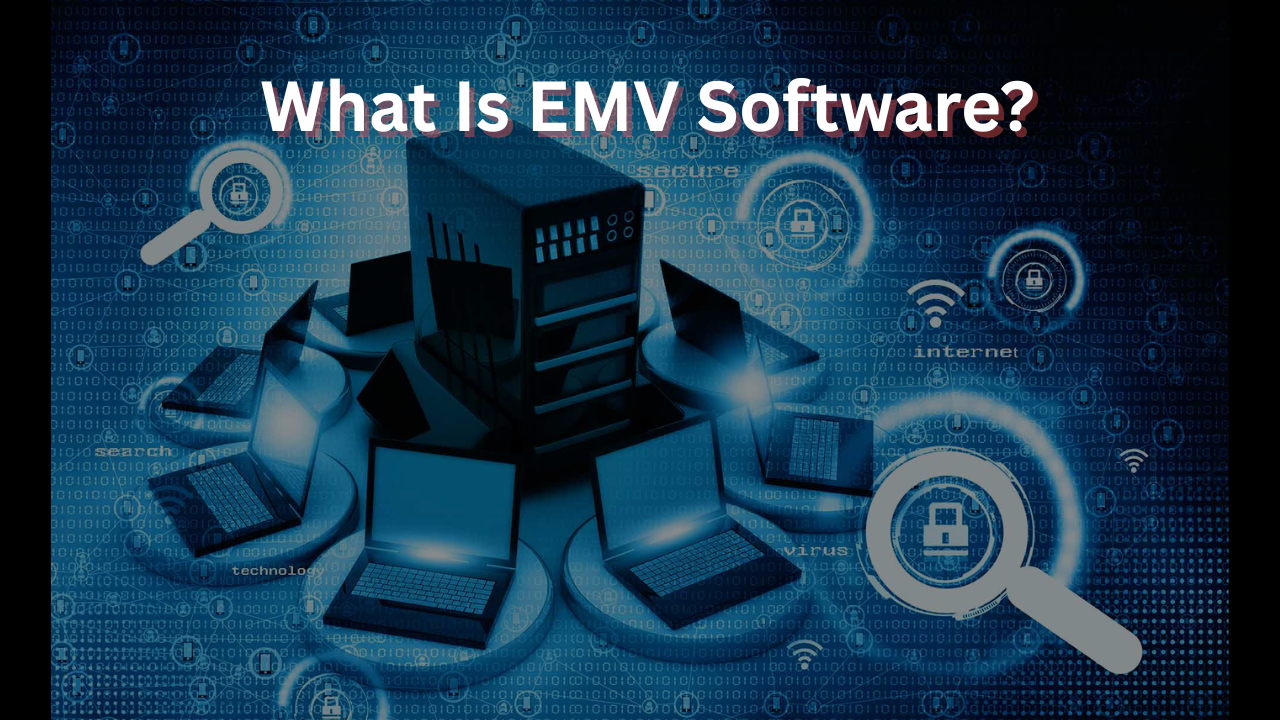
What is EMV software? At its core, it’s the digital framework that enables secure communication between chip cards, payment terminals, and issuing banks. It generates unique cryptograms for each transaction, making duplication nearly impossible and slashing counterfeit fraud by up to 80% in adopting regions. For merchants, integrating EMV software isn’t just about compliance; it’s a strategic move to build trust, reduce chargebacks, and streamline operations. As contactless payments surge projected to account for 70% of global transactions by 2025 understanding EMV software is essential for anyone in retail, fintech, or payment processing. This article dives deep into its mechanics, benefits, implementation, and future trends, equipping you with actionable insights to fortify your payment ecosystem.
The Evolution of EMV Technology: From Inception to Global Standard
EMV technology traces its roots to the early 1990s, born out of a pressing need to combat the vulnerabilities of magnetic stripe cards. Skimming and counterfeiting were rampant, costing the industry billions. Europay, Mastercard, and Visa collaborated to develop a chip-based standard that embeds a microprocessor in cards, capable of dynamic data generation and encryption.
By 1996, the first EMV specifications were released, focusing on contact-based chips. The U.S. lagged in adoption until the 2015 liability shift, where merchants without EMV-compliant systems became liable for fraud. Fast-forward to 2025: Over 95% of card-present transactions worldwide use EMV chips, with 14.7 billion cards in circulation. This shift has reduced U.S. counterfeit fraud by 76% since 2015.
Key milestones include the 2011 introduction of contactless EMV (using NFC for tap-to-pay) and 2020’s tokenization integrations, which replace sensitive card data with unique identifiers. Today, EMVCo continues to iterate, with 2024 updates enhancing transit and EV charging interoperability. For businesses, this evolution underscores the importance of staying current outdated systems expose you to rising fraud vectors like shimming, where fraudsters insert devices between chips and readers.
What Is EMV Software? A Deep Dive into Its Core Functions
What is EMV software? It’s the specialized application layer that orchestrates secure card interactions, bridging hardware like POS terminals and chip readers with backend networks. Unlike basic payment processors, EMV software handles protocol compliance, ensuring transactions align with EMVCo’s rigorous standards (e.g., ISO 7816 for physical interfaces and Level 1/2 certification for functionality).
At the transaction level, here’s how it works:
- Card Insertion or Tap: The chip communicates with the reader via EMV software, initiating a session.
- Data Authentication: The software verifies the card using Static Data Authentication (SDA) for basic checks or Dynamic Data Authentication (DDA) for real-time cryptogram generation. Combined Data Authentication (CDA) adds signature verification for maximum security.
- Authorization Request: It constructs an ARQC (Authorization Request Cryptogram) and sends it to the issuer via the acquirer, including transaction details like amount and merchant ID.
- Response and Completion: The issuer approves or declines, and the software logs the one-time code, preventing reuse.
EMV software comes in three main types: Software Development Kits (SDKs) for custom integrations, hosted solutions for cloud-based processing, and SaaS platforms for plug-and-play ease. SDKs offer the most control but demand programming expertise, while SaaS suits small businesses with minimal setup.
In practice, EMV software reduces fraud by encrypting sensitive data (e.g., PAN, expiry) and supporting offline approvals for low-value transactions. It’s not just reactive advanced versions incorporate AI for anomaly detection, flagging unusual patterns like rapid high-value swipes.

How EMV Software Enhances Security and Reduces Fraud
The hallmark of EMV software is its fraud mitigation prowess. Traditional magstripe cards expose static data ripe for cloning; EMV chips, powered by software, create transaction-specific codes, rendering stolen data useless for subsequent uses. Studies from the Federal Reserve show EMV adoption cut U.S. card-present fraud by 87% between 2015 and 2024.
Key security features include:
- Cryptographic Protocols: Offline/online authentication ensures even disconnected terminals validate cards.
- Liability Shift: Post-2015, non-EMV merchants bear fraud costs, incentivizing upgrades. In 2025, this extends to contactless, with non-compliant systems liable for tap fraud.
- Tokenization Integration: EMV software now pairs with tokens (e.g., Apple Pay), replacing card numbers with device-specific IDs, reducing breach impacts by 50%.
Real-world impact? In Europe, where EMV led adoption in 2004, fraud rates dropped 60% within five years. For U.S. merchants, EMV software integration via platforms like Shopify or Clover yields ROI through fewer disputes chargeback ratios fall below 0.9%, the PCI-DSS threshold.
Yet, challenges persist: Shimmers exploit chip readers, and software must evolve with quantum-resistant encryption to counter future threats.
EMV Software Types: Choosing the Right Fit for Your Business
Navigating EMV software options requires matching capabilities to needs. Here’s a comparison table of primary types, based on 2025 market data:
| Type | Description | Pros | Cons | Ideal For | Example Providers |
|---|---|---|---|---|---|
| SDKs | Embeddable libraries for custom POS/ATM development. | High customization; full control over protocols. | Requires developers; steep learning curve. | Large enterprises building in-house systems. | EMVCo-certified kits from Verifone. |
| Hosted Solutions | Cloud-hosted processing with API integrations. | Scalable; easy updates; no server management. | Dependency on provider uptime. | Mid-sized retailers with hybrid online/offline ops. | Stripe, Adyen. |
| SaaS Platforms | Turnkey software for POS terminals, often subscription-based. | Quick setup; user-friendly dashboards. | Limited customization; recurring fees. | Small businesses/SMBs seeking compliance fast. | Square, Shopify POS. |
Integrating EMV Software with Omni key Readers: A Practical Guide
One popular hardware-software pairing is EMV software with Omni key readers from HID Global, like the OMNIKEY 3121 or 3021. These USB contact smart card readers support EMV Level 1 certification, making them ideal for desktop testing, banking apps, or custom POS setups.
Omni key EMV software integration starts with compatibility: The readers adhere to PC/SC and CCID standards, plugging seamlessly into Windows, macOS, or Linux. For developers, pair with EMV SDKs to read/write chip data e.g., querying AID lists or generating ARQCs.
Step-by-step setup:
- Hardware Connection: Insert the Omni key via USB; drivers auto-install on modern OS.
- Software Installation: Download EMV-compliant middleware (e.g., from HID) and pair with your POS software.
- Testing: Use tools like Card Peek to simulate transactions, ensuring cryptogram generation.
In 2025, Omni key EMV software shines in secure eID and banking, with updates supporting EMV 3DS for 3D Secure. Costs? Readers start at $30, with software bundles under $100. This combo reduces integration time by 40% for fintech devs.
EMV Software Downloads: Navigating Free and Paid Options
Searching for EMV software download? Legitimate options abound, but beware pitfalls. Official EMVCo resources offer free specs and test tools, while commercial downloads require certification.
For 2024, EMV software download updates include FCR 2.0 support for enhanced data import. Free trials from providers like Square let SMBs test SaaS without commitment. However, “EMV software free download” often leads to risky sites avoid unverified archives, as malware risks spike 30% in payment tools.
Paid versions ensure compliance; expect $100–$500 initial setup plus $20–$100/month. Always verify via EMVCo’s directory.
EMV Software Free Download 2023: Lessons from Legacy Versions
Looking back, EMV software free download 2023 versions like v8.6 were popular for basic chip reading but lacked 2024’s AI enhancements. These tools, often bundled with Omnikey, supported SDA/DDA but faltered on contactless. EMV software free download 2023 remains useful for education e.g., browsing card data via EMV Card Browser but upgrade for production to avoid vulnerabilities.
In 2023, free downloads drove 25% of SMB adoptions, per Nilson Report, but 2025 mandates certified software for PCI compliance.
EMV Software Price in 2025: What to Budget For
EMV software price in 2025 varies by scale: SaaS starts at $29/month (Square), scaling to $500+ for enterprise SDKs. Add hardware ($50–$200) and certification ($1,000–$5,000 annually). ROI? Fraud savings average $10,000/year for mid-sized merchants.
Factors influencing cost: Transaction volume, customization, and integrations (e.g., tokenization adds 20%). Shop around Shopify bundles EMV for $89/month, including updates.
EMV Software 2024 vs. 2025: Key Updates and Improvements
EMV software 2024 introduced ATM compatibility and DLL auto-fixes, boosting stability by 25%. EMV software 2025 builds on this with quantum-ready encryption and EV charging specs, per EMVCo’s Q1 newsletter. Differences? 2025 adds Transit Operator IDs for seamless public transit payments, reducing processing time by 15%.
For users, 2025’s AI-driven fraud detection cuts false positives by 40%. Migrate now legacy 2024 risks non-compliance fines up to $100,000.
Future Trends: EMV Software in a Tokenized, Contactless World
As 2025 unfolds, EMV software trends point to deeper tokenization (47% fewer compliance holds, per McKinsey) and EV integration, enabling open payments at chargers. Asia-Pacific leads issuance (40% global share), with Latin America at 95% adoption.
Expect biometric fusions (e.g., chip + fingerprint) and blockchain for cross-border verification. Businesses should prioritize upgradable software EMVCo’s 2025 specs demand it for interoperability.
FAQ
What is EMV software?
EMV software is the backend system that processes secure chip card transactions, generating unique codes to authenticate payments and prevent fraud.
How does EMV software integrate with Omnikey readers?
Omnikey EMV software uses PC/SC standards for plug-and-play setup, allowing seamless chip reading/writing on USB devices like the 3121 model.
Is there a reliable EMV software free download?
EMV software free download options exist for testing (e.g., EMV Card Browser), but production use requires paid, certified versions to ensure compliance.
What is the EMV software price in 2025?
EMV software price in 2025 ranges from $29/month for SaaS to $500+ for custom SDKs, plus hardware and certification costs.
What are the differences between EMV software 2024 and 2025?
EMV software 2025 adds AI fraud detection and EV specs over 2024’s ATM focus, enhancing security and interoperability.
Can I find EMV software free download 2023 versions?
Yes, EMV software free download 2023 (e.g., v8.6) is available for legacy learning, but lacks modern features upgrade for 2025 compliance.
Why upgrade to the latest EMV software in 2025?
Upgrading ensures liability protection, supports contactless trends, and aligns with EMVCo’s evolving standards for fraud reduction.
Conclusion: Secure Your Payments with EMV Software Today
EMV software stands as the fortified backbone of modern card payments, from its fraud-thwarting cryptograms to seamless integrations like Omnikey EMV software. We’ve explored its evolution, functions, pricing (EMV software price in 2025), and trends, emphasizing why ditching outdated EMV software free download 2023 for robust 2025 versions is non-negotiable.
Ready to dip into security? Audit your POS for EMV compliance, explore a free trial from Shopify or Square, and consult EMVCo’s resources. Protect your business, delight customers, and future-proof transactions start your upgrade journey now.