




Imagine a computer that solves problems in minutes what would take today’s supercomputers billions of years. That’s the promise of quantum computing a technology leveraging the bizarre rules of quantum mechanics to process information in ways classical systems simply can’t match. As we sit in 2026, reflecting on the latest breakthroughs in quantum computing 2024, it’s clear this field isn’t just theoretical anymore. From drug discovery to climate modeling, quantum tech could revolutionize industries, but challenges like error rates and scalability persist. Why does this matter? In a world drowning in data and complex problems, quantum computing offers a lifeline, potentially unlocking solutions to global crises. Yet, with hype building, the big question remains: are we truly stepping into the quantum era, or is it still a distant dream?

This article dives deep into the fundamentals, key advancements from 2023 through 2026, real-world applications, and expert perspectives to help you understand if quantum computing is the future we’ve been waiting for.
Quantum Computing in a Nutshell
At its core, quantum computing in a nutshell boils down to harnessing quantum bits or qubits instead of traditional binary bits. While a classical bit is either 0 or 1, a qubit can exist in multiple states simultaneously thanks to superposition. Add entanglement, where qubits link so the state of one instantly influences another, and you’ve got exponential processing power.
What is quantum computing with example? Consider factoring large numbers, a task underpinning modern encryption. A classical computer might take eons to factor a 2048-bit number, but a quantum machine using Shor’s algorithm could do it swiftly. Google’s 2019 Sycamore experiment demonstrated this edge, solving a specific problem in 200 seconds that would take a supercomputer 10,000 years. This isn’t just faster computing it’s a paradigm shift.
Why Is Quantum Computing Important?
Why is quantum computing important? It tackles “intractable” problems. Classical computers excel at sequential tasks but struggle with simulations involving vast variables, like molecular interactions for new medicines or optimizing global supply chains. Quantum systems could accelerate AI training, enhance financial modeling, and even predict weather patterns with unprecedented accuracy. In 2024, investments surged as governments and companies recognized its strategic value think secure communications via quantum key distribution or breakthroughs in materials science for sustainable energy.
Yet, importance cuts both ways: quantum computers threaten current encryption, sparking a race for “post-quantum” cryptography. The tech’s dual-use potential also raises ethical concerns, from military applications to job displacement in computation-heavy fields.
Latest Breakthroughs in Quantum Computing 2023-2024
The latest breakthroughs in quantum computing 2024 marked a turning point, shifting focus from raw qubit counts to error correction and practical utility. In late 2023, IBM unveiled its Heron processor, boosting gate fidelity and paving the way for scalable systems. But 2024 stole the show.
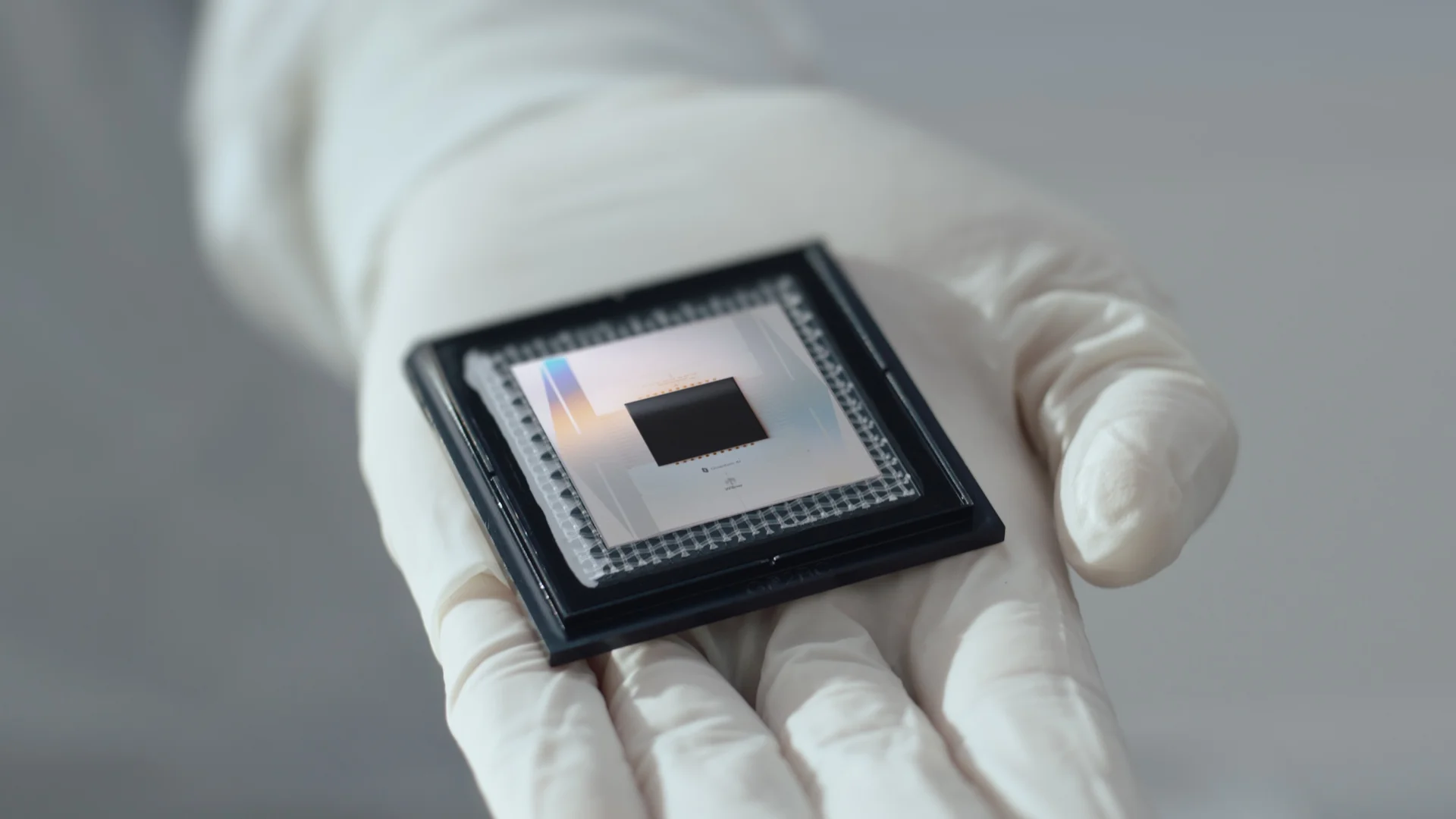
Google’s Willow chip, a 105-qubit marvel, achieved “below-threshold” error correction meaning errors decreased exponentially as qubits scaled. This addressed quantum’s Achilles’ heel: decoherence, where environmental noise corrupts calculations. Willow’s grids (3×3 to 7×7) showed logical qubits becoming more reliable with size, a first in the field.
Microsoft hit milestones too, demonstrating 24 logical qubits with Atom Computing in November 2024, using just 112 physical ones. Startups like QuEra and Alice & Bob advanced transversal gates and cat qubits, slashing error rates. Nord Quantique claimed a 14% reliability boost at the qubit level.
These latest breakthroughs in quantum computing 2024 2023 built on 2023’s momentum, like Argonne’s extended coherence times (0.1 milliseconds, a 1,000x improvement). Partnerships amplified progress: UChicago, IBM, and Tokyo aimed for a 100,000-qubit supercomputer.
Quantum Computing Breakthroughs 2026
Fast-forward to quantum computing breakthroughs 2026, and the pace hasn’t slowed. D-Wave announced scalable on-chip cryogenic control for gate-model qubits in January, overcoming obstacles to commercial viability. Quantinuum’s Helios, with 98 physical and 48 logical qubits, debuted in Singapore, targeting finance and pharma.
IonQ hit 256 qubits, doubling prior counts, while IBM advanced toward 200 logical qubits by 2026. Experts predict 2026 as the year for “useful” quantum computing, with hybrid workflows integrating quantum for optimization. Quantum networks for distributed computing emerged, promising qubit growth via interconnected systems.
However, hype cooled slightly stocks dipped as realities like high costs set in. Still, breakthroughs in room-temperature qubits and error suppression signal maturation.
Quantum Computing Applications
Quantum computing applications span industries. In healthcare, simulating proteins could speed drug development Microsoft’s Azure Quantum ran millions of chemistry calculations in 2024. Finance benefits from portfolio optimization; logistics from route efficiency.
Energy sees promise in materials discovery for better batteries. AI integration, or quantum machine learning, could train models faster. Defense applications include unbreakable encryption, though risks loom. As qubits scale, applications move from niche (like Google’s physics simulations) to mainstream.
Quantum Computer Google: Pioneering Advances
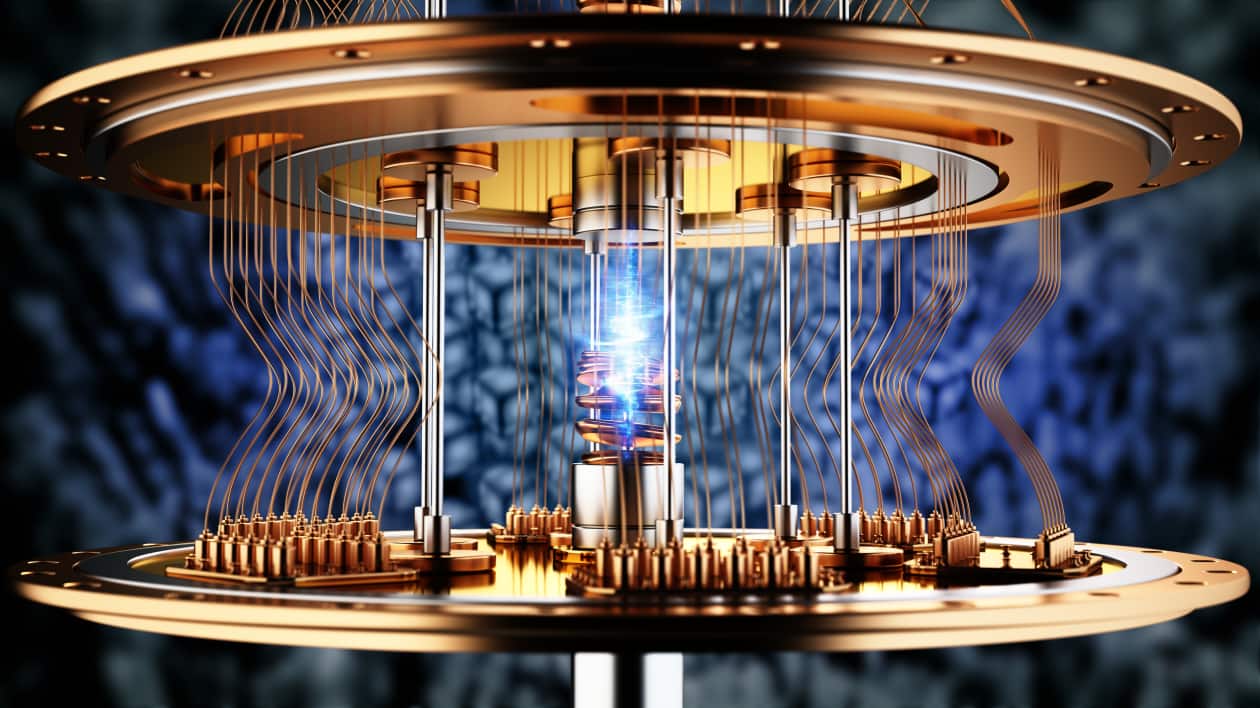
Quantum computer Google leads with its Quantum AI lab. The Willow chip not only scaled error correction but ran Quantum Echoes, a verifiable algorithm 13,000x faster than supercomputers like Frontier. This simulated complex physics, peering into molecular structures.
Google’s full-stack approach hardware, software, cryogenics sets it apart. Partnerships with UChicago and Tokyo aim for massive systems. In 2025, Willow’s successor pushed fidelity to 99.97%. Visit Google Quantum AI for more.
Is Quantum Computing the Future?
Is quantum computing the future?
Signs point yes, but tempered. Breakthroughs suggest utility by 2030, with 2026 marking commercialization. Yet, skeptics like Meta’s Mark Zuckerberg question near-term impact.
What did Mark Zuckerberg say about quantum computing?
On Joe Rogan’s podcast, he called it “quite a ways off” a decade plus from usefulness, echoing Nvidia’s Jensen Huang. This sparked stock sell-offs, highlighting hype risks.
Still, progress in error correction and applications outweigh doubts. Quantum’s future lies in hybrid systems, complementing classical tech.
How Powerful is 1000000 Qubits?
How powerful is 1000000 qubits? Mind-boggling. A million-qubit machine could simulate universes, crack unbreakable codes, or optimize global economies instantly. Classical computers pale: a 100-qubit system already exceeds all supercomputers combined for certain tasks. Microsoft’s Majorana aims for this scale on a single chip. With error correction, it enables fault-tolerant computing, transforming AI and science.
Key Players and Progress: A Comparison Table
| Company | Key Achievement | Qubit Count (Latest) | Focus Area |
|---|---|---|---|
| Willow chip, Quantum Echoes | 105 (2024) | Error correction, simulations | |
| IBM | Heron processor | 133 (2023), aiming 200 logical (2026) | Scalable architectures |
| Microsoft | Logical qubits with Atom | 112 physical / 24 logical (2024) | Topological qubits |
| Quantinuum | Helios system | 98 physical / 48 logical (2025) | Fault-tolerant computing |
| IonQ | High-fidelity gates | 256 (2026) | Trapped ions |
FAQ
What are the breakthroughs in quantum computing 2024?
Key ones include Google’s Willow for scalable error correction and Microsoft’s logical qubit milestones, pushing toward practical use.
What are the latest advancements in quantum computing?
In 2026, advancements focus on quantum networks, room-temperature qubits, and hybrid systems for real-world apps.
What did Mark Zuckerberg say about quantum computing?
He views it as a decade away from usefulness, not an expert but skeptical of near-term impact.
How powerful is 1000000 qubits?
Exponentially so capable of simulations beyond classical limits, potentially fitting on a single chip.
What is quantum computing with example?
It’s computing using quantum principles; e.g., Shor’s algorithm for fast factoring.
Why is quantum computing important?
It solves complex problems in medicine, finance, and climate faster than classical systems.
Is quantum computing the future?
Likely yes, with 2026 predictions for commercial viability, though challenges remain.
Conclusion: Embracing the Quantum Horizon
The latest breakthroughs in quantum computing 2024 ignited a fire that’s burning brighter in 2026, from error-corrected qubits to verifiable advantages. While skeptics like Zuckerberg urge caution, innovations in applications and scalability suggest we’re inching into the quantum era. Quantum isn’t just the future it’s reshaping ours now.