










Furniture design reflects cultural shifts, technological advances, and evolving ideas about how we live. Among all pieces, certain iconic chairs stand out for revolutionizing materials, production methods, comfort, and aesthetics. These designs didn’t just provide seating they challenged conventions, influenced architecture, and shaped how we interact with our environments.
From the 19th century’s industrial innovations to mid-20th century modernism, iconic chairs of all time continue to inspire designers and homeowners alike. This article explores the most iconic chairs, their creators (often famous architects), lasting impact, and why they remain relevant for modern iconic chairs for living room spaces today.
The Birth of Modern Chair Design: Industrial Revolution to Bauhaus
The story of transformative chairs begins with industrialization. Before the 19th century, furniture was largely handcrafted and expensive. Innovations in materials and manufacturing democratized design.
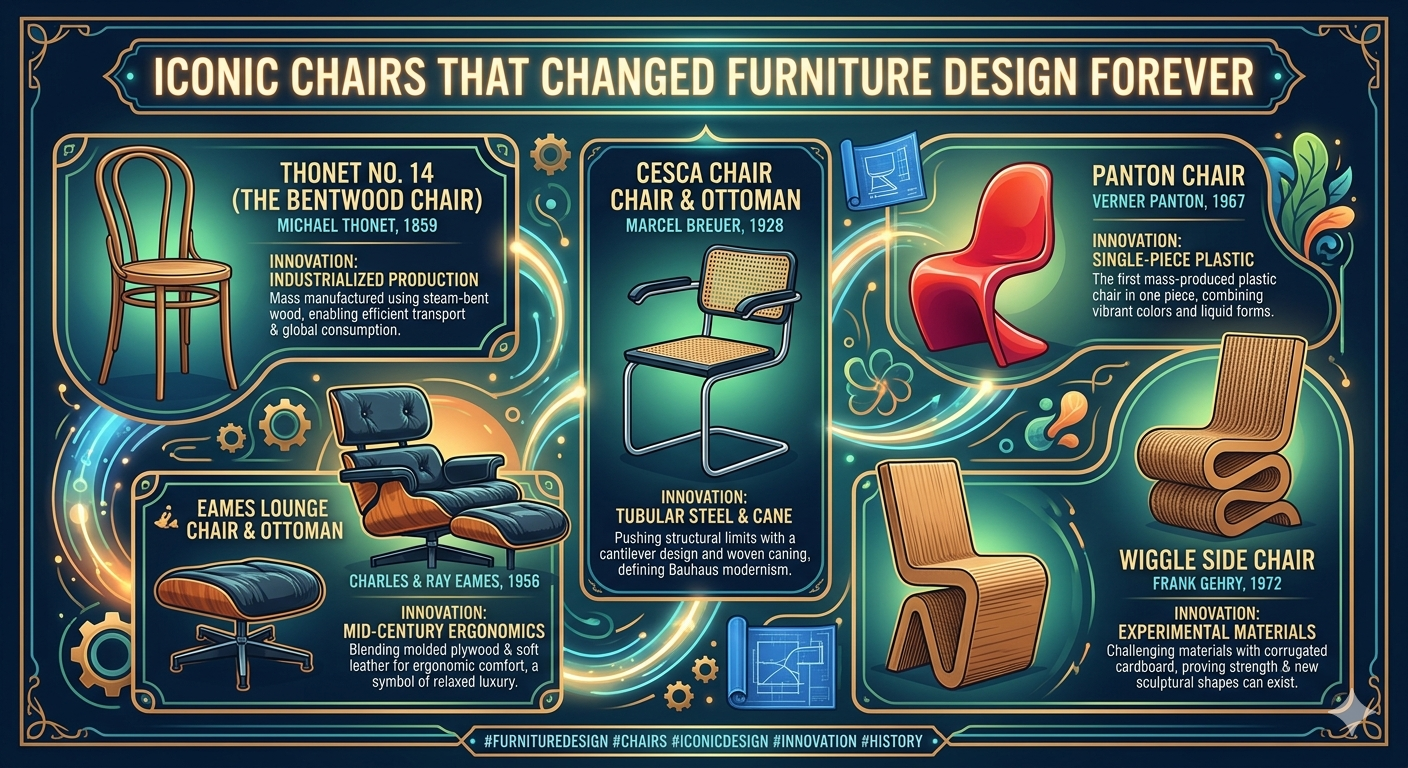
Thonet No. 14 Chair (Michael Thonet, 1859) Michael Thonet’s bentwood technique steaming and bending beech wood enabled mass production of lightweight, affordable, and durable chairs. The No. 14, with its curved back and cane seat, became ubiquitous in European cafés. It proved complex, elegant forms could be produced at scale, laying groundwork for modernist principles of form following function.
This chair influenced countless designs and remains a symbol of practical elegance.
Bauhaus and the Rise of Tubular Steel: Functionalism Redefined
The Bauhaus school in the 1920s emphasized uniting art, craft, and technology. Architects experimented with new materials like tubular steel, previously used in bicycles.
Wassily Chair (Marcel Breuer, 1925) Marcel Breuer’s B3 (Wassily) Chair was the first tubular steel chair. Inspired by bicycle handlebars, its cantilevered frame and leather or fabric straps created a lightweight, flexible seat. Named after Wassily Kandinsky, it rejected ornamentation in favor of industrial honesty. This design influenced countless cantilevered chairs and proved furniture could be both functional and sculptural.
Red and Blue Chair (Gerrit Rietveld, 1918/1923) Part of the De Stijl movement, Rietveld’s geometric chair used primary colors and black frames to embody abstract art in three dimensions. Its rigid, angular form prioritized visual harmony over immediate comfort, influencing modern abstract design.
Iconic Chairs of the 20th Century: Luxury, Innovation, and Modernity
The interwar and postwar periods produced some of the most iconic chairs through bold experimentation.
Barcelona Chair (Ludwig Mies van der Rohe and Lilly Reich, 1929) Designed for the German Pavilion at the 1929 International Exposition in Barcelona, this chair features premium leather straps over a stainless steel frame. Its minimalist elegance and “less is more” philosophy made it a symbol of modern luxury. It remains a staple in high-end interiors and museums.
Eames Lounge Chair and Ottoman (Charles and Ray Eames, 1956) Often called one of the best designs of the 20th century, this chair combined molded plywood (a technique refined during WWII), leather upholstery, and aluminum. Inspired by a worn baseball glove, it offered luxurious comfort while remaining producible. The Eames’ focus on ergonomics and warmth humanized modernism.
Egg Chair (Arne Jacobsen, 1958) Created for the SAS Royal Hotel in Copenhagen, Jacobsen’s Egg Chair envelops the sitter in a sculptural fiberglass shell with swivel base. It provides privacy and comfort in open spaces, exemplifying organic modernism.
Panton Chair (Verner Panton, 1960/1967) The first single-material, single-form injection-molded plastic chair, the S-shaped Panton Chair embodied 1960s futurism and pop culture. Its stackable, durable design proved plastic’s potential for innovative, affordable furniture.
Famous Chairs by Architects: Blurring Lines Between Building and Object
Many groundbreaking chairs came from architects who treated furniture as an extension of their buildings:
- Le Corbusier LC4 Chaise Longue (1928): The “relaxing machine” featured a chrome frame and adjustable leather seat for ergonomic rest.
- Wishbone Chair (Hans Wegner, 1949): A Danish Modern icon with a Y-shaped back, combining craftsmanship and comfort.
- Tulip Chair (Eero Saarinen, 1957): Eliminated the “slum of legs” with a single pedestal base, creating fluid, organic forms.
These famous chairs by architects demonstrate how seating design advanced architectural ideals of space, movement, and harmony.
Why These Iconic Chairs Endure: Cultural and Practical Impact
These designs succeeded because they solved problems manufacturing costs, comfort, material limitations while making bold aesthetic statements. Many transitioned from elite or exhibition pieces to everyday use through reproductions and inspired mass-market versions.
For contemporary homes, iconic chairs for living room spaces add character and conversation value. A Barcelona Chair or Eames Lounge serves as a sculptural focal point, while a Wishbone or Series 7 offers elegant dining options.
Iconic chairs poster collections from Vitra or design museums celebrate these pieces as art objects, popular for decorating design studios and homes.
Comparison Table: Landmark Iconic Chairs
| Chair Name | Designer(s) | Year | Key Innovation | Material Highlights | Lasting Impact |
|---|---|---|---|---|---|
| Thonet No. 14 | Michael Thonet | 1859 | Bentwood mass production | Bent beech wood, cane | Democratized quality furniture |
| Wassily (B3) | Marcel Breuer | 1925 | Tubular steel frame | Steel, leather/fabric | Launched industrial modernism |
| Barcelona | Mies van der Rohe/Reich | 1929 | Minimal luxury | Stainless steel, leather | Symbol of modern elegance |
| Eames Lounge | Charles & Ray Eames | 1956 | Molded plywood comfort | Plywood, leather, aluminum | Humanized modernism |
| Egg Chair | Arne Jacobsen | 1958 | Sculptural privacy | Fiberglass, fabric | Organic form in public spaces |
| Panton | Verner Panton | 1967 | Single-mold plastic | Polypropylene | Futuristic mass production |
| Wishbone (CH24) | Hans Wegner | 1949 | Crafted comfort | Wood, woven cord | Danish Modern classic |
This table highlights how each chair pushed boundaries in unique ways.
Collecting and Styling Iconic Chairs Today
Authentic versions or licensed reproductions from brands like Herman Miller, Knoll, or Vitra command premium prices, but high-quality replicas make these designs accessible. When styling, consider scale, materials, and contrast pair a sleek Barcelona with soft textiles or an Eames with vintage wood pieces.
Caring for these chairs involves protecting leather, avoiding direct sunlight on plastics, and regular maintenance to preserve value.
FAQ: Common Questions About Iconic Chairs
What makes a chair truly iconic?
It must innovate in materials, production, comfort, or aesthetics while influencing subsequent designs and remaining culturally relevant.
Which are the most iconic chairs of the 20th century?
The Eames Lounge, Barcelona, Wassily, Panton, and Egg chairs frequently top lists for their groundbreaking contributions.
Are iconic chairs comfortable for everyday use?
Many, like the Eames Lounge or Wishbone, prioritize ergonomics. Others, like the Red and Blue, lean more artistic.
Can I incorporate famous chairs by architects into a modern living room?
Absolutely. They add sophistication and serve as focal points. Start with one statement piece and build around it.
Where can I buy quality reproductions?
Authorized dealers for Herman Miller, Knoll, Vitra, or reputable online retailers specializing in mid-century modern furniture.
Do iconic chair designs hold their value?
Originals and early licensed pieces often appreciate, especially well-maintained examples from renowned makers.
What is a good starter iconic chair for beginners?
The Wishbone or a molded plastic Eames-inspired dining chair offers classic style at a more accessible price.
Conclusion: Timeless Seats That Still Inspire
The iconic chairs that changed furniture design forever continue to influence how we design, produce, and experience seating. They bridge art and function, history and modernity, proving that thoughtful design elevates daily life.
Whether you’re furnishing a living room, building a design collection, or simply appreciating innovation, exploring these masterpieces offers inspiration. Consider adding one iconic chair to your space it might just transform how you see and experience your home.