



In the competitive UK market, a professional website serves as your digital storefront, lead generator, and brand ambassador. For startups and small businesses, understanding the average cost of website design for small business UK is crucial for smart budgeting and avoiding costly mistakes. With limited funds, startups must balance affordability with quality to establish credibility and drive growth online.
This guide breaks down current 2026 pricing, what influences costs, different options available, and practical advice tailored for UK startups. Whether you’re launching a service-based business, e-commerce venture, or local operation, you’ll gain clear insights to make informed decisions.
Why Website Investment Matters for UK Startups
A strong online presence can significantly impact customer acquisition and trust. Many UK consumers research businesses online before engaging, making a professional site essential. Poor or outdated websites can harm perceptions, while an effective one supports SEO, conversions, and scalability as your startup grows.
Startups often operate with tight budgets, so knowing realistic costs helps prioritise features and avoid overspending or choosing options that limit future expansion.
Current Average Cost of Website Design for Small Business UK
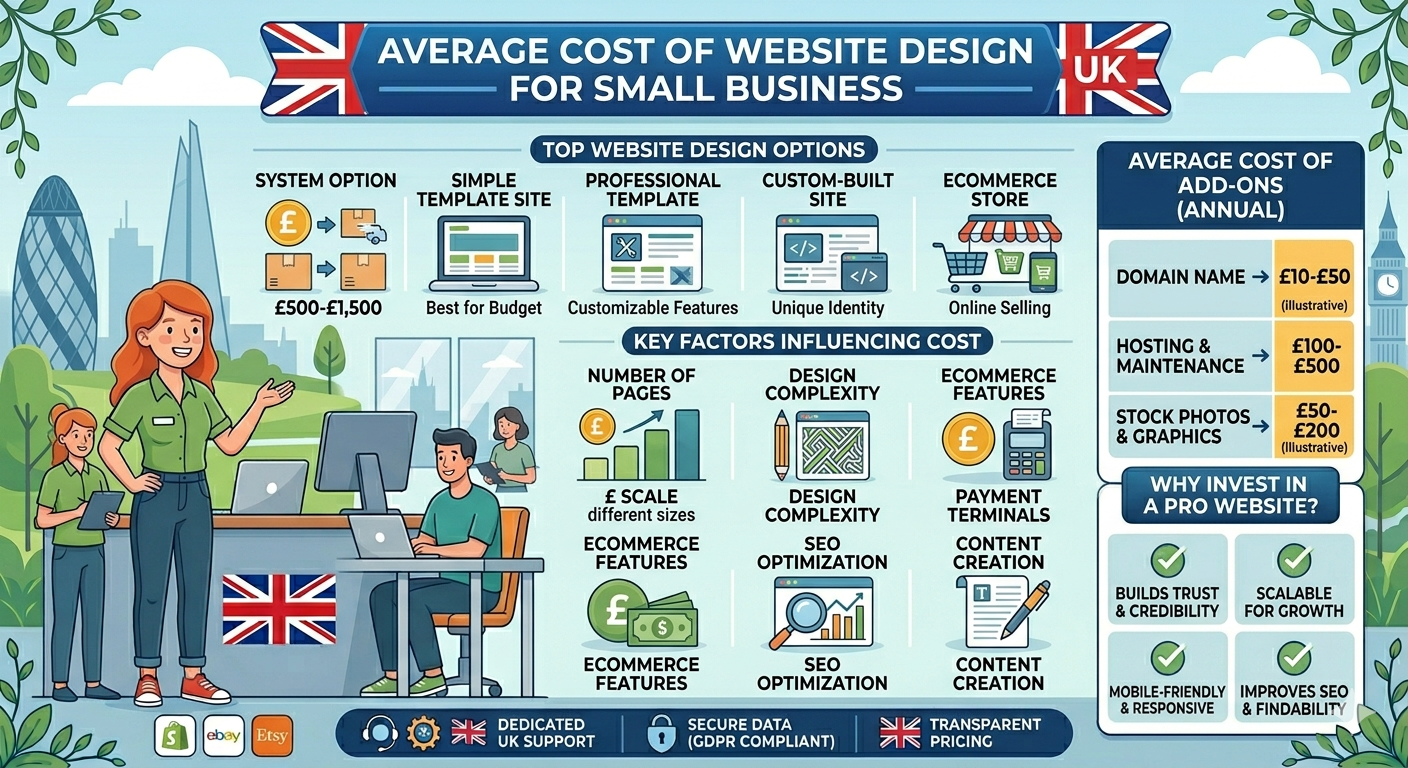
In 2026, the average cost of website design for small business UK typically ranges from £1,000 to £6,000 for a professional brochure-style site. Most startups pay between £2,000 and £5,000 for a solid, customisable solution that includes responsive design, basic SEO setup, and essential features.
- DIY/Website Builders: £100–£400 per year (including hosting and domain).
- Freelancer: £500–£3,000+ for one-off builds.
- Small Agency: £2,000–£6,000.
- Bespoke/Custom: £5,000–£15,000+ for complex needs.
These figures represent initial development. Ongoing costs for hosting, maintenance, and updates add £200–£1,000 annually depending on the route chosen.
Factors That Influence Website Costs for Startups
Several key elements determine the final price:
- Number of Pages and Complexity: A simple 5-page site costs far less than one with 20+ pages or custom functionality.
- Design Type: Template-based vs fully custom design.
- Features and Functionality: Contact forms, booking systems, e-commerce integration, or membership areas increase costs.
- SEO and Content: Professional copywriting, on-page optimisation, and imagery add to the budget.
- Provider Choice: Freelancers are more affordable than agencies; London rates tend to be higher than regional ones.
- Timeline and Revisions: Rush jobs or multiple revisions raise prices.
Startups should prioritise mobile responsiveness, fast loading speeds, and GDPR compliance, as these directly affect user experience and legal standing.
Website Options Comparison for UK Startups
| Option | Typical Cost (Initial) | Annual Ongoing Cost | Best For Startups | Pros | Cons |
|---|---|---|---|---|---|
| DIY Builders (Wix, Squarespace, GoDaddy) | £0–£300 setup + subscription | £100–£400 | Solo founders, testing ideas | Quick, cheap, easy to use | Limited customisation, SEO challenges |
| Freelancer | £500–£3,000 | £100–£500 | Small service businesses | Affordable, personalised | Variable quality, limited support |
| Small Agency/WordPress | £2,000–£6,000 | £300–£1,000 | Growing startups needing scale | Professional, better results | Higher upfront cost |
| Custom/E-commerce | £5,000–£15,000+ | £500–£2,000+ | Product-based or complex needs | Fully tailored, scalable | Expensive, longer timeline |
This table illustrates clear trade-offs for different startup stages and budgets.
Breakdown of Costs: What Are You Paying For?
A typical mid-range small business website includes:
- Design and UX/UI: £800–£2,500 – Creating visually appealing, user-friendly layouts.
- Development/Coding: £700–£2,000 – Building functionality on platforms like WordPress.
- Content Creation: £300–£1,000 – Professional text, images, and basic SEO.
- Setup (Domain, Hosting, SSL): £50–£200 initially.
- Testing and Launch: Included in most quotes.
- Training or Handover: Often provided for self-management.
Additional one-time costs might include logo design (£200–£800) or photography. E-commerce features like payment gateways and inventory systems can add £1,000–£5,000 or more.
DIY vs Professional: Making the Right Choice for Startups
DIY builders suit very early-stage startups validating ideas. They allow quick launches but may require more effort for SEO and custom branding later. Many businesses eventually migrate to professional platforms as they grow.
Freelancers offer a good middle ground for startups needing a unique look without agency prices. Check portfolios, reviews, and post-launch support.
Agencies provide comprehensive services, including strategy and ongoing maintenance, which can deliver better long-term ROI for ambitious startups.
Pro Tip: Request detailed proposals outlining exactly what is included to avoid hidden surprises.
Hidden and Ongoing Costs to Budget For
Many startups focus only on the build cost and overlook:
- Hosting and domain renewals.
- Maintenance and security updates (critical for WordPress sites).
- Marketing (SEO, Google Ads, content).
- Accessibility compliance and regular backups.
- Potential redesign every 3–5 years as the business evolves.
Factor in 15–30% of the initial cost for annual running expenses.
Tips for Startups to Get the Best Value
- Define clear goals and required features before approaching designers.
- Start with a minimum viable website (MVP) and iterate based on user feedback.
- Choose providers experienced with UK small businesses and startups.
- Ask for case studies and references.
- Consider payment plans or phased development.
- Invest in basic SEO from day one to drive organic traffic.
- Review contracts carefully regarding ownership and support.
Regional agencies outside London often provide competitive rates with excellent service.
Real-World Examples and Insights
A local trades startup might launch successfully with a £1,500 freelancer-built site featuring service pages and a contact form. An e-commerce fashion startup could invest £8,000+ initially for product catalogues, payments, and marketing integrations, seeing returns through increased sales.
The key is alignment: match your website investment to your current stage and growth ambitions. A well-designed site often pays for itself through new clients within months.
FAQ: Average Cost of Website Design for Small Business UK
What is the average cost of website design for small business UK in 2026?
Most small businesses and startups pay £2,000–£5,000 for a professional site, though ranges span £500–£10,000+ depending on requirements.
How much should a startup budget for a website?
Aim for £1,500–£4,000 initially if hiring help, or under £300/year for DIY. Include buffer for ongoing costs.
Is a cheap website worth it for startups?
Basic builders work for testing, but professional designs usually deliver better credibility, SEO performance, and conversion rates.
Freelancer or agency – which is better for small business UK?
Freelancers suit tighter budgets; agencies offer more comprehensive support and scalability for growing startups.
What are typical ongoing website costs?
Expect £200–£1,000 per year covering hosting, updates, and minor changes.
Can I get a free or very low-cost website?
Some platforms offer limited free tiers, but professional results usually require investment. Government grants or startup schemes may help in certain cases.
How long does it take to build a small business website?
DIY: days to weeks. Freelancer/agency: 4–12 weeks depending on complexity and revisions.
Conclusion
Understanding the average cost of website design for small business UK for startups empowers you to invest wisely. A quality website is not just an expense but a foundation for growth, helping attract customers, build trust, and support your business objectives in a digital-first world.
Assess your needs, explore quotes from multiple providers, and prioritise value over the cheapest option.