








In an era where data drives decisions, the role of a business intelligence analyst has become indispensable. These professionals transform raw data into actionable insights that help organisations improve performance, reduce costs, and gain competitive advantages. As businesses across sectors embrace digital transformation and data-driven strategies, demand for skilled BI analysts continues to rise.
This guide explores what is a business intelligence analyst, typical responsibilities, current salary ranges (with a focus on the UK), required skills, career progression, and tips for entering or advancing in the field. Whether you’re considering a career switch or negotiating your next role, understanding the landscape helps you make informed choices.
What Is a Business Intelligence Analyst?
A business intelligence analyst (often shortened to BI analyst) collects, analyses, and interprets complex data sets to support strategic decision-making. They bridge the gap between raw data and business strategy by creating reports, dashboards, and visualisations that highlight trends, opportunities, and potential risks.
Unlike pure data scientists who focus on advanced modelling and predictions, BI analysts emphasise practical, business-oriented insights using tools like Power BI, Tableau, SQL, and Excel. They work closely with stakeholders across departments to answer key questions about sales performance, customer behaviour, operational efficiency, and market trends.
Business intelligence analyst job description highlights responsibilities such as:
- Designing and maintaining interactive dashboards and reports.
- Querying databases using SQL and other languages.
- Cleaning and preparing data for analysis.
- Identifying key performance indicators (KPIs).
- Presenting findings to non-technical audiences.
- Recommending process improvements based on data.
Key Skills and Qualifications
Successful BI analysts combine technical expertise with strong business acumen and communication skills. Essential requirements typically include:
- Proficiency in SQL, Power BI/Tableau, Excel, and Python/R (for advanced roles).
- Understanding of data warehousing, ETL processes, and data modelling.
- Analytical thinking and problem-solving abilities.
- Excellent presentation and stakeholder management skills.
- Domain knowledge in the relevant industry (e.g., finance, retail, healthcare).
Most roles require a bachelor’s degree in business, computer science, statistics, or a related field. Certifications such as Microsoft Certified: Data Analyst Associate or Tableau Desktop Specialist can strengthen applications.
Business Intelligence Analyst Salary Overview
Business intelligence analyst salary varies significantly by location, experience, industry, and company size.
In the UK (2026):
- Average/median salary: Approximately £44,500 – £45,100 per year.
- Entry-level/Junior: £32,000 – £40,000.
- Mid-level: £42,000 – £55,000.
- Senior/Lead: £55,000 – £70,000+ (London often exceeds £60,000).
London and the South East command higher pay due to living costs and demand, while roles outside major cities may offer slightly lower base salaries but better work-life balance or additional benefits.
In the US:
- Average ranges from $88,000 – $116,000 annually, with total compensation often higher when including bonuses.
Additional compensation frequently includes performance bonuses, profit sharing, and benefits like pension contributions, private healthcare, or flexible working arrangements.
Factors Influencing Salary
Several elements affect earning potential:
- Experience: Significant jumps occur between junior and senior levels.
- Location: Premium in financial hubs like London, Manchester, or New York.
- Industry: Higher pay in finance, consulting, tech, and pharmaceuticals.
- Skills: Expertise in cloud platforms (Azure, AWS), advanced visualisation, or AI/ML integration boosts salaries.
- Company Size: Multinationals and tech firms often pay more than smaller organisations.
Career Growth and Progression
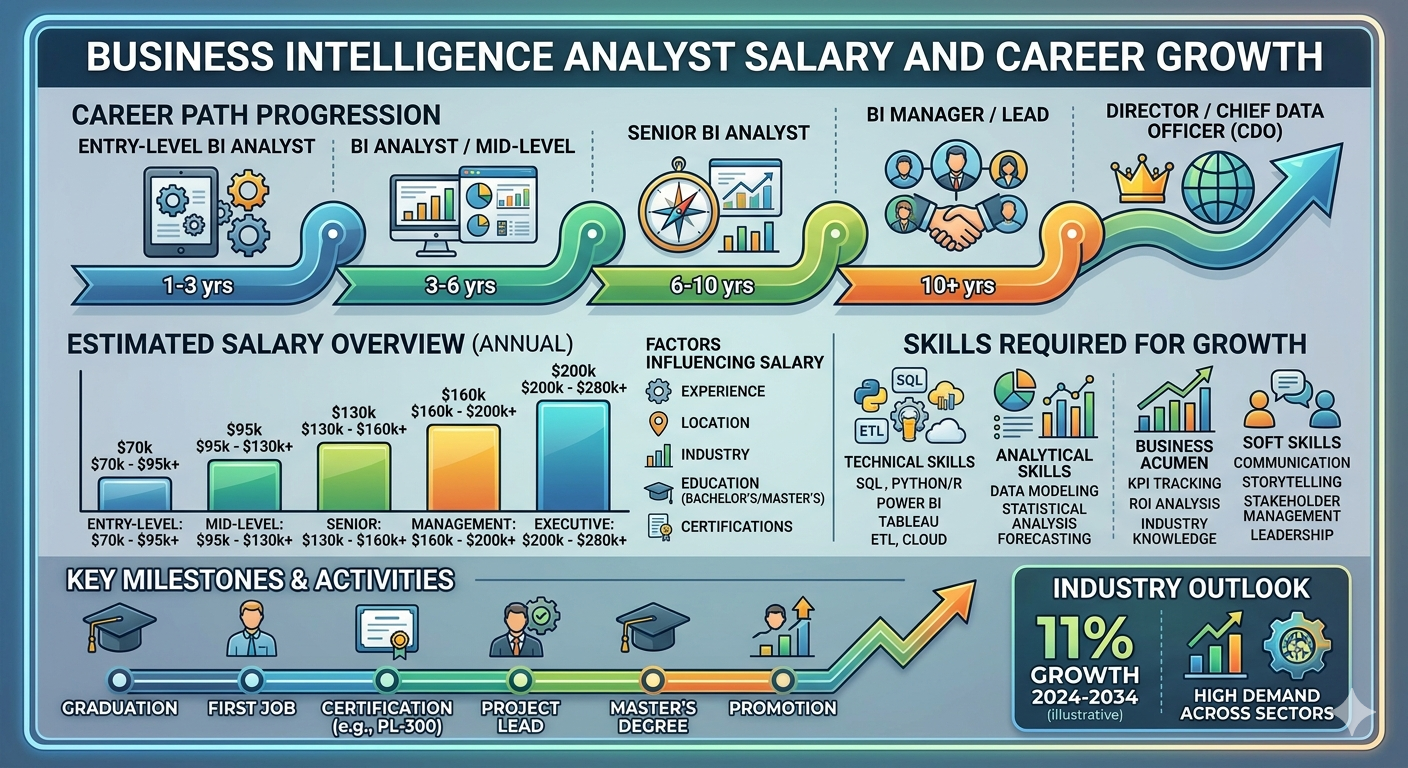
The business intelligence analyst role offers excellent career growth potential. Many start in junior analyst or data analyst positions and advance within 2–4 years.
Typical Career Path:
- Junior BI Analyst Focus on data preparation and basic reporting.
- BI Analyst Independent dashboard creation and stakeholder collaboration.
- Senior BI Analyst Complex projects, team mentoring, and strategic input.
- BI Manager / Lead Overseeing teams and BI strategy.
- Head of BI / Analytics Director Enterprise-wide data strategy.
- Related Roles: Business Intelligence Manager, Data Architect, Analytics Consultant, or even Chief Data Officer.
Demand for business intelligence analyst jobs remains strong, driven by digital transformation and the need for real-time insights. Growth projections for related analytics roles significantly outpace many traditional occupations.
Building a Strong Business Intelligence Analyst Resume
A targeted business intelligence analyst resume should highlight quantifiable achievements rather than just responsibilities. Focus on:
- Specific tools mastered (e.g., “Developed 50+ Power BI dashboards that improved reporting efficiency by 40%”).
- Business impact (cost savings, revenue growth, process improvements).
- Technical skills section with proficiency levels.
- Relevant certifications and continuous learning.
Tailor your resume for each application using keywords from the job description to pass Applicant Tracking Systems (ATS).
Comparison Table: Salary Ranges by Experience (UK, 2026)
| Experience Level | UK Salary Range | London Premium | Key Responsibilities |
|---|---|---|---|
| Entry/Junior | £32,000 – £40,000 | £38,000 – £45,000 | Data cleaning, basic reports |
| Mid-Level | £42,000 – £55,000 | £50,000 – £65,000 | Dashboard development, stakeholder work |
| Senior/Lead | £55,000 – £70,000+ | £65,000 – £80,000+ | Strategy, team leadership, advanced analytics |
| Manager/Head of BI | £70,000 – £100,000+ | £85,000 – £120,000+ | Department leadership, enterprise strategy |
Salaries can vary further based on bonuses and benefits.
Industry Demand and Future Outlook
Business intelligence analyst jobs are abundant in finance, retail, healthcare, manufacturing, and public sectors. The rise of AI, machine learning, and real-time analytics creates new opportunities while raising the bar for technical skills.
Professionals who combine BI expertise with domain knowledge or emerging technologies (such as generative AI for insights) position themselves for faster advancement and higher compensation.
How to Become a Business Intelligence Analyst
- Build foundational skills through courses, bootcamps, or degrees.
- Gain practical experience via personal projects, freelance work, or internal transfers.
- Develop a portfolio of dashboards and case studies.
- Network on LinkedIn and attend industry events.
- Pursue relevant certifications.
- Apply strategically, starting with junior or related analyst roles if needed.
FAQ: Business Intelligence Analyst Roles
What is a business intelligence analyst?
A professional who analyses data to generate insights and support business decisions through reports, dashboards, and recommendations.
What is the average business intelligence analyst salary in the UK?
Around £44,500 – £45,100 per year, with higher figures in London and for experienced professionals.
What skills are needed for business intelligence analyst jobs?
Strong SQL, visualisation tools (Power BI/Tableau), analytical thinking, communication, and business understanding.
How do I create an effective business intelligence analyst resume?
Emphasise quantifiable achievements, technical skills, and business impact with clear, results-oriented bullet points.
What does a typical business intelligence analyst job description include?
Data analysis, dashboard creation, stakeholder collaboration, KPI monitoring, and providing actionable recommendations.
Is career growth strong for BI analysts?
Yes. The field offers clear progression to senior, managerial, and strategic roles with competitive salary increases.
What factors most influence business intelligence analyst salary?
Experience, location, industry, technical skills, and the ability to deliver measurable business value.
Conclusion
A career as a business intelligence analyst offers strong earning potential, intellectual challenge, and significant impact on organisational success. With competitive business intelligence analyst salary packages and promising growth opportunities, it remains one of the most rewarding paths in the modern data economy.
Whether you’re just starting or looking to advance, focus on building practical skills, demonstrating business impact, and staying current with technology trends. Review current business intelligence analyst jobs, update your resume, and take proactive steps toward your next role.