




Your job title acts as a powerful first impression in the professional world. It appears prominently on resumes, LinkedIn profiles, and job applications, signaling your expertise, level of responsibility, and career direction to recruiters and connections. Choosing and presenting the right job title can open doors, while a poor choice might hide your true value.
In a competitive job market, understanding what is a job title, its meaning, and how to optimize it makes a significant difference. This guide explores everything from basics to specific examples, including nuances for fields like car insurance and SEO. It provides practical tips for resumes and LinkedIn to help you stand out authentically.
What Is a Job Title? Understanding the Job Title Meaning
A job title is the official name of your position within an organization. It reflects responsibilities, seniority, and department. It goes beyond a label it communicates your role in the company hierarchy and the value you bring.
What does job title mean in practice? It combines function (e.g., marketing, engineering) with level (junior, senior, manager). For instance, “Senior Software Engineer” indicates both technical work and leadership potential.
Job title examples vary widely:
- Entry-level: Marketing Coordinator, Sales Associate.
- Mid-level: Project Manager, Content Strategist.
- Senior: Director of Operations, Chief Marketing Officer.
The job title meaning extends to how it affects compensation, perception, and opportunities. Accurate titles help ATS (Applicant Tracking Systems) match you with roles, while on LinkedIn they improve search visibility.
Why Job Titles Matter for Resumes and LinkedIn Profiles
Recruiters spend seconds scanning documents. A clear, relevant job title grabs attention and sets the context for your achievements.
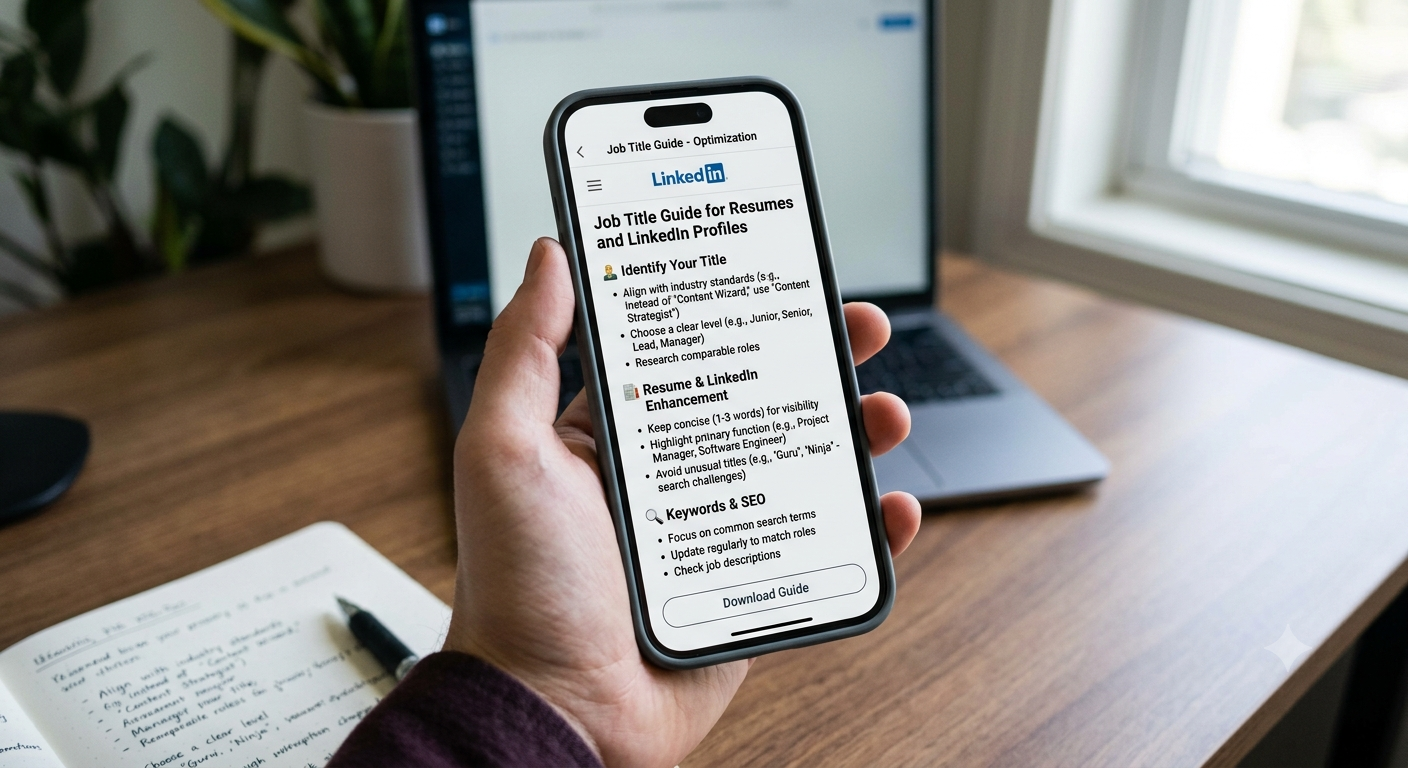
On resumes, use titles that align with target roles. Tailor them slightly if your actual title was internal jargon, without misrepresenting duties. For LinkedIn, consistency across headline, experience, and about sections boosts SEO within the platform.
Key benefits:
- Searchability: Recruiters search specific titles.
- Credibility: Standard titles build trust.
- Progression: Shows career growth through title changes.
Best Practices for Using Job Titles on Resumes
Craft your resume job title strategically:
- Match Target Jobs: Use common industry terms. Instead of a unique internal title, opt for a recognizable equivalent (e.g., “Client Success Lead” instead of vague phrasing).
- Add Clarity: Include parentheses for context if needed, like “Marketing Manager (Digital Focus)”.
- Quantify Impact: Follow the title with strong bullet points highlighting results.
- Consistency: Keep formatting uniform bold titles, consistent dates.
Avoid inflating titles. Focus on truthful representation that highlights transferable skills.
Optimizing Job Titles on LinkedIn Profiles
LinkedIn functions as a living resume and networking tool. Your headline often combines current or desired job title with a value proposition (e.g., “SEO Specialist | Helping Brands Rank Higher and Drive Traffic”).
In the experience section:
- Use exact past titles for accuracy.
- Add descriptions that expand on responsibilities.
- Update regularly to reflect growth.
LinkedIn search favors specific, searchable titles. Being overly creative can reduce visibility.
Job Title Examples Across Industries
Common job title examples help benchmark your own:
- Technology: Software Engineer, Data Analyst, UX Designer.
- Marketing: Content Marketer, Brand Manager, Digital Strategist.
- Sales: Account Executive, Sales Representative.
- Operations: Operations Manager, Supply Chain Coordinator.
For creative or small teams, titles might blend responsibilities.
Job title for someone who does everything: In startups or small businesses, terms like “Generalist,” “Operations Associate,” “Business Generalist,” or “Multipotentialite Professional” work well. Alternatives include “Administrative Services Specialist” or “Relationship Manager” to sound professional without limiting scope.
Special Considerations: Car Insurance Job Titles
Insurance has specific titles that impact both career and practical matters like premiums.
Car insurance job title options include:
- Insurance Agent / Sales Agent.
- Claims Adjuster.
- Underwriter.
- Customer Service Representative (Insurance).
Best job title for car insurance depends on role “Claims Adjuster” or “Insurance Specialist” for technical positions. For quoting or sales, “Insurance Advisor” or “Personal Lines Agent” fits.
Martin Lewis car insurance job title often highlights how titles like “Office Worker” versus “Driver” or high-risk roles affect quotes (per consumer advice sites). Use accurate titles when applying for policies to avoid issues.
Car insurance job title checker tools on comparison sites help select the right category for quotes, ensuring compliance and best rates. Always verify with your insurer.
SEO Job Titles: Standing Out in Digital Marketing
In search engine optimization, precise titles matter for both your role and optimization work.
SEO job title examples:
- SEO Specialist.
- Senior SEO Manager.
- Technical SEO Analyst.
- Content SEO Strategist.
- SEO Director.
On resumes and LinkedIn, include keywords like “SEO Specialist | Organic Growth Expert” to attract opportunities. Highlight tools (Google Analytics, SEMrush) and results (e.g., “Increased organic traffic by 150%”).
Table: Job Title Comparison for Resumes vs. LinkedIn
| Aspect | Resume Best Practices | LinkedIn Best Practices | Examples |
|---|---|---|---|
| Specificity | Match job description keywords | Search-friendly and descriptive | “Senior SEO Specialist” |
| Length/Format | Concise, exact or clarified | Expand in headline/about | “Project Manager (Agile)” |
| Customization | Tailor per application | Consistent personal brand | Generalist vs. Operations Lead |
| Impact Focus | Brief title + achievement bullets | Title + value proposition | Claims Adjuster with metrics |
| Common Pitfalls | Overly creative/internal jargon | Vague or outdated titles | “Do Everything” → Generalist |
This table summarizes optimization strategies for maximum effectiveness.
Common Challenges and Solutions
- Vague or Non-Standard Titles: Clarify with functional descriptors.
- Career Gaps or Changes: Use current aspirations in LinkedIn headline while listing accurate history.
- Multiple Roles: Prioritize the most relevant or use combined titles.
- International Variations: Research local conventions (e.g., UK vs. US terminology).
Deep insight: Titles evolve with industries. Regular audits of your profiles keep you aligned with market demands.
FAQ: Job Titles for Resumes and LinkedIn
What is a job title?
A job title is the official designation of your position, summarizing duties, seniority, and department.
How do I choose the best job title for my resume?
Select industry-standard terms that match target roles while accurately reflecting experience. Tailor where appropriate.
What job title for someone who does everything?
Options like “Generalist,” “Operations Associate,” or “Business Generalist” convey versatility professionally.
Does my car insurance job title affect premiums?
Yes. Accurate titles matter use tools or checkers for quotes. Roles like mechanic or delivery may increase costs.
What are good SEO job titles?
“SEO Specialist,” “SEO Manager,” or “Technical SEO Analyst” perform well. Include achievements for impact.
Should resume and LinkedIn job titles match exactly?
Aim for consistency, but LinkedIn allows more descriptive flair in headlines.
How often should I update my job title on profiles?
Update whenever responsibilities or roles change, or at least annually to stay relevant.
Conclusion: Elevate Your Professional Story with the Right Job Title
Mastering your job title transforms how others perceive your career. From understanding the job title meaning to applying specific examples in car insurance or SEO, strategic choices enhance resumes and LinkedIn profiles.
Review your current titles today. Align them with your goals, add quantifiable wins, and maintain authenticity. Small tweaks yield big results in visibility and opportunities.