






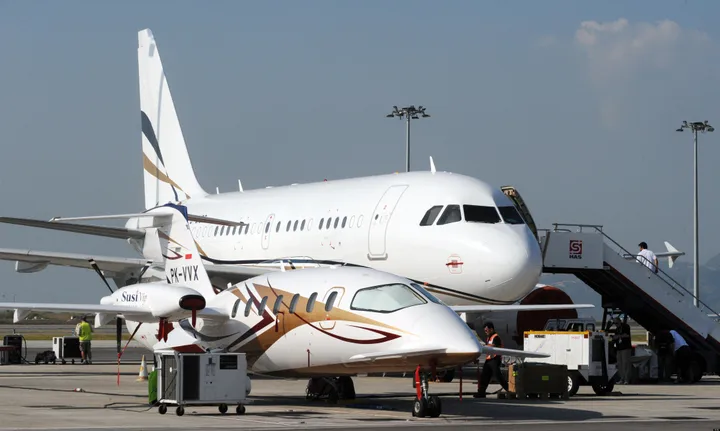
In an era where time is the ultimate currency, the private jet industry is redefining what it means to travel efficiently and luxuriously. Gone are the days of enduring long security lines, cramped seats, and rigid schedules at commercial airports. Today, high-net-worth individuals, corporate executives, and even families are turning to private aviation for its unparalleled flexibility, privacy, and productivity. As global business expands and leisure travel rebounds post-pandemic, the private jet industry has emerged as a vital enabler of seamless connectivity.
This transformation is more than a luxury perk it’s a strategic advantage. For businesses, private jets mean closing deals faster by hopping between remote locations without delays. For individuals, they offer wellness-focused escapes, like in-flight recovery zones or customized itineraries to wellness retreats. With the sector projected to grow significantly in 2025, understanding its evolution is key for anyone eyeing this dynamic space. This article dives into the private jet industry overview, its explosive growth, emerging trends, and more, highlighting why it’s reshaping modern mobility.
Private Jet Industry Overview: A Booming Sector
The private jet industry, often synonymous with the broader private aviation industry, encompasses the design, manufacturing, chartering, and operation of aircraft tailored for non-commercial use. At its core, it’s about delivering bespoke travel experiences that prioritize speed, comfort, and discretion. Unlike commercial airlines, private jets operate on-demand, accessing over 14,000 airports worldwide far more than the 500 or so served by major carriers.
Key players span manufacturers like Gulfstream and Bombardier, charter operators such as NetJets, and brokers who connect clients with aircraft. The industry’s appeal lies in its adaptability: a light jet for a quick regional hop or an ultra-long-range model for transoceanic voyages. In 2025, the global fleet exceeds 22,000 aircraft, with North America holding about 70% of registrations. This dominance reflects the U.S.’s vast geography and concentration of wealth, but emerging markets are catching up.
What sets the private aviation industry apart is its resilience. Even amid economic uncertainties, demand surged 3.5% year-over-year in North America during the first half of 2025, per WingX data. For newcomers, the private jet industry overview reveals a market blending cutting-edge tech with timeless luxury think AI-optimized flight paths and cabins equipped with zero-gravity seating.
Private Jet Industry Statistics: Numbers That Soar
Data paints a vivid picture of the private jet industry’s vitality. In 2025, the global market valuation hovers around $48.13 billion, up from $46.51 billion in 2024, according to Fortune Business Insights. This includes new deliveries, charters, and maintenance services. Business jet departures worldwide hit 900,221 in Q1 2025 alone a 3% increase from the prior year while active aircraft tails rose 1%.
Delving deeper, the private jet charter services segment alone reached $16.38 billion in 2025, with projections to climb to $24.02 billion by 2030 at a 7.95% CAGR, as reported by Mordor Intelligence. North America commands 44.74% of the business jet market share, valued at $20.81 billion in 2024. Ultra-high-net-worth individuals (UHNWIs) those with $30 million+ in assets number 510,810 globally, controlling $59.8 trillion and fueling about 4-5% of jet ownership.
To illustrate regional breakdowns and fleet compositions, here’s a table summarizing key 2025 statistics:
| Region/Country | Market Value (USD Billion) | Active Fleet Size | YoY Growth (%) | Notable Trend |
|---|---|---|---|---|
| North America (USA) | 20.81 | ~15,000 | +3.5 | 69% of global departures |
| Brazil | N/A | 775+ | +2 | Strong in turboprops for regional access |
| Europe (Germany) | Part of 27.5% global share | 496 | +1 | Rise in sustainable fuels |
| Asia-Pacific (India) | Emerging, ~$14.78B total aviation | 550+ | +11 | Infrastructure expansion |
| Global Total | 48.13 | 22,000+ | +4.99 CAGR | 820 new deliveries forecast |
Private Jet Industry Growth: Fueling the Future
The private jet industry growth trajectory is nothing short of meteoric. Honeywell’s 2025 Global Business Aviation Outlook forecasts 8,500 new deliveries worth $283 billion over the next decade a 3% annual increase. For 2025 specifically, deliveries are expected to rise 12% from 2024, reaching 820 units. This boom stems from post-pandemic shifts: private flying remains 10% above 2019 levels, with fractional ownership up 75.5% since then.
Emerging markets amplify this. Asia-Pacific’s charter market is set for an 8% CAGR through 2030, led by China’s affluent class and India’s infrastructure push aiming for 100 new airports by 2030. In the U.S., Trump-era policies like accelerated depreciation are boosting sales, with pre-owned transactions up 35% in Q1 2025.
Yet, growth isn’t uniform. Supply chain bottlenecks persist, delaying avionics deliveries into 2025. Still, the private jet industry growth signals a sector maturing beyond luxury into essential business infrastructure.
Private Jet Industry Trends: Innovation in the Skies
As we navigate 2025, private jet industry trends highlight sustainability, tech, and personalization. Electric and hybrid propulsion systems are gaining traction, with the world’s first electric private jet prototype flying in 2023 now scaling for short-haul routes. Sustainable aviation fuels (SAF) adoption rose 22% in 2025, per industry reports, driven by EU regulations like the ETS system, which could hike CO2 costs to €150 per tonne by 2030.
AI is revolutionizing operations: predictive maintenance cuts downtime by 15%, while apps enable real-time bookings and live tracking. Younger UHNWIs (under 45) now comprise 29% of buyers up from 15% in 2015 demanding wellness features like air purification systems and circadian lighting to combat jet lag.
Jet-sharing and on-demand models are democratizing access, with fractional programs like Flexjet securing $800 million in financing for fleet expansion. These private jet industry trends point to a greener, smarter future.
Private Jet Industry News: Headlines from 2025
Recent private jet industry news underscores momentum. In October 2025, Flexjet ordered 182 Embraer jets worth $7 billion the largest private fleet commitment ever bolstering super-midsize options. Qatar Executive added two Gulfstream G700s, enhancing ultra-long-range capacity.
Amid U.S. government shutdowns, private bookings spiked 20% in October, per Flexjet, as commercial delays mounted. Globally, Saudi Arabia’s market grew 32% YoY, with VistaJet launching domestic services. Sustainability made waves too: California’s climate laws now mandate Scope 3 emissions reporting for operators.
These stories reflect the private aviation industry outlook: resilient, with 90% of operators planning equal or more flights in 2026.
Private Jet Industry in India: An Emerging Powerhouse
The private jet industry in India is accelerating, mirroring the nation’s economic rise. With over 550 private aircraft jets, turboprops, and helicopters India leads South Asia’s general aviation market, contributing 8-10% to the $14.78 billion aviation sector in 2025. Ownership has surged among tycoons like Mukesh Ambani (Reliance’s Boeing 737 MAX) and Gautam Adani, with the fleet projected to hit 200 jets by 2030.
Charter demand spiked 24.7% in 2023, expected to grow 18.3% in 2024, fueled by events like Ambani’s pre-wedding bash that drew 100+ jets to Udaipur. Challenges persist: high import duties and Mumbai’s prohibitive fees push operators toward Delhi. Yet, government initiatives like 100 new airports signal promise. Operators like JetSetGo eye a $900 million raise and IPO by 2027-28, positioning India as Asia’s next hotspot.
Private Jet Industry Jobs: Careers That Take Flight
The private jet industry jobs landscape is diverse and rewarding, from pilots earning $150,000+ annually to brokers netting commissions on multimillion-dollar charters. With 9,106 employees at NetJets alone (up from 6,476 in 2019), the sector added thousands of roles in 2025 amid fleet expansions.
Pilots face high demand shortages persist but command premiums for type ratings on Gulfstreams. Maintenance directors oversee $51 billion backlogs, while client service reps handle concierge duties at $60,000-$120,000. Brokers, acting as matchmakers between clients and operators, thrive on networks; no cold calling needed, just expertise. Entry points include internships at Flexjet or certifications via ARGUS. As growth hits 6.2% CAGR, private jet industry jobs offer stability and global perks.
What Is a Private Jet Broker? Your Gateway to the Skies
A private jet broker is an intermediary who sources, negotiates, and books aircraft for clients, ensuring seamless travel without ownership hassles. Unlike operators with fixed fleets, brokers access thousands of jets worldwide, optimizing for cost, safety, and schedule. They handle everything: FAA certifications, insurance verification, catering, and ground transport.
What is a private jet broker’s edge? Transparency and advocacy. In an unregulated market, they vet operators via ARGUS or Wyvern ratings, avoiding pitfalls like hidden fees. Commissions (5-10%) come from operators, not clients, aligning incentives. For first-timers, brokers demystify options from light jets ($3,000/hour) to ultra-long-range ($12,000+/hour) saving up to 20% via empty legs. In essence, they’re travel architects, turning “fly to Monaco” into a tailored masterpiece.
On-Demand Private Jet Services: Flexibility Redefined
On-demand private jet services epitomize the industry’s shift to accessibility. These allow instant bookings via apps like XO or Jettly, drawing from 2,200+ aircraft for 60,000 routes. No memberships required just select, pay, and fly, often within 2-4 hours.
Priced at $2,000-$15,000 per hour based on size and distance, they suit sporadic travelers. Providers like Mercury Jets offer global reach, with perks like carbon offsets at no extra cost. In 2025, AI streamlines matching, while SAF integration appeals to eco-conscious users. For businesses, on-demand means ditching delays; for leisure, it’s spontaneous getaways. As fractional models evolve, on-demand private jet services bridge luxury and practicality.
Flight Charter Broker: The Unsung Hero of Charters
A flight charter broker specializes in arranging ad-hoc rentals, bridging clients and operators for one-off trips. Much like a private jet broker, they negotiate rates, secure backups, and manage logistics but focus on charters over ownership sales.
Duties include manifest reviews, FBO coordination, and contingency planning (e.g., weather reroutes). In a fragmented market, they ensure Part 135 compliance, avoiding illegal ops. Fees? Operator-paid commissions keep client costs neutral. For 2025’s dynamic demand, flight charter brokers shine in peak scenarios, like holiday surges, delivering value through networks. They’re the fixers ensuring your charter isn’t just a flight it’s flawless.
How Big Is the Private Jet Market?
The private jet market in 2025 is robust, valued at $48.13 billion globally, per Fortune Business Insights encompassing charters ($16.38 billion) and manufacturing. With 22,000+ aircraft and 797 deliveries forecast, it’s a $39.84 billion powerhouse by WingX estimates. North America dominates at 44.74%, but Asia-Pacific grows fastest at 8% CAGR. UHNWIs drive 4-5% ownership, with activity 10% above 2019. This scale reflects a market blending exclusivity with expanding access.
What Company Makes Private Jets?
Leading private jet makers include Gulfstream (G700 for ultra-long-range), Bombardier (Global 7500, largest cabin), and Dassault (Falcon 10X, fighter-jet heritage). Embraer (Phenom 300, versatile light jet) and Cessna (Citation Latitude, midsize efficiency) round out the top tier. Boeing’s BBJ and Airbus’ ACJ cater to VIP conversions. These innovators prioritize range, tech, and sustainability.
Is Private Jet Business Profitable?
Yes, but selectively. Charter operators like NetJets report strong margins (10-20% on flights), with $7 billion deals fueling growth. Ownership? Rarely annual costs hit $700,000-$4 million, offset by chartering at $800-$1,500 net/hour. For UHNWIs ($1.6B net worth average), it’s about time savings, not ROI. Fractional models yield better returns for mid-tier users.
Which Country Owns the Most Private Jets?
The U.S. reigns with ~15,000 jets (70% global fleet), per 2025 data Texas alone has 1,651. Brazil follows at 775+, then Mexico (1,000+ including turboprops). Canada’s 532 aids vast terrains; Germany’s 496 supports EU business. Wealth concentration drives this.
FAQ
What are the main drivers of private jet industry growth in 2025?
Surging UHNWIs, fractional ownership (up 75% since 2019), and tech like AI maintenance fuel 4.99% CAGR. Emerging markets like India add momentum.
How does sustainability impact the private aviation industry outlook?
SAF adoption (22% rise) and electric prototypes address emissions, but regulations like EU ETS could add €150/tonne CO2 costs by 2030.
What entry-level private jet industry jobs are available?
Internships at Flexjet or certifications via ARGUS lead to roles like dispatch ($50,000+) or client service ($60,000-$120,000).
Why choose an on-demand private jet over fractional ownership?
On-demand offers flexibility without commitments; book in hours via apps, ideal for irregular travel at $2,000-$15,000/hour.
How has the private jet industry in India evolved recently?
Fleet hit 550+ in 2025, with 24.7% charter growth; tycoons like Ambani drive demand amid 100 new airports planned.
Is buying a used private jet a smart investment?
Depreciation (10-20% value rise post-COVID rare) makes it time-efficient, not profitable charter offsets costs but rarely profits.
What role does a flight charter broker play in modern travel?
They negotiate, vet safety, and handle logistics for ad-hoc flights, ensuring compliance and savings up to 20% on empty legs.
Conclusion: Elevate Your Journey Today
The private jet industry is more than transport it’s a catalyst for empowered living, blending growth, innovation, and exclusivity. From $48 billion valuations to sustainable strides, it’s transforming modern travel into something personal and profound. Whether you’re a executive eyeing efficiency or a family seeking serenity, private aviation unlocks possibilities.