





In the world of e-commerce, helping customers quickly find exactly what they’re looking for can make or break a sale. This is where faceted navigation comes in a powerful tool that lets shoppers refine product listings by attributes like color, size, price, brand, or material. Also known as faceted search, it transforms overwhelming catalogs into intuitive browsing experiences.
However, while faceted navigation boosts user satisfaction and conversions, it often creates challenges for ecom SEO. Poorly managed filters can generate thousands of similar URLs, leading to duplicate content, wasted crawl budget, and diluted rankings. As Google continues to emphasize efficient crawling in 2025, mastering seo faceted navigation is essential for maintaining strong search visibility without sacrificing UX.
This guide explores what is faceted navigation, real-world faceted navigation examples, common faceted navigation seo issues, and proven faceted search best practices. By aligning with google faceted navigation guidelines, you can create a system that delights users and supports your SEO goals.
What Is Faceted Navigation?
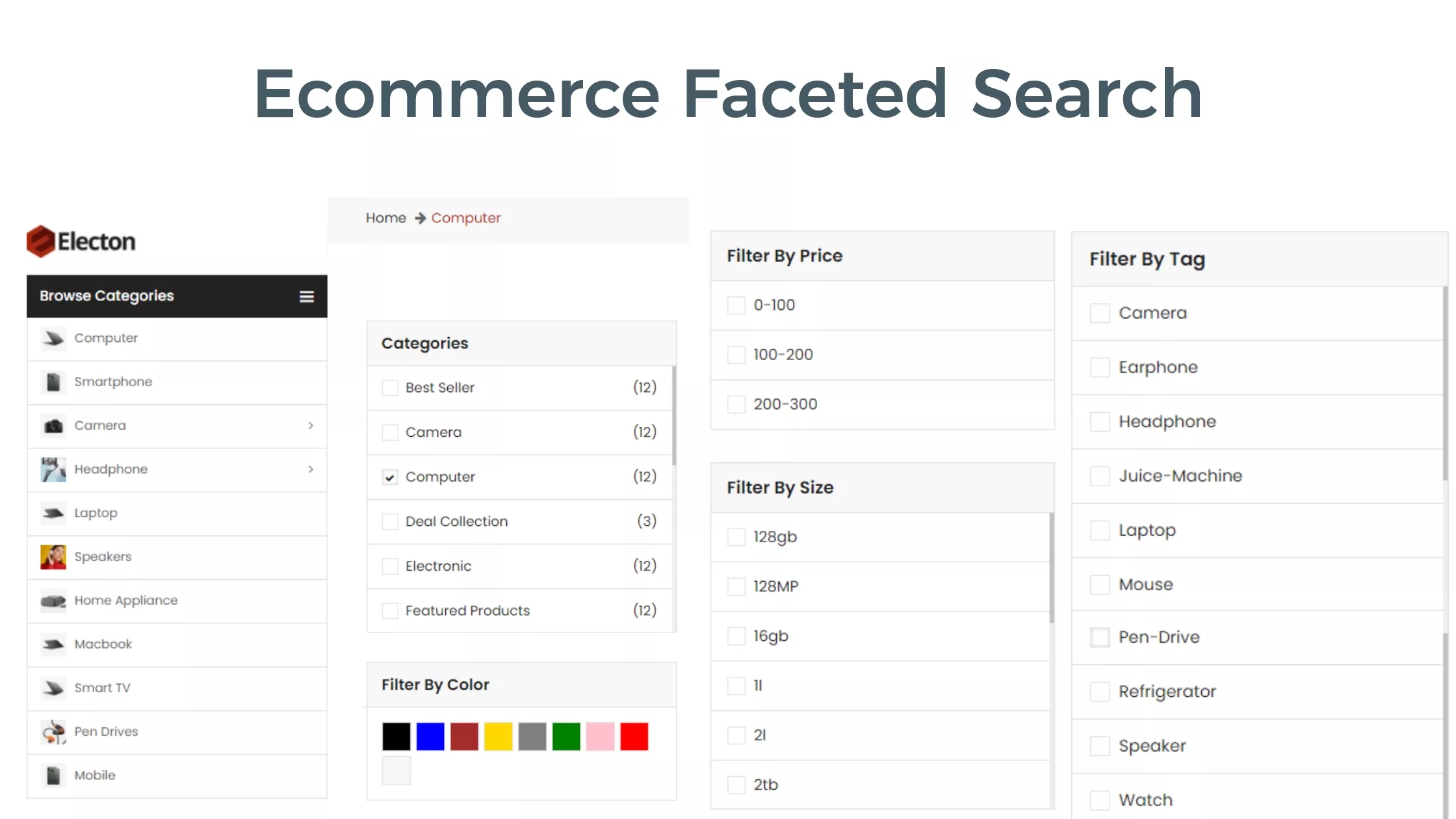
Faceted navigation, or faceted search, is a filtering system that allows users to narrow down large sets of items (like products, articles, or listings) using multiple attributes or “facets” simultaneously.
The term “faceted” comes from “facet,” meaning one side or aspect of something multifaceted, like a gem. In web design, facets represent different dimensions of your content, such as:
- Color (red, blue, black)
- Size (small, medium, large)
- Price range ($0–$50, $50–$100)
- Brand (Nike, Adidas)
- Material (cotton, leather)
Unlike simple sorting (e.g., by price or popularity), faceted navigation lets users combine filters for precise results. It’s especially valuable on e-commerce sites with thousands of products, reducing frustration and encouraging deeper exploration.

Faceted Navigation Examples in E-Commerce
Major retailers rely on faceted navigation to handle massive inventories:
- Amazon: Prominent left-sidebar filters for department, brand, price, customer reviews, and more. Applying filters updates results dynamically.
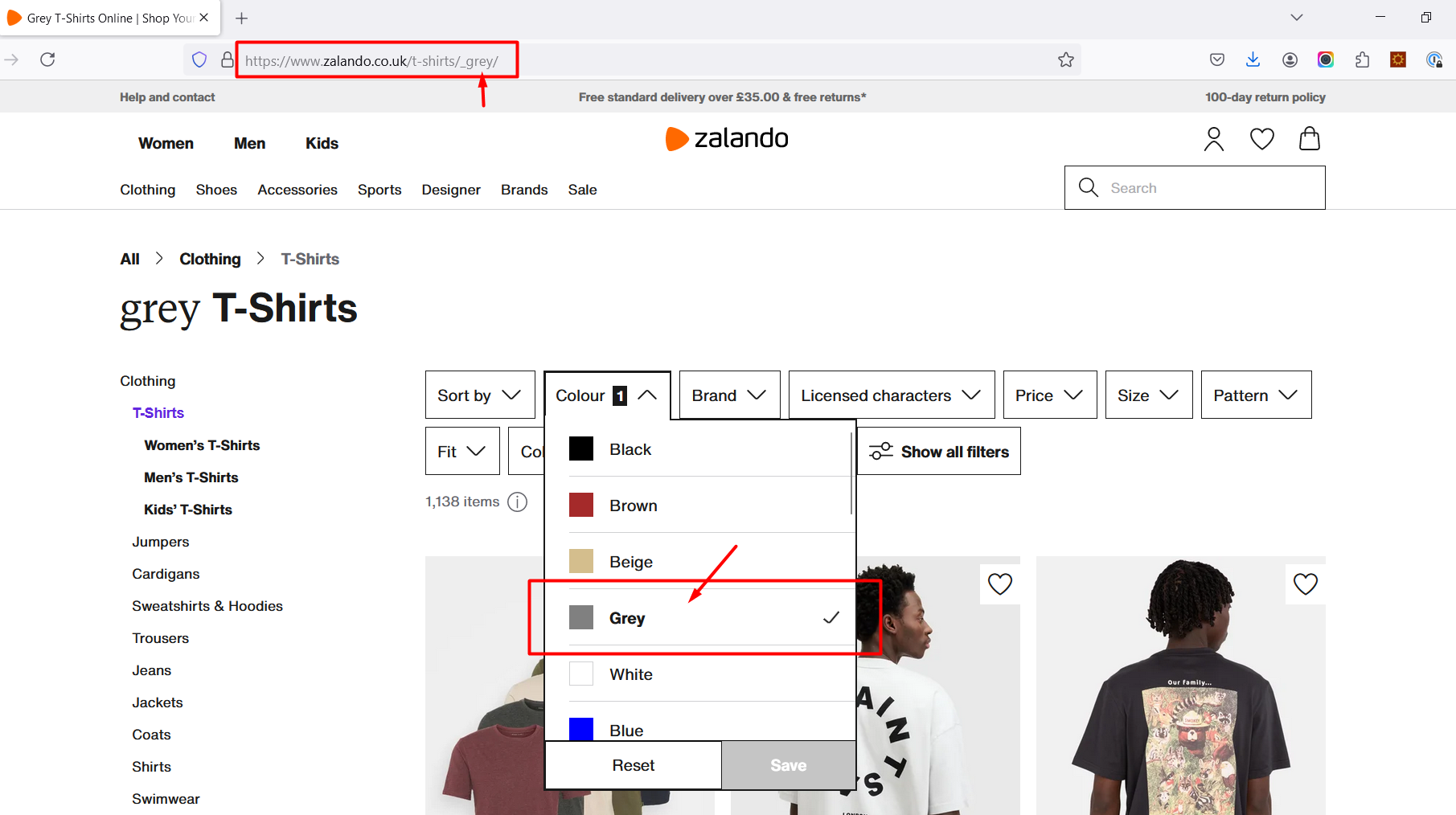
- ASOS or Zalando: Fashion sites with facets for size, color, style, and sustainability ideal for visual categories.
- Newegg: Tech products filtered by specs like processor type, RAM, or graphics card.
- Etsy: Combines facets with search for handmade items, including price, shipping, and shop location.
These faceted navigation examples show how filters guide users from broad categories to specific products in just a few clicks, improving engagement and sales.
Why Faceted Navigation Matters for Ecom SEO
Faceted navigation drives higher conversion rates by making product discovery effortless. Studies show well-implemented filters can increase add-to-cart rates by 20–30%.
For SEO, valuable facet combinations (e.g., “/shoes/red-running-shoes”) can rank for long-tail keywords, capturing targeted traffic. However, unchecked filters create explosive URL growth, harming performance.
Google notes faceted navigation as a top cause of overcrawling in 2025. Balancing UX with SEO is key to ecom seo success.
Common Faceted Navigation SEO Issues
Without proper controls, faceted navigation leads to:
- Duplicate Content: Similar pages from different filter combos (e.g., sorting variations) confuse search engines.
- Index Bloat: Thousands of low-value pages indexed, diluting site quality signals.
- Crawl Budget Waste: Bots crawl useless URLs instead of new or important content.
- Diluted Link Equity: Internal links spread across duplicates, weakening core pages.
- Crawl Traps: Infinite combinations trap bots in endless loops.
These faceted navigation seo issues slow discovery of fresh content and risk ranking drops.
Google Faceted Navigation Guidelines
Google’s official documentation (updated from 2014 advice) recommends:
- Prevent crawling of unnecessary faceted URLs if not needed in search.
- For indexable URLs: Use canonical tags, efficient rendering, and user-friendly structures.
- Avoid overcrawling by blocking low-value filters.
Follow these google faceted navigation guidelines at developers.google.com/search/docs/crawling-indexing/crawling-managing-faceted-navigation.
Faceted Search Best Practices
Implement these faceted search best practices to optimize:
1. Decide Which Facets to Index
Prioritize high-search-volume combinations (e.g., color + brand) using keyword tools. Noindex or block others like sorting or pagination.
2. Use Canonical Tags Strategically
Point filtered URLs to the preferred version (often the main category) to consolidate signals.
3. Implement JavaScript or Hash URLs for Dynamic Filters
Load filters client-side without new URLs, preserving UX while limiting crawlable pages.
4. Control Crawling with Robots.txt and Meta Tags
Disallow low-value parameters in robots.txt; add noindex to specific pages.
5. Optimize Valuable Faceted Pages
Treat high-potential pages as landing pages with unique titles, metas, and content.
6. Limit Filter Combinations
Prevent zero-result pages and cap multi-select options.
7. Monitor with Tools
Use Google Search Console, Screaming Frog, or Ahrefs to track indexed faceted URLs
| Technique | When to Use | Pros | Cons | SEO Impact |
|---|---|---|---|---|
| Canonical Tags | Near-duplicate filtered pages | Consolidates signals easily | Doesn’t stop crawling | Reduces duplication |
| Noindex Meta Tags | Low-value filters | Prevents indexing | Allows crawling (budget use) | Controls index bloat |
| Robots.txt Disallow | Parameters with no SEO value | Blocks crawling entirely | Can’t use if partial value | Saves crawl budget |
| JavaScript/AJAX Filtering | Most filters (dynamic updates) | Great UX, no new URLs | Rendering dependencies | Minimizes URL explosion |
| Static Sub-Categories | High-value combinations | Full SEO control | Manual maintenance | Targets long-tail keywords |
Conclusion
SEO faceted navigation doesn’t have to be a tradeoff. By understanding what is faceted navigation, learning from faceted navigation examples, addressing faceted navigation seo issues, and applying faceted search best practices aligned with google faceted navigation guidelines, you can deliver seamless UX while protecting and even enhancing your ecom seo.
Start by auditing your site in Google Search Console for parameterized URLs. Identify valuable facets, implement controls like canonicals and noindex, and monitor changes.
Ready to optimize? Review your filters today and turn potential pitfalls into ranking opportunities.
FAQ
What is faceted navigation in e-commerce?
Faceted navigation is a filtering system that lets users refine product lists by multiple attributes (facets) like color, size, or price, improving discovery on large catalogs.
Why is faceted navigation important for ecom SEO?
It enhances UX and conversions but can cause duplicate content and crawl waste if unmanaged. Proper implementation captures long-tail traffic while avoiding penalties.
What are common faceted navigation SEO issues?
Key problems include duplicate content, index bloat, crawl budget waste, diluted link equity, and crawl traps from excessive URL variations.
How do Google’s faceted navigation guidelines help?
Google advises preventing crawling of low-value URLs and optimizing indexable ones with canonicals and efficient structures to avoid overcrawling.
What are some faceted navigation examples?
Sites like Amazon, ASOS, and Newegg use sidebar filters for attributes. Valuable combos can become optimized landing pages.
What are faceted search best practices?
Prioritize valuable facets for indexing, use canonicals/noindex, implement JS for dynamic updates, and monitor with SEO tools.
How can I fix faceted navigation issues on my site?
Audit indexed URLs, apply canonicals or noindex to duplicates, disallow parameters in robots.txt, and create static pages for high-value filters.