





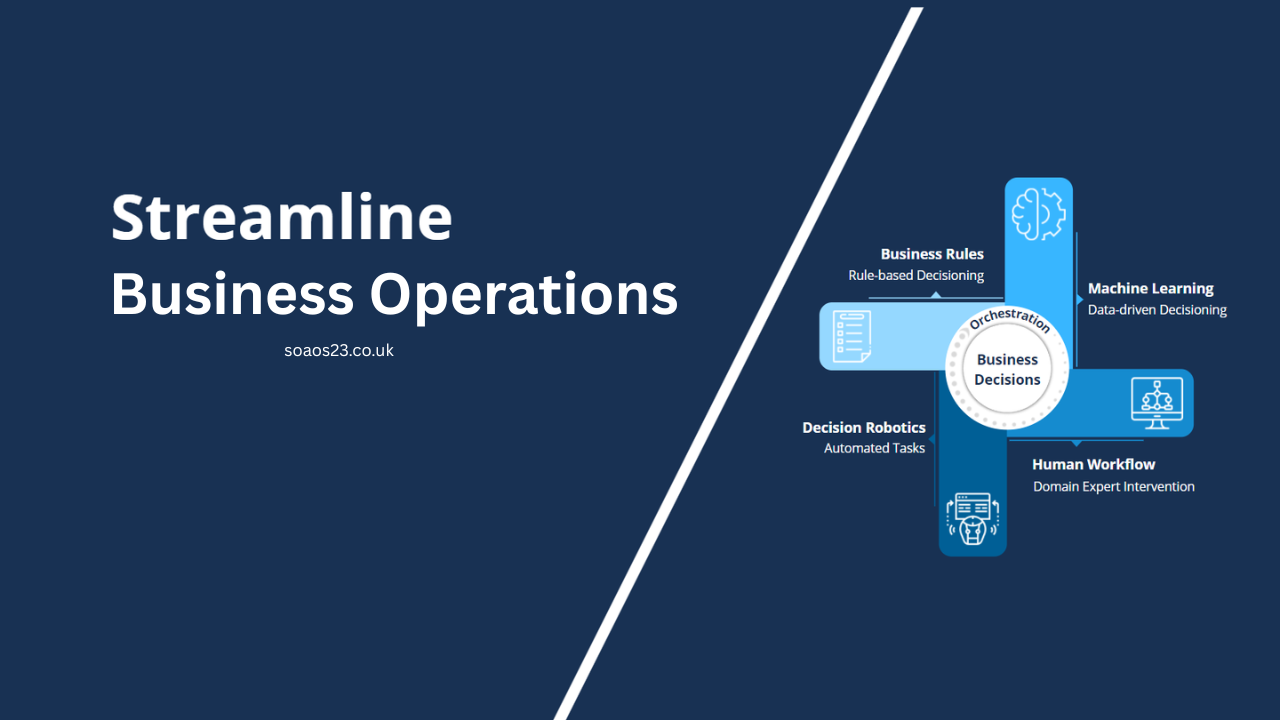
In today’s hyper-competitive market, companies that move quickly and efficiently win. Streamlining business operations isn’t just a buzzword it’s a survival necessity. Whether you’re a startup burning cash or an established enterprise fighting margin pressure, removing waste, reducing complexity, and accelerating decision-making directly impacts profitability, employee satisfaction, and customer experience.
The core idea behind streamlining in business is simple: do more with less. Yet many leaders confuse “cutting costs” with true operational streamlining. Real streamlining eliminates redundant steps, automates repetitive tasks, and aligns every process with customer value. Done right, it can cut operating costs by 15–30 %, shorten cycle times by half, and dramatically improve agility.
This comprehensive guide explains streamlining operations meaning, real-world streamlining business operations examples, proven frameworks, and step-by-step strategies you can implement immediately.
What Does “Streamlining Business Operations” Actually Mean?
At its essence, streamlining operations meaning is the systematic removal of unnecessary steps, delays, and resources from core business processes so work flows faster and cheaper without sacrificing quality.
Think of it like a river: what is streamlining in science? It’s the shaping of an object (like a fish or airplane) to reduce resistance and allow smoother movement through water or air. In business, you’re shaping your organization to reduce friction bureaucracy, manual handoffs, duplicated effort, and outdated tools.
Streamlining meaning in a corporate context includes:
- Eliminating non-value-adding activities (Lean terminology: “muda”)
- Automating routine tasks
- Simplifying decision-making hierarchies
- Standardizing repeatable processes
- Integrating disjointed systems
Synonyms include streamlining operations synonyms: optimizing, simplifying, rationalizing, rightsizing, and lean transformation.
Streamline in Business Operations vs. Cost-Cutting
| Aspect | Pure Cost-Cutting | True Operational Streamlining |
|---|---|---|
| Goal | Reduce expenses fast | Create sustainable efficiency |
| Time horizon | Short-term | Long-term capability building |
| Employee impact | Often layoffs and morale drop | Higher engagement through clarity |
| Customer impact | Risk of quality decline | Faster delivery, better experience |
| Sustainability | Temporary savings | Continuous improvement culture |
Why Streamlining Business Operations Matters in 2025–2026
McKinsey reports that companies in the top quartile of operational effectiveness enjoy 3–5× higher shareholder returns than their peers. Meanwhile, Gartner predicts that by 2026, 75 % of enterprises will face “operational rigidity” as their biggest growth barrier.
Key drivers forcing leaders to streamline business processes meaning urgency:
- Rising labor and supply-chain costs
- Customer demand for instant fulfillment (Amazon effect)
- Remote/hybrid work exposing process gaps
- Explosion of SaaS tools creating integration chaos
- AI and automation making manual work obsolete
Proven Strategies to Streamline Operations (With Real Examples)
1. Map Your Current Processes (Value Stream Mapping)
You can’t improve what you can’t see. Start with end-to-end process mapping.
Streamlining operations example: Toyota pioneered Value Stream Mapping in the 1990s. A mid-sized U.S. manufacturer applied the same technique to its order-to-cash cycle and discovered 47 handoffs and 23 days of wait time. After mapping, they reduced it to 9 handoffs and 4 days cutting working capital needs by $18 million.
Action step: Use tools like Lucidchart, Miro, or Microsoft Visio to document every step, decision point, and system involved in your top 3 revenue-generating processes.
2. Apply the 80/20 Rule Ruthlessly
70–80 % of delays and costs usually come from 20 % of process steps.
Streamline business processes example: A SaaS company noticed 80 % of customer support tickets stemmed from just 4 onboarding issues. They created automated self-service tutorials and reduced ticket volume by 68 % within one quarter.
3. Automate Whatever Moves
Automation is the highest-ROI lever in 2025.
| Manual Process | Tool Category | Example Tools | Typical ROI |
|---|---|---|---|
| Invoice processing | AP Automation | Bill.com, Stampli, Airbase | 6–9 months |
| Employee onboarding | HRIS + Workflow | BambooHR, Rippling, Workday | 4–8 months |
| Lead qualification | CRM + AI | HubSpot + Clay, Salesforce Einstein | 3–6 months |
| Report generation | BI Dashboards | Tableau, Looker, Power BI | Immediate |
4. Consolidate and Integrate Tools (Kill the Frankenstack)
The average company uses 130+ SaaS applications. Each integration gap creates manual work.
Streamlining business operations example: A 300-person fintech was using 11 different tools for finance alone. By consolidating to NetSuite + Expensify + Bill.com, they eliminated 1,200 hours of manual journal entries per year.
5. Implement Daily Standups + Visual Management
Borrow from Agile and Lean: 15-minute daily huddles with visual boards (physical or digital) surface bottlenecks instantly.
A European e-commerce brand cut order fulfillment errors by 63 % after switching from email updates to a Kanban board in ClickUp.
6. Outsource or Eliminate Non-Core Activities
Ask: “Would we proudly tell investors we’re world-class at this activity?”
Common candidates:
- Payroll & benefits administration
- IT helpdesk
- Facilities management
- Basic bookkeeping
Streamlining operations example: Buffer famously outsourced almost all non-product functions and stayed lean at 90 people while reaching $20M+ ARR.
7. Adopt OKRs or EOS to Align the Entire Company
Fragmented goals create conflicting priorities and duplicated work. Frameworks like Objectives & Key Results (Google, Intel) or Entrepreneurial Operating System (EOS) force clarity.
Step-by-Step Framework: How to Streamline the Process of Doing Business
- Diagnose – Run a 2-week time-study on key roles + map top 5 processes
- Prioritize – Score opportunities by (Impact × Ease)
- Pilot – Test one change in a single department (90-day sprint)
- Measure – Track lead time, error rate, cost per transaction
- Scale – Standardize the new process + train everyone
- Sustain – Add to monthly leadership review + assign process owner
Common Mistakes That Silently Kill Streamlining Efforts
- Treating it as a one-time project instead of a culture
- Automating broken processes (paving the cowpath)
- Ignoring employee input frontline staff know where the real waste hides
- Declaring victory too early without hard metrics
- Senior leaders exempting themselves from new rules
FAQ About Streamlining Business Operations
What is streamline in business operations?
It is the continuous practice of removing waste, simplifying workflows, and leveraging technology so the organization can deliver value to customers faster and at lower cost.
What is an example of streamlining operations?
A classic example is Amazon’s “single-threaded leader” model: one leader owns an entire process end-to-end (no committees), dramatically reducing decision latency.
What does operational streamlining mean in practice?
It means fewer approval layers, shorter cycle times, lower error rates, and higher employee autonomy. Think Zappos’ holacracy experiment or ING Bank’s Spotify-style squads.
How can you streamline the process of doing business on a limited budget?
Start with zero-cost wins: eliminate unnecessary reports, cancel recurring meetings with no agenda, combine related tasks (batch processing), and enforce single-source-of-truth documents.
Is there a streamlining business operations PDF I can download?
Many excellent free resources exist. The Lean Enterprise Institute offers a free Value Stream Mapping guide, and the U.S. Department of Commerce has a 52-page “Process Improvement Toolkit” available as PDF.
What’s the difference between streamlining and digital transformation?
Streamlining is the goal; digital transformation is one (powerful) means. You can streamline with pen and paper (Toyota did for decades). Digital tools simply accelerate the gains.
How long does meaningful streamlining take?
Quick wins appear in 30–90 days. Full cultural transformation usually takes 18–36 months of sustained leadership focus.
Conclusion: Start Small, Win Fast, Scale Relentlessly
Streamlining business operations is not a destination it’s a muscle you build daily. The companies winning in 2025–2030 aren’t necessarily the ones with the most capital or the flashiest tech stack. They’re the ones that removed friction first.