









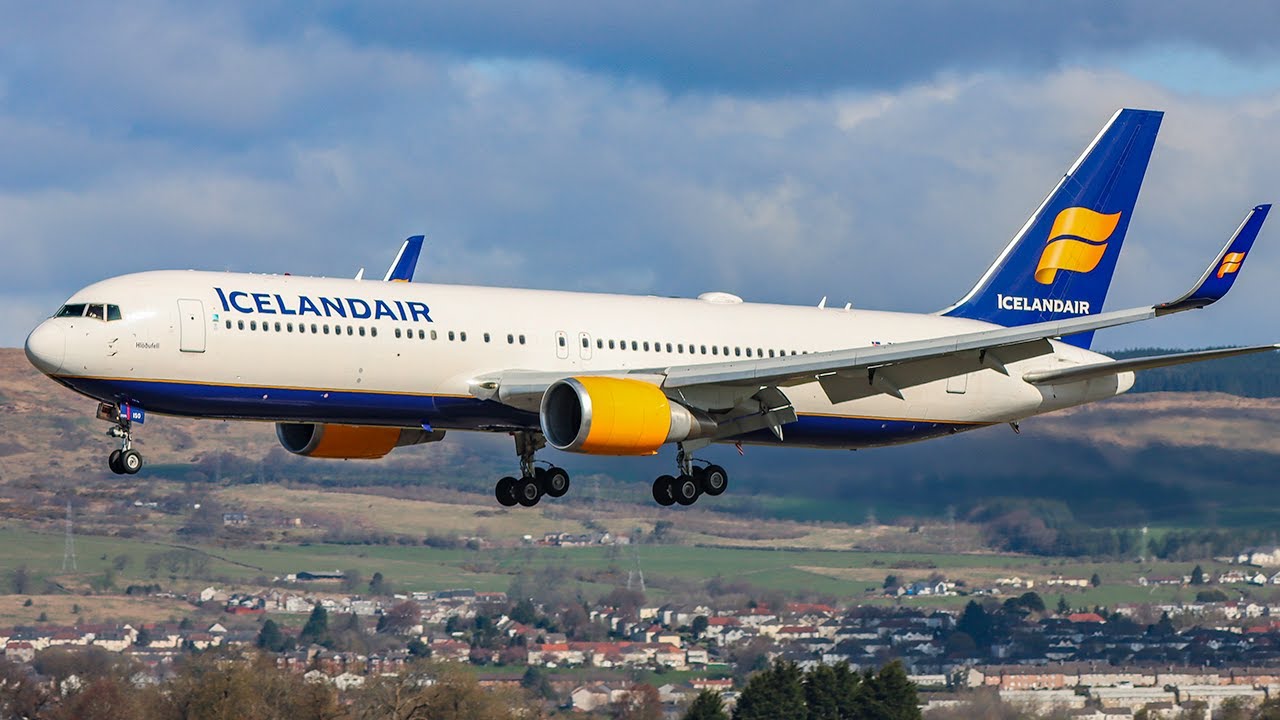
On June 20, 2025, an Icelandair emergency landing Manchester incident drew significant attention when flight FI5443, operating from Paris Charles de Gaulle to Keflavik International Airport, declared a general emergency mid-flight over the UK. The Boeing 767 squawked 7700 the international code for an urgent situation prompting air traffic control to clear a path and direct the aircraft to Manchester Airport. Fire engines and emergency services met the plane on arrival, creating a dramatic scene captured on social media and local news.
No injuries were reported, and the aircraft landed safely. Icelandair later confirmed the diversion was due to a technical issue, though specific details were not immediately released to the public. The event caused the return flight to be cancelled, affecting passengers and highlighting the complexities of long-haul operations even on relatively short European sectors. In an industry where safety is paramount, such incidents remind travellers and aviation enthusiasts alike how crews and ground teams manage unexpected situations with precision.
This article examines the known facts of the Icelandair emergency landing Manchester today (or the June 2025 event), possible causes based on similar past incidents, the airline’s response, impacts on passengers and operations, and broader context around Icelandair flights and emergency procedures. It also addresses related questions about diversions and safety records.
What Happened: Timeline of the Icelandair Incident
Flight FI5443 departed Paris around midday on June 20, 2025, carrying passengers and crew on a routine route to Iceland. Approximately one hour into the flight, while over UK airspace near Liverpool, the crew declared a general emergency. The aircraft began descending and was vectored toward Manchester Airport, which has long runways suitable for the Boeing 767.
Eyewitness reports and flight tracking data showed the plane approaching with landing gear extended earlier than usual. It touched down safely around 4 p.m. local time, greeted by multiple fire engines as a standard precaution for emergency declarations. Passengers were disembarked normally, and the aircraft was inspected by engineers.
Icelandair stated the diversion was precautionary due to a technical snag. No smoke, fire, or pressurisation issues were publicly confirmed, though some online speculation mentioned possible cabin-related concerns. The return leg to Keflavik was cancelled, with passengers offered rebooking or alternative arrangements.
Manchester Airport handled the situation efficiently, with minimal disruption to other Manchester airport departures and Manchester airport arrivals. The incident was widely covered by Manchester Evening News and aviation tracking communities.
Possible Causes Behind the Emergency Declaration
Aviation emergencies can stem from multiple sources, and airlines are cautious about releasing details until investigations conclude. Common reasons for declaring an emergency on a Boeing 767 include:
- Technical malfunctions (hydraulics, electrical systems, or engine indicators)
- Cabin issues (pressurisation warnings, smoke detection, or door alerts)
- Medical emergencies on board
- Weather or turbulence-related concerns (though less likely in this case)
In this incident, reports pointed to a “technical issue.” Similar past Icelandair events at Manchester, such as a 2017 diversion due to an onboard emergency or hard landings causing cabin damage, show the airline’s conservative approach to safety. Declaring squawk 7700 ensures priority handling, even if the situation turns out to be manageable.
Icelandair operates a modern fleet with strong safety protocols. The Boeing 767, while older than some narrowbodies, remains reliable when properly maintained. Investigations by the UK Air Accidents Investigation Branch (AAIB) or Icelandic authorities would examine flight data and crew actions.
Icelandair’s Safety Record and Emergency Procedures
Icelandair has a solid safety reputation with no fatal accidents in its modern history. The airline follows strict European Union Aviation Safety Agency (EASA) standards and Icelandic Transport Authority oversight. Crews train regularly for emergency scenarios, including diversions to alternate airports like Manchester, which serves as a common diversion point for North Atlantic flights due to its infrastructure and proximity.
When an emergency is declared:
- Pilots communicate with ATC using standard phraseology.
- The aircraft is prioritised for landing.
- Ground emergency services are alerted and positioned.
- Post-landing inspections determine if the plane can continue or requires maintenance.
In the June 2025 case, the quick diversion to Manchester prevented any escalation. The decision reflects best practice: better to land safely at a nearby major airport than risk continuing with an unresolved issue.
Impact on Passengers, Flights, and Operations
The diversion and subsequent cancellation affected dozens of passengers. Icelandair arranged accommodation, meals, and rebooking options. Some travellers faced delays of 24 hours or more, highlighting how a single technical event can cascade into broader flights cancelled or flight cancellation and delay situations.
For Manchester Airport, the incident was routine from an operational standpoint. Emergency landings occur several times a year across major UK airports without long-term disruption. Icelandair Manchester terminal (typically Terminal 1 or 2 depending on agreements) handled the arrival smoothly.
Broader context includes occasional Air India emergency landing or Ryanair crash Greece discussions in media, but these are separate events. Icelandair’s case was contained and resolved without harm.
Comparison of Recent Aviation Diversions Involving Icelandair or Similar Routes
| Date | Flight Details | Reason Reported | Outcome | Lessons Learned |
|---|---|---|---|---|
| June 2025 | FI5443 Paris–Keflavik (Boeing 767) | Technical issue | Safe diversion to Manchester; return flight cancelled | Importance of nearby major airports |
| Feb 2017 | FI440 Reykjavik–Manchester | Onboard emergency | Safe landing at Manchester | Conservative decision-making |
| Oct 2022 | Icelandair 767 at Manchester | Hard landing | Cabin damage; return flight cancelled | Need for thorough post-incident checks |
Passenger Experience and What to Expect During Diversions
Passengers on the affected flight described a controlled descent and professional crew communication. Most aviation emergencies feel more dramatic from the ground than inside the cabin, where crews are trained to remain calm.
If you experience a diversion:
- Follow crew instructions precisely.
- Expect emergency vehicles on arrival as standard procedure.
- Prepare for possible delays or rebooking.
- Contact your travel insurance provider promptly for covered expenses.
Manchester Evening News and Daily Mail coverage of the event focused on the visual of fire engines surrounding the plane, which understandably heightened public interest.
Broader Context: Icelandair Operations and Route Challenges
Icelandair specialises in transatlantic routes, using Iceland as a hub. Flights from continental Europe to Keflavik occasionally face technical or weather-related issues over the UK or North Atlantic. The airline maintains a reliable fleet, but like all carriers, it must manage occasional diversions.
Related queries, such as Why does Icelandair fly to Antarctica?
(typically not a regular route; occasional charters or positioning flights), or questions about other carriers’ emergencies (Has EasyJet ever had an emergency landing?, Why did the United flight divert to Iceland?), reflect public interest in aviation safety. A separate EasyJet incident involving reported smoke smell on a UK-bound flight was unrelated but often surfaces in similar discussions.
FAQ: Common Questions About the Icelandair Emergency Landing
Why did Icelandair declare an emergency over Manchester?
The flight experienced a technical issue mid-air, prompting the crew to declare a general emergency (squawk 7700) and divert to the nearest suitable airport with full facilities Manchester.
Was there smoke or fire on board the Icelandair flight?
No official confirmation of smoke or fire was released. Reports described a precautionary diversion due to a technical snag. Passengers were safely disembarked with no injuries.
How common are emergency landings at Manchester Airport?
Manchester handles several diversions and precautionary landings annually. The airport is well-equipped with long runways and rapid emergency response, making it a preferred diversion point for North Atlantic traffic.
What happens to passengers after an Icelandair emergency landing?
Passengers are safely disembarked, offered refreshments, accommodation if needed, and rebooked on alternative flights. The airline coordinates with ground staff and travel partners.
Did the incident cause long-term disruption at Manchester Airport?
No. The airport returned to normal operations quickly. The main impact was the cancellation of the Icelandair return flight.
Has Icelandair had similar incidents before?
Like most airlines, Icelandair has experienced occasional diversions and hard landings over the years, but maintains a strong safety record with no fatal accidents in recent decades.
Should travellers worry about flying Icelandair after this event?
No. Emergency declarations are rare relative to millions of flights operated annually. Icelandair’s quick and safe handling demonstrates effective safety protocols.
Conclusion: Safety First in Aviation Incidents
The Icelandair emergency landing Manchester on June 20, 2025, was a precautionary measure triggered by a technical issue. The crew’s professional response, combined with Manchester Airport’s readiness, ensured a safe outcome with no injuries. While it caused inconvenience through flight cancellations and delays, such events underscore the robust safety systems in modern aviation.
For travellers, the incident serves as a reminder to monitor flight status, maintain travel insurance, and stay calm during any unexpected changes. Icelandair continues to operate its network reliably, with Icelandair flights forming an important bridge between Europe and North America via Iceland.
If you’re planning travel with Icelandair or any carrier, check real-time status through official apps or Manchester airport departures / arrivals pages. Have you experienced a diversion? Share your story or questions below. Safe travels staying informed helps ensure smoother journeys.