




Digital wallets have transformed everyday payments, making cash and physical cards less essential. Two leaders dominate the conversation: Apple Pay and Google Pay. As contactless payments grow, understanding Apple Pay vs Google Pay helps users choose the right option for security, convenience, and privacy.
This comparison examines features, Apple Pay vs Google Pay security, privacy (Apple Pay vs Google Pay privacy and Apple Pay vs Google Pay datenschutz in German contexts), market performance, and real-user perspectives from Apple Pay vs Google Pay Reddit discussions. Whether you use iOS or Android, this guide delivers clear insights to match your needs.
Overview of Apple Pay and Google Pay
Apple Pay launched in 2014 and integrates deeply with Apple devices via the Wallet app. It supports in-store NFC taps, app payments, and web transactions.
Google Pay (now part of Google Wallet in some regions) offers similar functionality but targets Android users with broader device compatibility and Google ecosystem integration, such as Gmail and Maps.
Both use tokenization replacing card details with unique tokens to protect information. Differences emerge in ecosystem lock-in, data handling, and adoption patterns.
Key Features Comparison
Both wallets excel at contactless payments, but nuances matter:
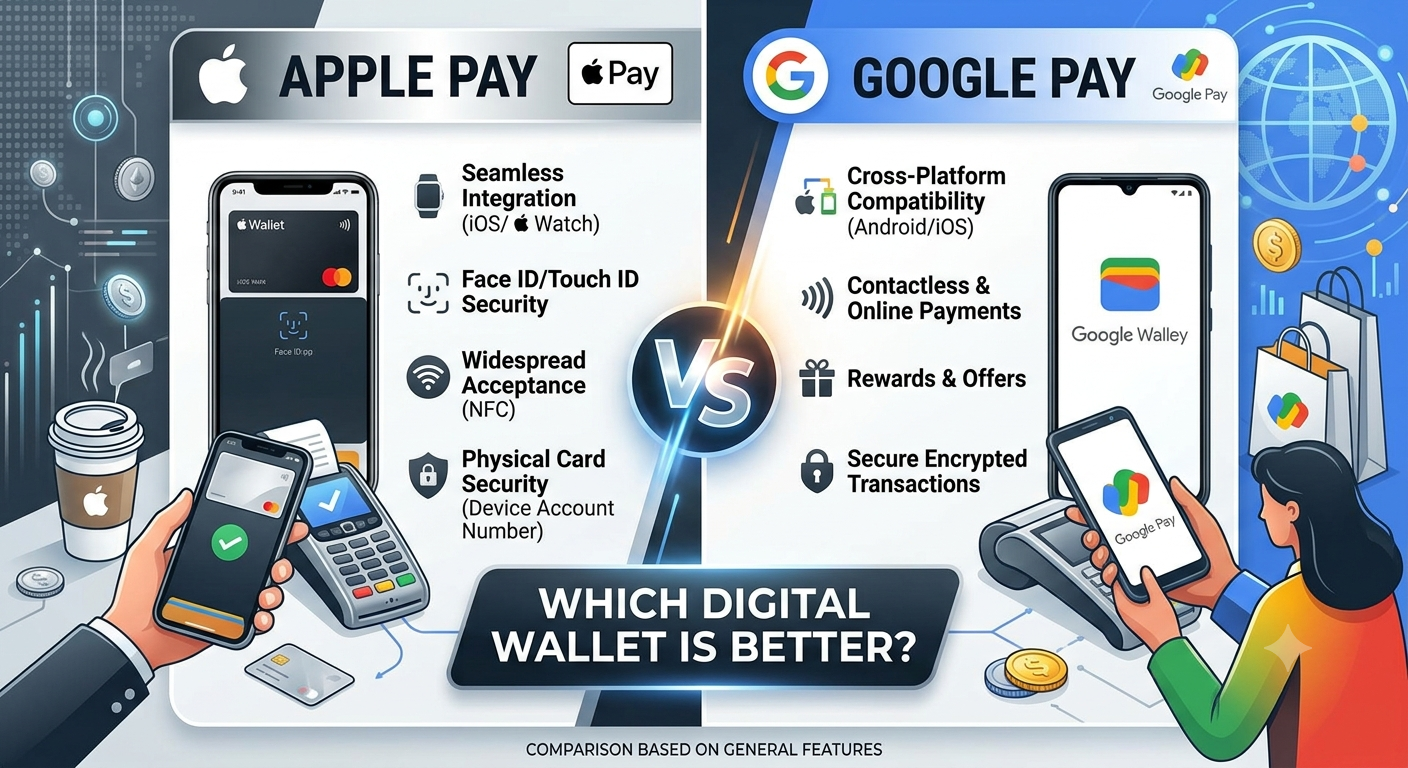
- Compatibility: Apple Pay works on iPhones, Apple Watches, and Macs. Google Pay supports most Android devices with NFC.
- In-Store Use: Tap-to-pay at terminals accepting contactless cards.
- Online/App Payments: One-tap checkout in supported apps and sites.
- Additional Tools: Apple Pay includes transit cards and rewards in some areas. Google Pay offers peer-to-peer sending and loyalty integration.
Google Pay often feels more flexible for multi-device users, while Apple Pay provides a seamless, polished experience within its closed ecosystem.
Apple Pay vs Google Pay Security
Security remains a top priority. Both platforms prioritize protection:
- Tokenization and Encryption: Neither stores actual card numbers on the device or servers for transactions. Tokens are device-specific.
- Authentication: Apple Pay relies on Face ID, Touch ID, or passcode. Google Pay uses device biometrics or PIN.
- Fraud Protection: Both partner with banks for monitoring. Apple’s Secure Element chip adds hardware-level isolation.
Apple Pay vs Google Pay which is more secure? Many experts and users lean toward Apple Pay due to its dedicated Secure Element and minimal data sharing. Google uses Host Card Emulation (HCE) in some setups, routing more through servers.
Real-world fraud rates for both stay low, but Apple’s closed system reduces attack surfaces. Always enable biometrics and monitor linked cards.
Apple Pay vs Google Pay Privacy
Privacy concerns drive many decisions.
Apple Pay emphasizes user control. Apple states it does not track purchases or sell data. Transactions stay private between you, the merchant, and your bank.
Google Pay integrates with Google’s broader services. While payment data receives strong protections, Google may use aggregated insights for personalization across its products.
Apple Pay vs Google Pay privacy (or Apple Pay vs Google Pay datenschutz) discussions often favor Apple, especially in regions with strict regulations like the EU. Reddit threads frequently highlight Apple’s no-tracking stance as a key differentiator.
Choose based on your comfort with data ecosystems. Both comply with major standards, but Apple positions itself as more privacy-focused.
Market Share and Statistics
Adoption reveals clear regional strengths.
- US Market: Apple Pay leads with around 49% of mobile wallet users and higher transaction shares. Google Pay holds roughly 30%.
- Global Reach: Google Pay benefits from Android’s worldwide dominance, leading in markets like India. Apple Pay grows strongly in North America and Europe.
- Transaction Volume: Apple Pay processes significantly higher volumes in key markets, projected at trillions annually.
Apple Pay vs Google Pay market share statistics show Apple dominating user engagement in the US despite Google’s broader potential user base. Usage frequency favors Apple, with more iPhone users actively tapping daily.
| Metric (Approx. 2025-2026) | Apple Pay | Google Pay |
|---|---|---|
| US Wallet Market Share | ~49% | ~30% |
| Global Users | ~780M projected | 200-250M |
| Transaction Volume (2025) | ~$8.7T | ~$5.2T |
| In-Store Usage Lead | Strong in US/EU | Strong in Asia/India |
Data highlights ecosystem effects: iOS users adopt Apple Pay more readily than Android users do Google Pay.
User Experience and Convenience
Apple Pay feels intuitive for Apple users quick setup and reliable performance. Limitations appear outside the ecosystem.
Google Pay shines with cross-device support and integration with Google services. Some users note occasional merchant compatibility gaps.
Apple Pay vs Google Pay Reddit conversations often praise Apple’s reliability while appreciating Google’s flexibility for non-Apple users. Common complaints involve bank support variations or occasional authentication hiccups for both.
Fees, Rewards, and Practical Considerations
Neither charges users direct fees for standard transactions. Banks or merchants may apply their own rules. Rewards depend on linked cards both support cashback or points programs.
International travel favors the wallet with better acceptance in your destinations. Google Pay’s wider Android reach helps in diverse markets.
Which Digital Wallet Is Better?
Apple Pay vs Google Pay has no universal winner.
- Choose Apple Pay for superior privacy, seamless integration, and US dominance if you’re in the Apple ecosystem.
- Opt for Google Pay for broader device support, international flexibility, and Android users.
Test both if possible. Many use them side-by-side depending on device or context. The “better” choice aligns with your phone, privacy priorities, and daily habits.
FAQ: Apple Pay vs Google Pay
Which is more secure: Apple Pay or Google Pay?
Both are highly secure with tokenization. Apple Pay often edges out due to hardware Secure Element and stricter data isolation.
How do Apple Pay and Google Pay differ in privacy?
Apple minimizes data collection and tracking. Google integrates more with its services, potentially using aggregated data.
What do statistics say about market share?
Apple Pay leads in the US (~49% wallet share). Google Pay competes strongly globally, especially on Android devices.
Is Apple Pay or Google Pay better for international use?
Google Pay offers broader device compatibility. Acceptance depends on local infrastructure and bank support.
Can I use both Apple Pay and Google Pay?
Yes. Many people with multiple devices or for specific merchants use both.
What do Reddit users say about Apple Pay vs Google Pay?
Discussions often favor Apple for security and privacy, while praising Google for accessibility. Experiences vary by region and bank.
Do either have transaction fees?
Generally no for users, though merchant or bank fees may apply indirectly.
Conclusion: Make the Smart Choice for Your Payments
Apple Pay vs Google Pay reflects broader ecosystem battles. Apple excels in privacy and polished US experience, while Google offers versatility and reach.
Evaluate your device, privacy needs, and usage patterns. Try setting up the one matching your phone today it takes minutes and could simplify your transactions significantly. Stay informed as features evolve, and always link trusted cards with strong security habits.