






Modern vehicles have transformed dramatically from basic mechanical machines into sophisticated computers on wheels. Advanced systems now actively assist drivers, making roads potentially safer while enhancing overall vehicle performance. The car technology impact on driving is profound, influencing everything from collision avoidance to fuel efficiency and driver behaviour.
As we move through 2026, technologies like Advanced Driver Assistance Systems (ADAS), AI-powered monitoring, and connected vehicle features are reshaping how we drive. While these innovations offer clear benefits, they also introduce new challenges related to driver reliance, distraction, and skill degradation. Understanding this dual impact helps drivers, manufacturers, and policymakers make better decisions for safer roads.
Evolution of Car Technology in Driving
Car technology has progressed from basic safety features like seatbelts and crumple zones to intelligent, real-time systems. Early innovations such as Anti-lock Braking Systems (ABS) and Electronic Stability Control (ESC) laid the groundwork by preventing loss of control. Today’s vehicles integrate sensors, cameras, radar, LiDAR, and powerful onboard computers that process vast amounts of data every second.
This evolution reflects a shift from passive safety (protecting occupants during a crash) to active safety (preventing crashes altogether). The result is measurable improvements in both safety metrics and driving dynamics, though human factors remain critical.
Key Technologies Enhancing Safety
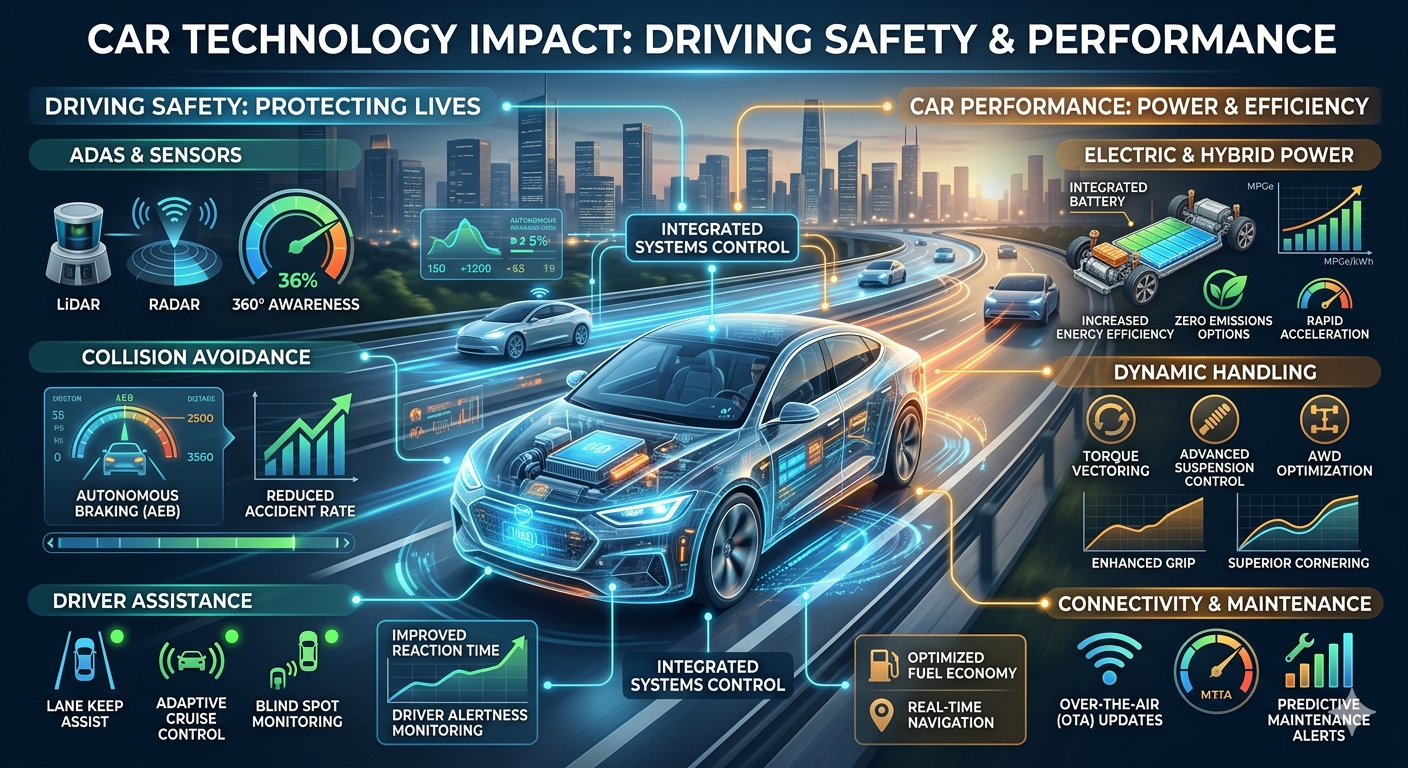
Several core technologies demonstrate the positive car technology impact on driving safety:
Automatic Emergency Braking (AEB) and Forward Collision Warning These systems detect potential collisions and automatically apply brakes if the driver does not respond. Real-world studies show AEB can reduce rear-end crashes by around 50% and associated injuries significantly. Pedestrian AEB variants further cut daytime pedestrian strikes.
Lane Keeping Assist and Lane Departure Warning These help maintain lane position, reducing lane-change crashes by approximately 14% and related injuries. Combined with blind-spot monitoring, they provide comprehensive side and rear protection.
Adaptive Cruise Control and Driver Monitoring Systems Adaptive cruise maintains safe distances, while driver monitoring tracks eye movement, head position, and steering patterns to detect fatigue or distraction. Euro NCAP now emphasises these systems heavily in safety ratings.
Blind Spot Detection and Rear Cross-Traffic Alert These technologies have become widespread, with high adoption rates in new vehicles and proven reductions in side-impact incidents.
Impact on Driving Performance
Beyond safety, car technology significantly enhances performance:
- Handling and Stability: Electronic systems optimise traction, braking, and steering for better cornering and stability in adverse conditions.
- Efficiency: Hybrid and electric powertrains combined with intelligent energy management improve fuel economy and acceleration.
- Comfort and Reduced Workload: Features like adaptive suspension and traffic jam assist reduce driver fatigue on long journeys.
- Predictive Capabilities: AI systems analyse patterns to anticipate hazards, allowing smoother, more confident driving.
These improvements make modern cars more responsive and enjoyable, but they can also create a false sense of security.
Potential Downsides and Behavioural Changes
While technology saves lives, it can influence driver behaviour in complex ways. Some studies show that advanced assistance systems may lead to:
- Reduced Vigilance: Drivers may pay less attention when systems are active, a phenomenon known as “automation complacency.”
- Skill Degradation: Over-reliance on features like automatic parking or lane centring can diminish manual driving proficiency over time.
- Risk Compensation: Feeling safer, some drivers may take more risks, such as following too closely or speeding.
Importantly, technology cannot fully replace core human skills. Drivers must still select a safe speed when driving, control your emotions when driving, and put things into practice when driving through consistent, attentive habits.
Data and Statistics on Safety Improvements
Real-world data from insurance institutes and safety organisations consistently shows positive net effects:
- ADAS technologies could prevent or mitigate a substantial percentage of crashes.
- Automatic emergency braking effectiveness has improved from earlier models (around 46%) to newer ones (52%+).
- Combined systems contribute to measurable reductions in fatalities and injuries over decades.
However, benefits depend heavily on proper use and driver awareness.
Comparison: Traditional vs Technology-Enhanced Driving
| Aspect | Traditional Driving | Technology-Enhanced Driving | Net Impact |
|---|---|---|---|
| Collision Prevention | Driver-dependent | Active intervention (AEB, etc.) | Significant reduction in rear-end crashes |
| Lane Management | Manual steering | Lane keeping assist | Fewer lane departure incidents |
| Driver Workload | High, especially in traffic | Reduced by adaptive systems | Lower fatigue but risk of complacency |
| Reaction Time | Human-only | Augmented by warnings and auto-braking | Faster overall response in many cases |
| Skill Maintenance | Constant practice | Potential degradation with heavy reliance | Requires conscious effort to maintain |
| Fuel/Energy Efficiency | Driver behaviour dominant | Optimised by intelligent systems | Consistent improvements |
This table illustrates clear safety gains alongside the need for balanced human-technology interaction.
Best Practices for Drivers in the Technology Age
To maximise benefits while minimising risks:
- Stay engaged and keep hands on the wheel when required.
- Understand your vehicle’s specific systems and limitations.
- Regularly practise manual driving skills.
- Control your emotions when driving technology cannot compensate for aggressive or distracted behaviour.
- Select a safe speed when driving based on conditions, not maximum assisted capabilities.
- Put things into practice when driving by applying defensive driving principles alongside technology.
Regular software updates and proper maintenance are also essential for optimal performance.
Future Outlook for Car Technology
In 2026 and beyond, expect more predictive AI, vehicle-to-everything (V2X) communication, and advanced driver monitoring. Regulations like updated Euro NCAP and US safety standards will push further integration of these features. The ultimate goal remains reducing human error the cause of most accidents while preserving driver control and enjoyment.
FAQ: Car Technology Impact on Driving Safety and Performance
How does car technology impact on driving safety overall?
It significantly improves safety through collision avoidance, better visibility, and automated interventions, though benefits depend on responsible use.
Can advanced car technology make drivers worse?
Yes, over-reliance can lead to skill degradation and reduced attention. Drivers must remain actively engaged.
What are the most effective safety technologies in modern cars?
Automatic Emergency Braking, Lane Keeping Assist, Blind Spot Monitoring, and Driver Monitoring Systems show strong real-world results.
Does technology improve driving performance?
Yes, through better handling, efficiency, and reduced workload, but it requires understanding system limitations.
How should drivers adapt to new car technologies?
Take time to learn features, maintain manual skills, stay attentive, and follow safe driving practices like selecting appropriate speeds and managing emotions.
Are there any downloadable resources on this topic?
Yes, various studies and reports on car technology impact on driving pdf formats are available from safety institutes and research organisations.
Will technology eventually replace human drivers?
Fully autonomous driving is advancing, but human oversight and intervention skills will remain important for years to come.
Conclusion
The car technology impact on driving safety and performance is overwhelmingly positive when used correctly, delivering fewer accidents, greater efficiency, and enhanced comfort. However, technology serves best as a co-pilot rather than a replacement for attentive, skilled driving.
Embrace these innovations while upholding fundamental responsibilities: stay focused, control your emotions when driving, select a safe speed when driving, and continuously put things into practice when driving. By combining advanced systems with responsible human behaviour, we can move toward safer, more enjoyable journeys for everyone on the road.