










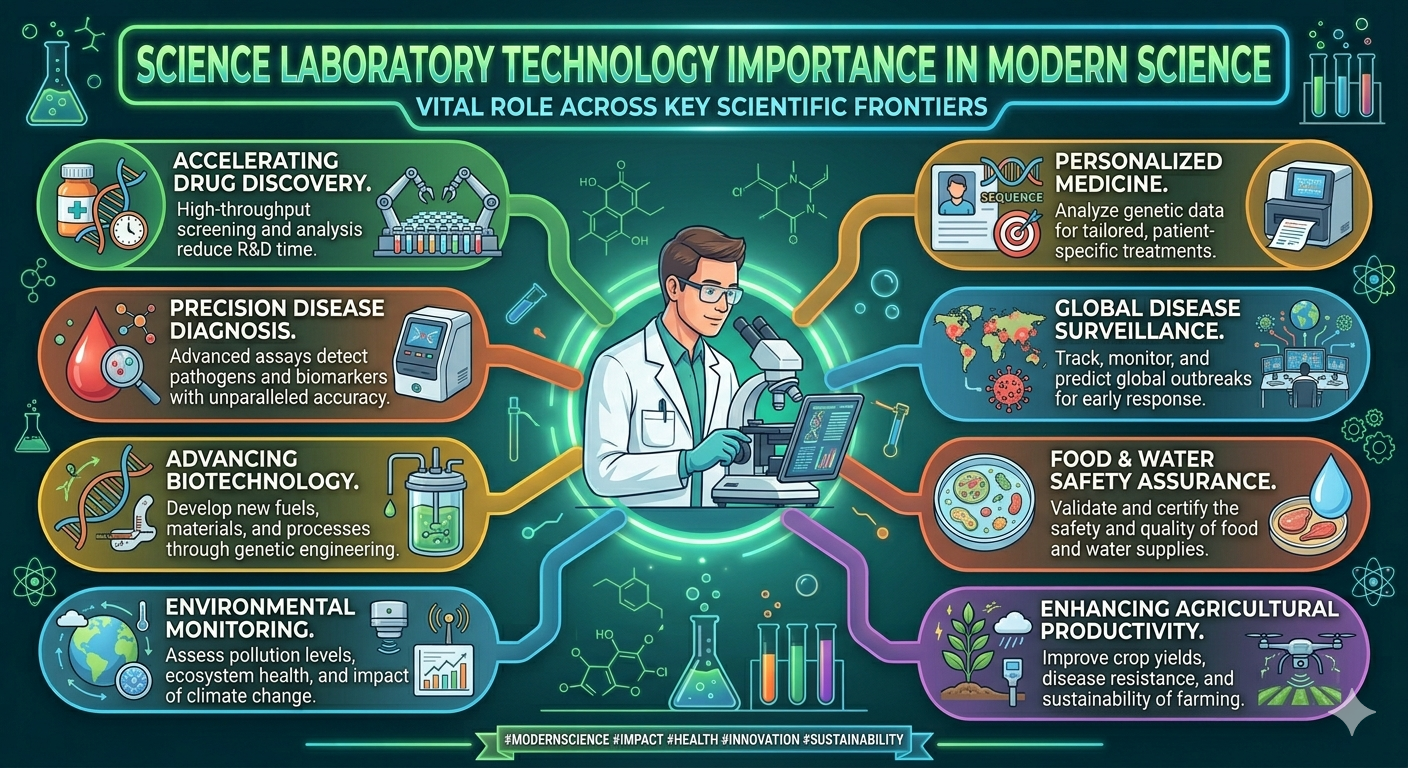
Modern scientific progress depends on precise experimentation, accurate data collection, and reliable analysis. Science laboratory technology provides the essential foundation that enables researchers, healthcare professionals, and industries to conduct meaningful work. From developing life-saving vaccines to ensuring food safety and advancing materials science, skilled laboratory technologists turn theoretical concepts into verifiable results.
In an age of rapid innovation, including biotechnology, personalised medicine, and environmental monitoring, science laboratory technology has grown more critical than ever. This field bridges theoretical science and practical application, ensuring experiments are conducted safely, efficiently, and reproducibly. This guide explores its importance, career opportunities, education pathways, and future outlook.
The Role of Science Laboratory Technology in Modern Science
Science laboratory technology involves the practical skills and knowledge required to support scientific investigation. Laboratory technologists prepare samples, operate sophisticated instruments, maintain equipment, record data, and ensure compliance with safety and quality standards.
In research institutions, they enable breakthroughs by handling complex procedures that scientists rely on. In healthcare, medical laboratory technologists perform diagnostic tests that inform treatment decisions. In industry, they support quality control, product development, and regulatory compliance.
The importance stems from several factors:
- Accuracy and Reproducibility: Reliable results depend on standardised techniques and proper calibration.
- Safety: Proper handling of hazardous materials, biological agents, and chemicals protects personnel and the environment.
- Efficiency: Skilled technologists optimise workflows, reducing time and resource waste.
- Innovation Support: They implement new technologies, such as automated systems and molecular tools, accelerating discovery.
Without strong laboratory technology, even the most brilliant scientific ideas would struggle to move from concept to validated outcome.
Key Applications Across Sectors
Healthcare and Diagnostics: Laboratory tests account for a significant portion of medical decisions. Technologists analyse blood, tissue, and other samples to detect diseases, monitor treatment, and support public health initiatives.
Research and Development: In universities and private labs, they support experiments in genetics, microbiology, chemistry, and physics.
Environmental Science: Testing water, soil, and air quality helps monitor pollution and climate impacts.
Food and Pharmaceutical Industries: Quality assurance and safety testing ensure products meet strict standards.
Biomolecular Science: Growing demand exists in areas like genomics, proteomics, and synthetic biology, where biomolecular science jobs often overlap with laboratory technology roles.
Science Laboratory Technology Course and Subjects
A typical science laboratory technology course combines theoretical knowledge with extensive hands-on training. Programmes usually last 2–4 years, depending on the qualification level (certificate, diploma, foundation degree, or bachelor’s).
Core Subjects often include:
- General Chemistry and Organic Chemistry
- Biology and Microbiology
- Anatomy and Physiology
- Physics and Instrumentation
- Laboratory Safety and Quality Control
- Data Analysis and Statistics
- Molecular Biology and Biotechnology Techniques
- Biochemistry
Practical modules focus on sample handling, equipment calibration, aseptic techniques, and report writing. Many programmes include work placements or internships for real-world experience.
In the UK, related pathways often lead to roles as laboratory technicians through college courses, apprenticeships, or university degrees in applied science.
Laboratory Technician Apprenticeship and Entry Routes
The laboratory technician apprenticeship offers a popular route into the profession in the UK. These Level 3 or Level 5 programmes combine paid work with structured learning, typically lasting 2–4 years.
Apprentices gain practical skills while earning a salary and often achieve formal qualifications. Employers in research institutes, hospitals, and industrial labs participate actively. This pathway suits those preferring hands-on learning over traditional university routes.
Science Laboratory Technology Jobs and Career Paths
Science laboratory technology jobs span diverse sectors with strong demand due to skills shortages and scientific advancement. Common roles include:
- Laboratory Technician
- Medical Laboratory Technologist
- Research Assistant
- Quality Control Analyst
- Environmental Testing Technician
Entry-level positions focus on routine testing and support, while experienced professionals take on supervisory, specialist, or managerial responsibilities. Progression into research scientist or laboratory manager roles is common with further qualifications.
Biomolecular science jobs represent a growing niche, particularly in genomics, drug discovery, and personalised medicine.
Science Laboratory Technology Salary Expectations
Science laboratory technology salary and laboratory technician salary UK vary by experience, location, sector, and qualifications.
UK Figures (2026):
- Starting salary: £18,000 – £24,000
- Average for experienced technicians: £25,000 – £31,000
- Senior or specialist roles: £32,000 – £40,000+ (higher in London and private sector)
Additional benefits often include pension contributions, health insurance, and overtime pay. Salaries tend to be higher in pharmaceuticals, London-based research, and NHS roles with banding structures.
Skills Required for Success
Technical proficiency in laboratory instruments, attention to detail, analytical thinking, and strong safety awareness are essential. Soft skills such as communication, teamwork, and problem-solving help technologists collaborate effectively with scientists and stakeholders.
Continuous professional development is vital as technologies like automation, AI-assisted analysis, and molecular diagnostics evolve rapidly.
Comparison Table: Career Pathways in Laboratory Science
| Pathway | Typical Duration | Entry Salary (UK) | Best For | Progression Opportunities |
|---|---|---|---|---|
| Apprenticeship | 2–4 years | £18,000 – £22,000 | Practical learners | Technician → Senior → Manager |
| College Diploma/Foundation | 1–2 years | £20,000 – £25,000 | School leavers | Specialist roles |
| Bachelor’s Degree | 3–4 years | £24,000 – £28,000 | Research-oriented careers | Scientist, Management |
| Specialist Certifications | Varies | Higher starting pay | Experienced professionals | Leadership in niche areas |
This table illustrates flexible entry routes suited to different backgrounds and ambitions.
Future Outlook and Challenges
The field faces a skills shortage, creating excellent opportunities for new entrants. Automation will handle routine tasks, shifting focus toward complex analysis, data interpretation, and specialised techniques.
Challenges include keeping pace with technological change, maintaining funding for public laboratories, and addressing workforce diversity. Those who embrace lifelong learning will thrive.
FAQ: Science Laboratory Technology
What is the importance of science laboratory technology in modern science?
It provides the practical backbone for research, diagnostics, quality control, and innovation by ensuring accurate, safe, and efficient experimental work.
What subjects are covered in a science laboratory technology course?
Core subjects include chemistry, biology, microbiology, instrumentation, safety protocols, and data analysis, with significant practical components.
What is the average science laboratory technology salary in the UK?
Entry-level salaries range from £18,000–£24,000, rising to £25,000–£35,000 with experience. Senior roles can exceed £40,000.
Are there good science laboratory technology jobs available?
Yes. Demand remains strong across healthcare, research, industry, and environmental sectors, with opportunities in both permanent and apprenticeship positions.
What is a laboratory technician apprenticeship?
A paid training programme combining on-the-job experience with formal qualifications, ideal for entering the profession without traditional university study.
How do laboratory technician jobs differ from research scientist roles?
Technicians focus on practical execution, testing, and support, while scientists design experiments and interpret broader findings. Many technicians advance into research roles.
What are biomolecular science jobs? Roles involving molecular biology techniques, genetics, protein analysis, and biotechnology applications, often overlapping with laboratory technology positions.
Conclusion
Science laboratory technology remains fundamental to modern science, enabling discovery, innovation, and practical solutions across countless fields. Its importance will only grow as society tackles complex challenges in health, climate, and technology.