







Modern buildings consume vast amounts of energy while needing to deliver safe, comfortable, and productive indoor environments. Environmental control technology in HVAC and building systems plays a central role in achieving this balance. It encompasses the design, operation, and optimisation of systems that regulate temperature, humidity, air quality, ventilation, and pressure factors critical to occupant health, energy efficiency, and operational performance.
As buildings become smarter and sustainability targets tighten, advanced environmental control technology helps reduce carbon emissions, lower operating costs, and improve indoor environmental quality (IEQ). This guide explores its core components, applications, benefits, and emerging trends shaping the industry in 2026.
What Is Environmental Control Technology?
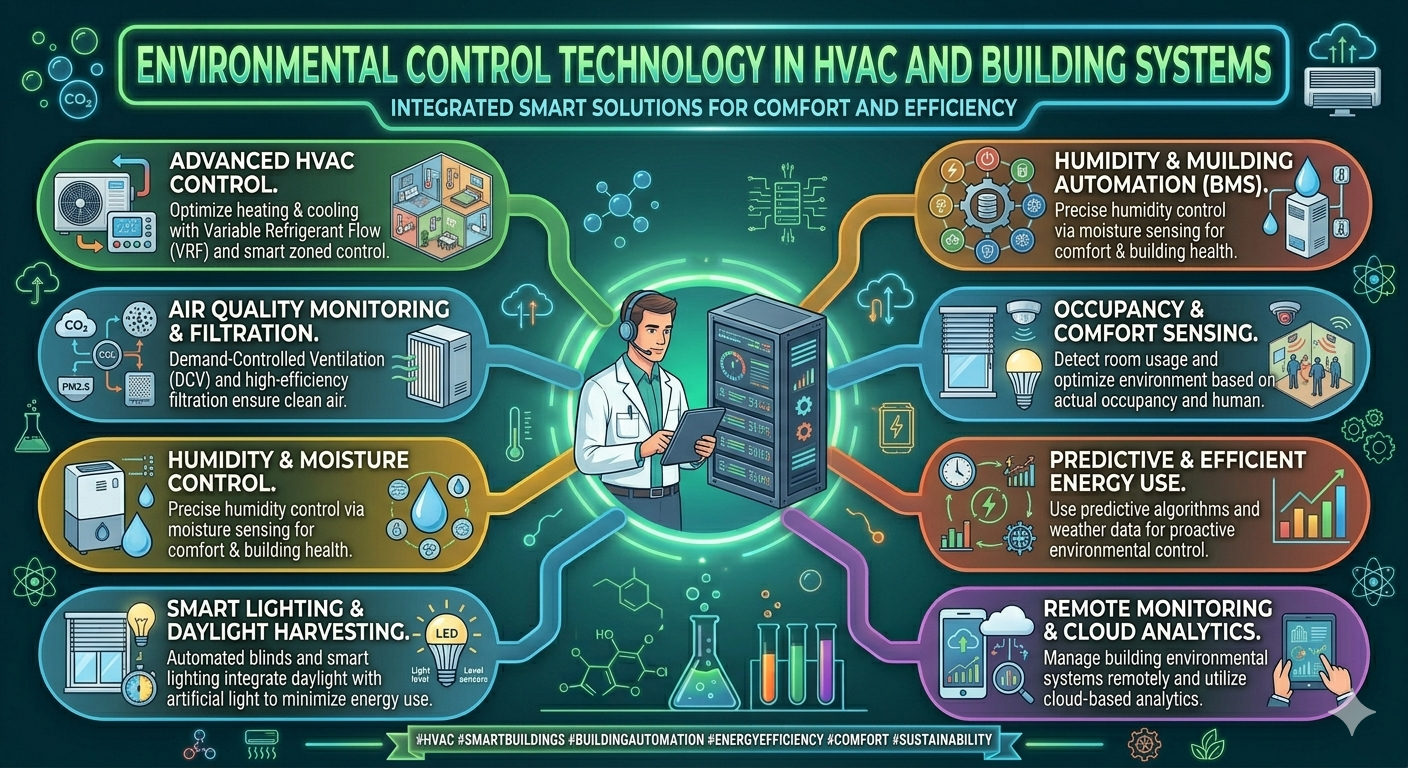
Environmental control technology refers to the integrated systems and processes used to maintain desired conditions within enclosed spaces. In the context of HVAC (Heating, Ventilation, and Air Conditioning), it goes beyond basic temperature control to manage a full range of environmental variables.
Key elements include:
- Temperature regulation (heating and cooling).
- Humidity control.
- Ventilation and fresh air introduction.
- Air filtration and purification.
- Pressure differentials (especially in critical environments like hospitals or labs).
- Monitoring and automation through sensors and building management systems (BMS).
This technology draws from mechanical engineering, electronics, controls, and data analytics to create responsive, efficient systems.
Core Components in HVAC Systems
Modern environmental control technology relies on several interconnected components:
Heating and Cooling Systems These form the foundation, using boilers, chillers, heat pumps, and variable refrigerant flow (VRF) systems. Heat pumps are gaining popularity for their efficiency and lower carbon impact.
Ventilation Systems Demand-controlled ventilation (DCV) uses CO₂ sensors to adjust fresh air intake based on occupancy, improving air quality while saving energy.
Air Distribution and Filtration Ductwork, variable air volume (VAV) boxes, and high-efficiency filters (including HEPA and activated carbon) ensure even distribution and removal of pollutants, allergens, and pathogens.
Controls and Automation Building automation systems (BAS) integrate sensors, actuators, and software for real-time adjustments. Direct digital controls (DDC) offer precise management far superior to older pneumatic systems.
Monitoring and Analytics IoT sensors feed data into cloud platforms for predictive maintenance and optimisation.
Applications Across Building Types
Commercial and Office Buildings Here, the focus is on comfort, productivity, and energy savings. Zoned systems and smart controls allow different areas to operate independently.
Healthcare Facilities Strict environmental control is essential. Isolation rooms, operating theatres, and laboratories require precise pressure, humidity, and filtration to prevent infection spread.
Industrial and Critical Environments Data centres, cleanrooms, and manufacturing plants use specialised environmental control units (ECUs) for tight tolerances on temperature, humidity, and particulates.
Residential and Educational Settings Simpler but increasingly smart systems focus on indoor air quality (IAQ) and energy efficiency, especially with rising awareness of health impacts.
Benefits of Advanced Environmental Control Technology
Energy Efficiency and Cost Savings Optimised systems can reduce HVAC energy consumption significantly often 20-40% through smart controls and right-sizing.
Improved Indoor Air Quality and Health Better filtration and ventilation reduce airborne contaminants, lowering risks of respiratory issues, allergies, and “sick building syndrome.”
Enhanced Occupant Comfort and Productivity Stable conditions improve concentration and reduce absenteeism in workplaces and schools.
Sustainability and Compliance Advanced systems support decarbonisation goals, help meet regulations like EPBD (Energy Performance of Buildings Directive), and contribute to certifications such as BREEAM or LEED.
Operational Resilience Predictive maintenance and real-time monitoring minimise downtime and extend equipment life.
Comparison of Traditional vs Modern Environmental Control Approaches
| Aspect | Traditional Systems | Modern Environmental Control Technology | Key Advantage of Modern Systems |
|---|---|---|---|
| Control Mechanism | Manual or basic thermostats | AI, IoT, and DDC automation | Real-time responsiveness |
| Energy Efficiency | Lower (fixed operation) | High (demand-based optimisation) | 20-40% potential savings |
| Air Quality Management | Basic filtration | Multi-stage + monitoring | Superior pollutant and pathogen control |
| Maintenance Approach | Reactive | Predictive analytics | Reduced downtime and costs |
| Integration | Limited | Full BMS and smart building platforms | Holistic building performance |
| User Experience | Static comfort levels | Personalised and adaptive zones | Higher satisfaction and productivity |
This comparison shows why investment in modern technology delivers strong long-term returns.
Emerging Trends in 2026 and Beyond
AI and Predictive Controls Agentic AI analyses occupancy, weather, and usage patterns to optimise systems proactively.
Electrification and Heat Pumps Shift away from gas heating toward efficient electric solutions supports net-zero goals.
Smart Sensors and Real-Time IAQ Monitoring Continuous tracking of CO₂, VOCs, particulates, and humidity enables dynamic responses.
Integration with Renewables Systems that seamlessly work with solar, battery storage, and demand-response programmes.
Personalised Environmental Control Micro-zoning and individual comfort systems enhance user experience in offices and homes.
Refrigerant Transition Phase-down of high-GWP HFCs drives adoption of lower-impact alternatives.
Implementation Considerations for Building Owners
Successful deployment requires careful planning:
- Conduct thorough energy audits and load calculations.
- Choose scalable, interoperable systems.
- Prioritise proper commissioning and ongoing maintenance.
- Train facility staff on new technologies.
- Consider total cost of ownership rather than just upfront price.
Integration with existing infrastructure often poses the biggest challenge, making modular and retrofit-friendly solutions particularly valuable.
Challenges in Environmental Control Technology
Despite advances, issues remain:
- High initial costs for comprehensive upgrades.
- Complexity of integrating legacy systems.
- Skills gaps in the workforce.
- Balancing energy efficiency with occupant comfort.
- Cybersecurity risks in connected systems.
Addressing these requires collaboration between manufacturers, installers, facility managers, and policymakers.
FAQ: Environmental Control Technology in HVAC and Building Systems
What is environmental control technology?
It refers to systems and technologies that manage indoor environmental conditions including temperature, humidity, air quality, and ventilation within buildings.
How does environmental control technology improve HVAC systems?
It adds intelligent automation, precise sensors, and data analytics to make HVAC more efficient, responsive, and effective at maintaining healthy indoor conditions.
Why is indoor air quality important in modern buildings?
Poor IAQ contributes to health issues and reduced productivity. Advanced environmental controls significantly improve air filtration and ventilation.
What are the main benefits of upgrading to modern environmental control systems?
Key benefits include lower energy costs, better comfort, improved sustainability, predictive maintenance, and compliance with green building standards.
How is AI changing environmental control technology?
AI enables predictive optimisation, real-time adjustments based on occupancy and weather, and more intelligent fault detection.
Are environmental control systems suitable for residential buildings?
Yes. While more advanced in commercial settings, smart thermostats, zoned systems, and IAQ monitors bring similar benefits to homes.
What trends should building owners watch in 2026?
Focus on electrification, AI-driven automation, tighter IAQ standards, and integration with renewable energy sources.
Conclusion
Environmental control technology in HVAC and building systems has evolved from basic heating and cooling into sophisticated, intelligent platforms that deliver comfort, efficiency, and sustainability. As energy costs rise and expectations for healthy buildings grow, investing in advanced solutions provides both immediate operational benefits and long-term strategic advantages.
Whether retrofitting an existing building or designing a new one, prioritising robust environmental controls is essential for future-proofing your property. Assess your current systems, consult qualified professionals, and explore how modern technology can transform your building’s performance. The buildings that thrive in the coming years will be those that master environmental control delivering healthier spaces while operating more efficiently and sustainably.