







Rapid urbanisation is putting unprecedented pressure on city infrastructure. Traffic congestion, road safety concerns, environmental impact, and inefficient road maintenance are major challenges for modern cities. Global traffic technologies provide the digital backbone for smart city development by enabling real-time monitoring, intelligent coordination, predictive analytics, and seamless communication between road users, authorities, and service providers.
These technologies are transforming how cities manage mobility, reduce disruptions, and improve quality of life. From emergency vehicle priority systems to cloud-based roadworks coordination platforms, global traffic technologies are essential for creating safer, more efficient, and sustainable urban environments in 2026 and beyond.
The Role of Global Traffic Technologies in Smart Cities
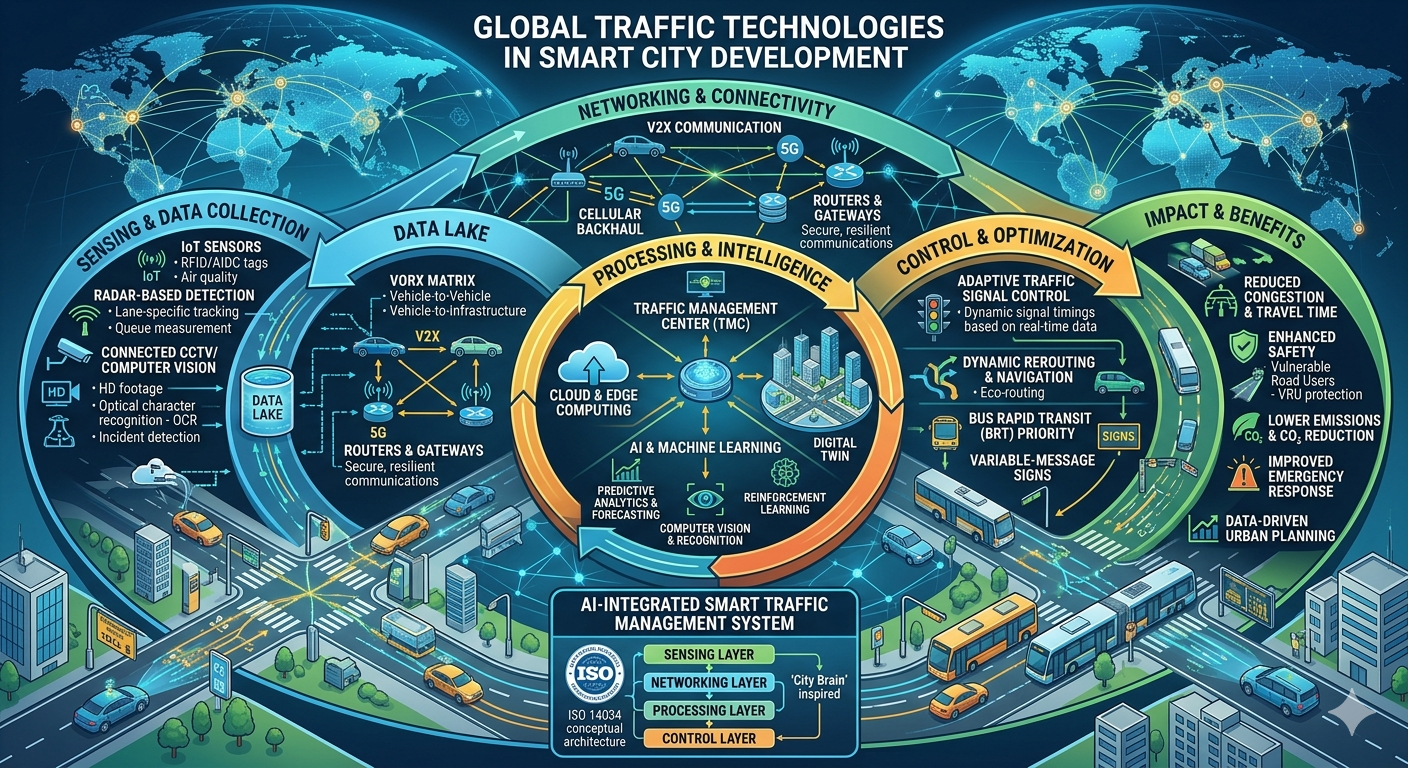
Global traffic technologies encompass a wide range of solutions including intelligent traffic management systems, connected vehicle infrastructure, data analytics platforms, and digital coordination tools. They integrate sensors, cameras, AI algorithms, cloud computing, and communication networks to create a responsive transportation ecosystem.
In smart cities, these technologies support goals such as reducing congestion, lowering emissions, enhancing public safety, and optimising infrastructure maintenance. They shift cities from reactive traffic management to proactive, data-driven decision-making.
Key applications include adaptive traffic signal control, real-time incident management, work zone coordination, emergency vehicle pre-emption, and public information systems.
Major Technologies and Platforms
Several leading solutions illustrate the impact of global traffic technologies:
Opticom Priority Control (Global Traffic Technologies / Miovision) Originally from Global Traffic Technologies (GTT), this system enables emergency vehicles, public transit, and authorised fleets to receive green lights at intersections. The technology has been installed at thousands of intersections worldwide, improving response times and safety while reducing congestion.
Causeway one.network Platform Causeway one.network is a leading cloud-based digital road management platform used extensively in the UK, US, and other regions. It allows highway authorities, utilities, and contractors to plan, coordinate, communicate, and analyse roadworks, events, and incidents in real time.
Key modules include:
- Traffic Management — For planning and coordinating interventions.
- Causeway Live / Live Link — Real-time public communication of road closures and disruptions.
- Integrated mapping and data sharing that feeds navigation apps.
This platform significantly reduces clashes between roadworks, improves public awareness, and supports better compliance with regulations such as D-TRO (Digital Traffic Regulation Orders).
Other notable technologies include AI-powered traffic prediction, vehicle-to-infrastructure (V2I) communication, and environmental sensors that adjust signals based on air quality or weather conditions.
Benefits for Smart City Development
Reduced Congestion and Emissions Smart coordination and predictive systems can cut journey times and idle emissions substantially. Studies suggest smart traffic management could deliver billions in economic savings globally.
Improved Road Safety Real-time alerts, priority systems for emergency services, and better work zone management reduce accidents and protect road workers.
Enhanced Public Information Platforms like Causeway Live answer common queries such as “what roads are closed near me” by pushing accurate, timely data to drivers via navigation apps and public dashboards.
Operational Efficiency Digital workflows replace manual processes, saving staff time and reducing administrative burden for local authorities.
Data-Driven Decision Making Rich analytics help cities plan infrastructure investments and optimise maintenance schedules.
Challenges and Considerations
Despite clear advantages, implementation faces hurdles:
- High initial investment and integration with legacy systems.
- Data privacy and cybersecurity concerns.
- Need for cross-agency collaboration.
- Digital divide and public adoption challenges.
- Ensuring technology complements rather than replaces human oversight.
Successful smart city projects require strong governance, stakeholder engagement, and phased deployment.
Comparison of Key Global Traffic Technology Platforms
| Platform / Solution | Primary Focus | Key Features | Best Suited For | Notable Strength |
|---|---|---|---|---|
| Opticom (GTT/Miovision) | Emergency & transit priority | Intersection pre-emption, monitoring | Cities with high emergency needs | Proven safety improvements |
| Causeway one.network | Roadworks & event coordination | Planning, Live Link, real-time updates | Highway authorities & contractors | Public communication & coordination |
| Adaptive AI Traffic Systems | Signal optimisation | Predictive analytics, dynamic control | Large metropolitan areas | Congestion reduction |
| V2X / Connected Vehicle Tech | Vehicle-infrastructure communication | Real-time alerts, automated priority | Future-ready smart cities | Enhanced safety & efficiency |
This table highlights how different solutions address specific aspects of traffic management in smart cities.
Global Traffic Technologies Careers and Jobs
The growth of smart mobility has created strong demand for global traffic technologies careers and global traffic technologies jobs. Roles range from traffic engineers and data analysts to software developers, project managers, and IoT specialists.
Common positions include:
- Traffic Signal Engineer
- Intelligent Transport Systems (ITS) Specialist
- Data Analyst (Mobility)
- Platform Implementation Consultant
- GIS and Mapping Specialist
Salaries are competitive, particularly for candidates with experience in AI, cloud platforms, and transportation planning. Reviews of companies in this sector often highlight innovative work, impact on communities, and opportunities for professional growth.
Implementation Examples and Best Practices
Cities successfully using these technologies demonstrate measurable improvements in traffic flow, reduced response times for emergency services, and higher public satisfaction. Best practices include starting with pilot projects, ensuring open data standards, and maintaining transparent communication with residents.
FAQ: Global Traffic Technologies in Smart City Development
What are global traffic technologies?
They are digital solutions, platforms, and systems used to monitor, manage, and optimise traffic flow, roadworks, and mobility in urban areas.
How does Causeway one.network support traffic management?
It provides a cloud platform for planning, coordinating, and communicating road interventions, with tools like Traffic Management and Live Link for real-time public updates.
What is the impact of global traffic technologies on smart cities?
They reduce congestion, improve safety, lower emissions, enhance public information, and increase operational efficiency for road authorities.
Are there good career opportunities in global traffic technologies?
Yes. Growing demand exists for engineers, data specialists, and project managers as cities invest in smart mobility solutions.
How can drivers find out what roads are closed near me?
Platforms like Causeway Live Link and integrated navigation services provide real-time updates on closures and disruptions.
What is Opticom technology?
A priority control system by Global Traffic Technologies that allows emergency vehicles and transit to receive green lights at equipped intersections.
Do these technologies replace human traffic management?
No. They augment human decision-making by providing better data, automation for routine tasks, and real-time coordination tools.
Conclusion
Global traffic technologies are fundamental to successful smart city development. They enable cities to move beyond traditional traffic management toward intelligent, responsive, and sustainable mobility systems. Solutions like Causeway one.network, Opticom, and AI-driven platforms are already delivering measurable benefits in congestion reduction, safety, and public satisfaction.
For city leaders, investing in these technologies is no longer optional but essential for managing urban growth effectively. For professionals, the field offers exciting global traffic technologies careers with real societal impact.