 11
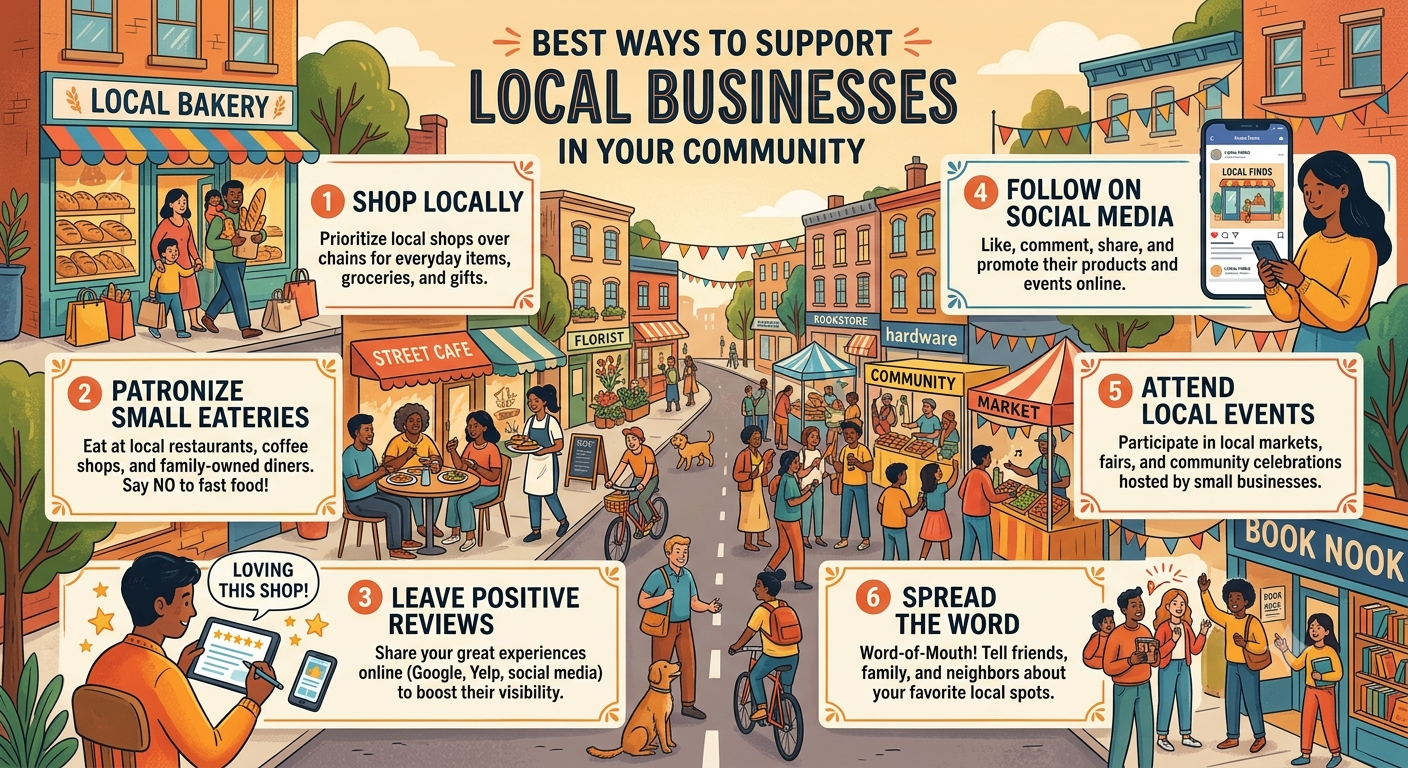
In an age dominated by multinational corporations and online giants, local businesses form the backbone of communities. They create jobs, foster unique character, and keep money circulating close to home. Supporting them isn’t just a nice gesture it’s an investment in economic resilience, cultural vibrancy, and neighborhood vitality. Exploring the best ways to support local businesses empowers individuals and families to make choices that strengthen their communities in meaningful, lasting ways.
This guide outlines practical, impactful strategies for everyday consumers, from shopping habits to advocacy. Whether you’re a busy professional or a community leader, these approaches deliver tangible benefits while building stronger local ecosystems.
Local businesses contribute disproportionately to job creation and tax bases compared to big chains. They respond quickly to community needs, offer personalized service, and often prioritize sustainability. When dollars stay local, they multiply through repeated circulation studies show this “local multiplier effect” can be two to four times stronger than spending at national chains.
During economic uncertainty or recovery periods, vibrant local scenes provide stability. They also reduce environmental impact through shorter supply chains. Choosing to support them consciously counters homogenization and preserves the unique flavors that make places feel like home.
The most direct way is shifting purchasing decisions. Make a conscious effort to browse independent stores first for everyday needs.
This habit builds relationships. Owners remember regular customers, often leading to better service and insider recommendations.
Food and hospitality sectors feel economic shifts acutely.
Social media shoutouts or honest reviews on platforms like Google also amplify visibility at no cost to the owner.
Technology makes finding and supporting nearby businesses easier.
These digital tools bridge awareness gaps, especially for newer residents or those with busy schedules.
Financial support isn’t the only currency. Time and expertise matter too.
This builds social capital and often leads to deeper community ties.
Amplification creates broader impact.
Word-of-mouth remains powerful personal recommendations carry more weight than advertisements.
| Method | Ease of Implementation | Economic Impact | Community Building | Long-Term Benefits |
|---|---|---|---|---|
| Regular Shopping | High | Direct & Immediate | Moderate | Sustained Revenue |
| Dining & Experiences | High | High | High | Cultural Preservation |
| Online Discovery Tools | Medium | Medium | Low | Increased Awareness |
| Volunteering Skills | Medium | Indirect | Very High | Relationship Building |
| Advocacy & Reviews | Low-Medium | High (Amplified) | High | Policy & Visibility Gains |
This comparison helps prioritize actions based on your time and resources.
These establishments create gathering spaces. Beyond dining, buy gift cards during slow seasons or suggest them for corporate events.
Bookstores, boutiques, and hardware stores offer curated selections. Ask owners for recommendations they often know their inventory deeply.
From mechanics to hair salons, loyalty here builds trust. Refer friends and leave detailed reviews highlighting exceptional service.
Artists, makers, and studios benefit enormously from commissions or studio visits. Attending open houses supports both the creator and the local arts scene.
Many cite higher prices or inconvenience as reasons to default to chains. Counter this by:
During inflation or tight budgets, focus on experiences or bulk buying from local producers where possible.
Consistent support creates virtuous cycles. Thriving businesses invest back locally, hire residents, and sponsor community programs. This resilience shows during downturns when national chains might pull out.
Diverse business ecosystems also foster innovation, as independents experiment more freely than corporate structures allow.
1. How does shopping local really help the economy?
Money spent locally recirculates multiple times through wages, supplier payments, and taxes, creating a stronger multiplier effect.
2. What if local options cost more?
Consider total value including service, uniqueness, and community benefit. Many independents match or beat prices on quality goods.
3. Are there easy ways to find local businesses?
Use maps filters, community directories, or “buy local” campaigns organized by chambers of commerce.
4. Can supporting local businesses help during economic challenges?
Yes they provide stability, quick adaptation, and retain character when larger entities retract.
5. How can I support local businesses without spending much?
Leave reviews, share on social media, volunteer time, or refer customers these cost nothing but have high impact.
6. What role do events play in supporting local businesses?
Festivals, markets, and pop-ups drive foot traffic and create memorable experiences that encourage repeat visits.
7. Is there a difference between supporting small vs. local businesses?
Local emphasizes geographic ties and community roots, while small focuses on scale ideally both overlap for maximum benefit.
The best ways to support local businesses in your community combine intentional spending, advocacy, and relationship-building. These actions strengthen economic foundations, preserve character, and create more vibrant, resilient neighborhoods.