


The first year of a baby’s life is a whirlwind of rapid growth motor skills emerge, senses sharpen, and tiny brains forge millions of connections daily. Choosing the right baby toys during this window isn’t just about keeping little ones entertained; it’s about supporting crucial development in cognition, fine motor control, sensory exploration, and even emotional bonding. In 2026, with parents increasingly focused on purposeful play, high-quality, safe toys that encourage active discovery stand out. From high-contrast mobiles for newborns to stacking rings for curious one-year-olds, the best baby toys blend fun with learning while prioritizing safety and durability.
This guide highlights 10 standout baby toys across key age stages, drawing from expert recommendations, parent-tested favorites, and developmental insights. We’ll cover how to choose baby toys, age-specific picks like baby toys 0-6 months and baby toys for 1 year old, plus practical tips on how to sanitize baby toys to keep everything safe and hygienic.
Why the Right Baby Toys Matter for Early Development
Babies learn through play every rattle shake teaches cause and effect, every grasp builds hand-eye coordination, and every texture explored refines sensory processing. The American Academy of Pediatrics (AAP) emphasizes selecting toys that match developmental stages, avoid small parts for choking risks, and promote open-ended interaction over passive screen-like features. In 2026, trends lean toward natural materials, Montessori baby toys that foster independence, and versatile items that grow with the child. Investing in a few thoughtful pieces yields long-term benefits: better problem-solving, stronger motor skills, and richer parent-child interactions.
How to Choose Baby Toys: Key Guidelines
Follow these practical steps to select safe, effective baby toys:
- Check age guidelines — Labels reflect safety (no small parts under 3 years) and developmental fit.
- Prioritize safety — Avoid toys with strings longer than 7 inches, loud noises over 85 decibels, or detachable small pieces. Look for non-toxic materials (BPA-free plastics, food-grade silicone, natural wood).
- Focus on development — Choose items that encourage grasping, rolling, stacking, or sensory input rather than battery-heavy lights/sounds alone.
- Opt for versatility — Toys that adapt (e.g., play gyms for tummy time then floor play) offer better value.
- Consider materials — Wood and fabric feel natural and durable; washable items simplify cleanup.
- Read reviews and certifications — Seek ASTM or CPSC compliance for U.S. safety standards.
These principles help avoid impulse buys and ensure every toy contributes meaningfully.
Top 10 Must-Have Baby Toys for Early Learning
Here are 10 proven picks, grouped by age but often overlapping for extended use.
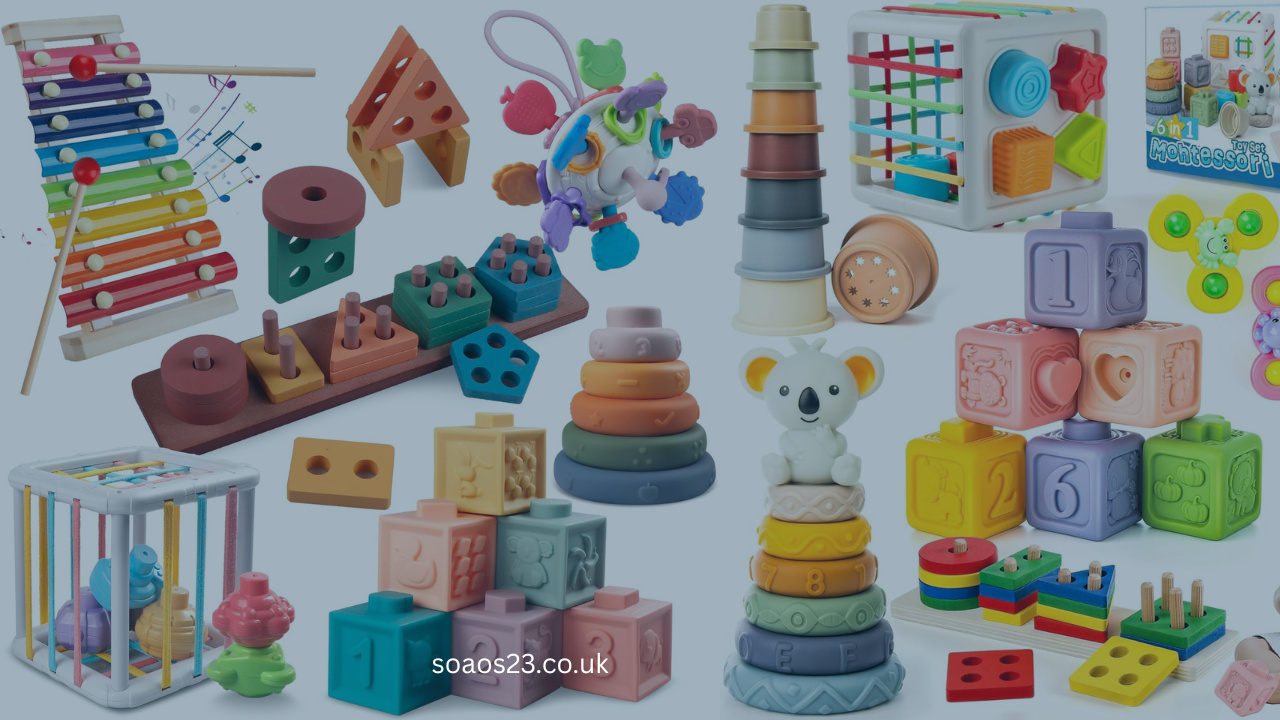
- Lovevery The Play Gym (Best for 0-12+ months) A versatile mat with hanging toys in high-contrast patterns, crinkly fabrics, and teething rings. Supports visual tracking, tummy time, and grasping. Parents praise its quality and how it “grows” with baby.
- Manhattan Toy Skwish Infant Rattle (Ideal for baby toys 0-6 months) Soft, squeezable geometric shape with gentle rattle sounds. Encourages grasping, hand transfer, and sensory exploration. A classic for newborns building fine motor skills.
- Sassy Developmental Bumpy Ball (Great for rolling and grasping, 3-9 months) Textured ball with bumps for easy grip. Promotes rolling, crawling motivation, and tactile learning. Affordable and durable.
- Melissa & Doug Flip Fish Soft Baby Toy (Top for 6+ months) Crinkly, flip-and-discover fish with mirrors and textures. Boosts cause-effect understanding and sensory play. Soft and machine-washable.
- Lovevery Montessori Baby Rolling Rattle (Classic Montessori baby toys for 0-6 months) Wooden or natural rattle that rolls and makes soft sounds. Encourages tracking, reaching, and intentional movement—pure Montessori simplicity.
- Essential Montessori Interlocking Discs (For baby toys 6 months+) Simple wooden discs that connect and stack. Builds fine motor precision, problem-solving, and bilateral coordination.
- Tobbles Neo (Excellent for baby toys for 1 year old) Wobbly stacking toy that challenges balance and persistence. Develops hand-eye coordination and cause-effect as pieces topple and rebuild.
- Fat Brain Toys Klickity (Innovative for 10-18 months) Click-clack sensory toy with moving parts. Sharpens fine motor skills, auditory feedback, and exploration.
- Whirly Squigz (Suction-cup spinners for high chairs/floors, 10+ months) Spinning suction toys that stick to surfaces. Encourages reaching, spinning, and cause-effect learning during meals or play.
- Oombee Cube (Soft, multi-texture cube for 6-18 months) Shapes inside a soft cube promote squeezing, poking, and discovery. Safe for teething and sensory play.
These selections draw from 2026 favorites like Lovevery, Fat Brain, and Melissa & Doug, emphasizing open-ended, developmental benefits.
Age-Specific Recommendations Table
| Age Range | Focus Areas | Top Recommended Toys | Key Benefits |
|---|---|---|---|
| Baby Toys 0-6 Months | Visual tracking, grasping, sensory | Lovevery Play Gym, Skwish Rattle, Rolling Rattle | High-contrast visuals, hand development |
| Baby Toys 6 Months | Rolling, sitting, cause-effect | Bumpy Ball, Flip Fish, Interlocking Discs | Motor skills, texture exploration |
| Baby Toys for 1 Year Old | Stacking, problem-solving, balance | Tobbles Neo, Klickity, Whirly Squigz | Persistence, coordination, independence |
Montessori Baby Toys: A Deeper Look
Montessori baby toys emphasize natural materials, simplicity, and child-led exploration. Items like wooden rattles, stacking discs, and mobiles avoid overstimulation, letting babies focus on real discovery. Brands like Lovevery and Essential Montessori lead in 2026, offering age-specific kits that align with sensitive periods for skill-building. Parents report calmer, more engaged play compared to flashy electronic toys.
How to Sanitize Baby Toys Safely
Babies explore with mouths, so regular cleaning is essential. Follow these safe methods:
- Hard plastic/wood toys — Wash with warm soapy water, rinse thoroughly. For disinfection, use a diluted bleach solution (1 tablespoon bleach per gallon water), soak 6 minutes, rinse, and air dry. Or wipe with vinegar-water mix.
- Soft/fabric toys — Machine wash on gentle/hot cycle with baby-safe detergent; air dry or tumble low. For non-washable plush, spot-clean or use laundry sanitizer spray.
- Teethers/silicone — Boil for 5 minutes or dishwasher top rack.
- Battery toys — Wipe with soapy cloth; avoid submerging.
- Frequency — Clean weekly or after illness/drool sessions. Always air dry completely to prevent mold.
Use EPA-registered disinfectants sparingly; soap and water often suffice for routine care.
FAQ Section
What are the best baby toys for early learning?
Versatile, open-ended items like play gyms, rattles, and stacking toys support motor skills, sensory development, and cause-effect understanding without overwhelming babies.
How do I choose baby toys safely?
Follow AAP guidelines: match age labels, avoid small parts/strings, choose non-toxic materials, and prioritize developmental benefits over flashy features.
What are good baby toys 0-6 months?
High-contrast mobiles, soft rattles like Skwish, and textured balls encourage visual tracking, grasping, and tummy time.
Which baby toys for 1 year old promote development?
Stacking toys like Tobbles Neo, suction spinners, and sensory cubes build coordination, problem-solving, and independence.
Are Montessori baby toys worth it?
Yes, they use natural materials and simple designs to foster focused, independent play, often leading to longer engagement and skill growth.
How often should I sanitize baby toys?
Weekly for regular use; immediately after illness or heavy mouthing. Soap and water handle most cleaning; disinfect as needed.
What materials are safest for baby toys?
BPA-free plastic, food-grade silicone, natural wood, and washable fabrics. Avoid cheap plastics with strong odors.
Conclusion
The best baby toys do more than entertain they lay foundations for lifelong learning through purposeful play. From sensory-rich baby toys 0-6 months to challenging baby toys for 1 year old, these 10 picks offer safe, engaging ways to support growth. Prioritize quality, follow how to choose baby toys guidelines, and keep them clean with proper how to sanitize baby toys routines.