









In today’s financial landscape, finding flexible and affordable borrowing options matters more than ever. Unexpected expenses, credit building, or bridging cashflow gaps can challenge many people. Credit Spring has emerged as an alternative lender in the UK, offering a membership-based model that differs significantly from conventional borrowing. Understanding how it stacks up against traditional lenders helps consumers make informed choices.
This comparison explores Credit Spring loans, features, costs, eligibility, and real-user experiences. We’ll break down pros, cons, and scenarios where one option might suit better than the other, providing clear insights for anyone considering short-term or flexible credit.
What Is Credit Spring?
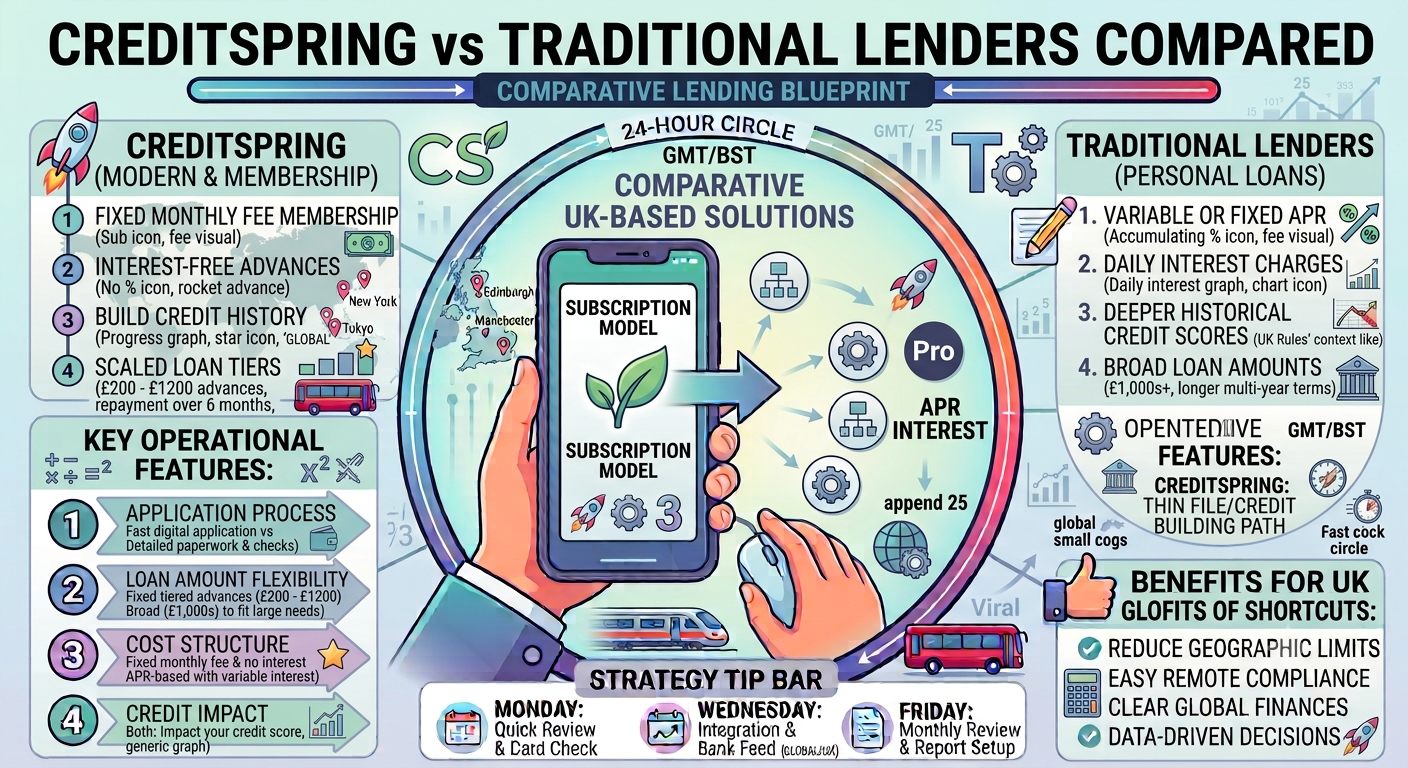
Credit Spring operates on a subscription-style membership rather than traditional interest-charging loans. Members pay a fixed monthly fee for access to credit lines they can draw upon multiple times per year, often without additional interest. This structure aims to provide predictability and avoid the compounding costs common in payday or high-interest loans.
Key products include plans like the £2,400 membership, allowing access to up to £2,400 annually through multiple loans (e.g., two £1,200 draws). There’s also a “Go” option for credit building at a lower monthly fee. The model emphasizes transparency with one simple fee and no hidden surprises.
How Traditional Lenders Work
Traditional lenders high street banks, building societies, and established finance companies typically offer personal loans, credit cards, or overdrafts with fixed or variable interest rates. Approval depends heavily on credit scores, income verification, and debt-to-income ratios. Repayments include principal plus interest, with terms ranging from months to years.
These lenders often provide larger loan amounts and longer repayment periods but can involve more stringent checks and potential fees for late payments or early settlement.
Key Differences: Credit Spring vs Traditional Lenders
Eligibility and Accessibility: Credit Spring may appeal to those with thinner credit files or rebuilding credit, using a more holistic assessment. Traditional lenders usually require stronger credit histories for the best rates.
Cost Structure: Credit Spring charges a fixed membership fee instead of interest, making costs predictable. Traditional loans have APRs that can add substantial expense over time, especially on longer terms or for lower credit scores.
Flexibility: With Credit Spring loans, members can borrow, repay, and re-borrow within limits annually. Traditional loans are often one-time disbursements with fixed schedules.
Speed and Convenience: Online applications and quick decisions are common for both, but Credit Spring’s app and portal streamline ongoing access.
Credit Spring Login and App: Users manage accounts via the Credit Spring app or web portal for draws, repayments, and tracking. Traditional lenders offer apps too, but experiences vary by institution.
Pros and Cons Comparison
Credit Spring Advantages:
- Predictable fixed fees.
- Potential for multiple draws per year.
- Focus on credit building support.
- Simpler for smaller, flexible needs.
Traditional Lenders Advantages:
- Potentially lower long-term costs for excellent credit.
- Larger borrowing amounts.
- Established reputation and regulatory oversight.
- Broader product range (mortgages, etc.).
Potential Drawbacks:
- Membership fees mean ongoing costs even if not borrowing.
- Limits on total annual credit.
- Newer model may have fewer long-term reviews.
Loans Like Credit Spring: Alternatives to Consider
If Credit Spring doesn’t fit, look at loans like Credit Spring from other fintechs or credit unions offering fee-based or guarantor options. Payday lenders differ sharply with high interest, while banks suit those qualifying for low APRs. Always compare total repayable amounts.
Deep Dive into User Experiences and Reviews
Credit Spring reviews are mixed but often highlight ease of use and transparency. Many appreciate the lack of interest and support for credit rebuilding. Some note the membership fee as a commitment worth evaluating against usage needs. Customer service via live chat or phone receives positive mentions for responsiveness.
Traditional lender reviews frequently cite bureaucracy or rate variations based on credit scores. Credit Spring contact number (020 3870 3332, Mon-Fri 9am-5pm) and help centre provide direct support.
Credit Spring 3rd Loan and Borrowing Limits
Policies on additional draws, such as a Credit Spring 3rd loan, depend on membership tier and repayment history. Members should check terms, as exceeding standard limits may require contacting support or upgrading plans. This flexibility sets it apart from one-off traditional loans.
Comparison Table: Credit Spring vs Traditional Lenders
| Aspect | Credit Spring | Traditional Lenders |
|---|---|---|
| Cost Model | Fixed monthly membership fee | Interest-based APR |
| Borrowing Flexibility | Multiple draws within annual limit | Usually single disbursement |
| Eligibility Focus | Credit building, holistic assessment | Strong credit score emphasis |
| Loan Amounts | Up to £2,400+ depending on plan | Varies widely, often higher |
| Application Process | Online, quick via app/portal | Online or branch, credit checks |
| Customer Support | Live chat, phone (020 3870 3332) | Varies by bank |
| Best For | Short-term, repeatable needs | Larger, longer-term borrowing |
Practical Tips for Choosing Between Options
Assess your credit score, borrowing purpose, and repayment capacity. Use eligibility checkers without hard searches. Calculate total costs over time fixed fees vs. interest. Read full terms, including Credit Spring reviews from independent sources.
For those with variable income, Credit Spring’s model may offer breathing room. Prime borrowers might secure better deals traditionally.
FAQ Section
1. What is Credit Spring?
Credit Spring provides membership-based access to credit with fixed fees instead of traditional interest.
2. How does Credit Spring login work?
Access your account via the Credit Spring app or website portal using registered details for managing loans and repayments.
3. Are Credit Spring loans expensive?
Costs are fixed and transparent. Compare total fees against your usage versus interest on traditional loans.
4. What are loans like Credit Spring?
Other flexible or fee-based lenders and credit-building products from fintech providers.
5. How to contact Credit Spring?
Use the Credit Spring contact number 020 3870 3332 (business hours) or live chat via the account portal.
6. Is there a Credit Spring app?
Yes, the Credit Spring app allows convenient account management and borrowing.
7. Can I get a Credit Spring 3rd loan?
Availability depends on your membership and history contact support for details on additional draws.
Conclusion
Credit Spring vs traditional lenders ultimately comes down to your financial situation, credit needs, and preference for predictability versus potentially lower rates. Credit Spring shines for flexible, smaller-scale borrowing with credit support, while traditional options suit larger, longer commitments for strong-credit borrowers.