






The Silkfred retailer administration dashboard was the essential backend tool for independent fashion brands selling on the Silkfred marketplace. It empowered retailers and boutique owners to manage their online presence, inventory, orders, and performance metrics within a platform dedicated to unique, affordable women’s fashion from independent designers.
As Silkfred grew to feature hundreds of brands and attract millions of customers, its retailer administration tools became critical for success in a competitive e-commerce landscape. This article provides a comprehensive breakdown of the Silkfred retailer administration dashboard, its key features, benefits, and practical usage tips. Whether you’re a current or former brand partner, or exploring similar marketplace platforms, understanding this dashboard offers valuable insights into efficient multi-brand retail management.
What Is Silkfred and Its Retailer Administration System?
Silkfred was a London-based online fashion marketplace founded in 2011, specializing in connecting independent women’s fashion brands with shoppers seeking distinctive styles not found on the high street. At its peak, it hosted over 500 brands, leveraging AI-driven personalization (including the ‘Fred’ recommendation tool) to enhance customer experiences.
The Silkfred retailer administration dashboard (often accessed via brand portals or seller logins) served as the central hub for brands. Unlike generic e-commerce backends, it was tailored for marketplace sellers, handling product listings across a shared platform while maintaining brand autonomy in visuals and inventory. Brands used it to upload products, track sales, manage fulfillment, and analyze performance without building their own full e-commerce infrastructure.
This dashboard was particularly important because it allowed smaller independent retailers to compete with larger players by providing access to Silkfred’s traffic, AI recommendations, and global shipping capabilities.
Key Features of the Silkfred Retailer Administration Dashboard
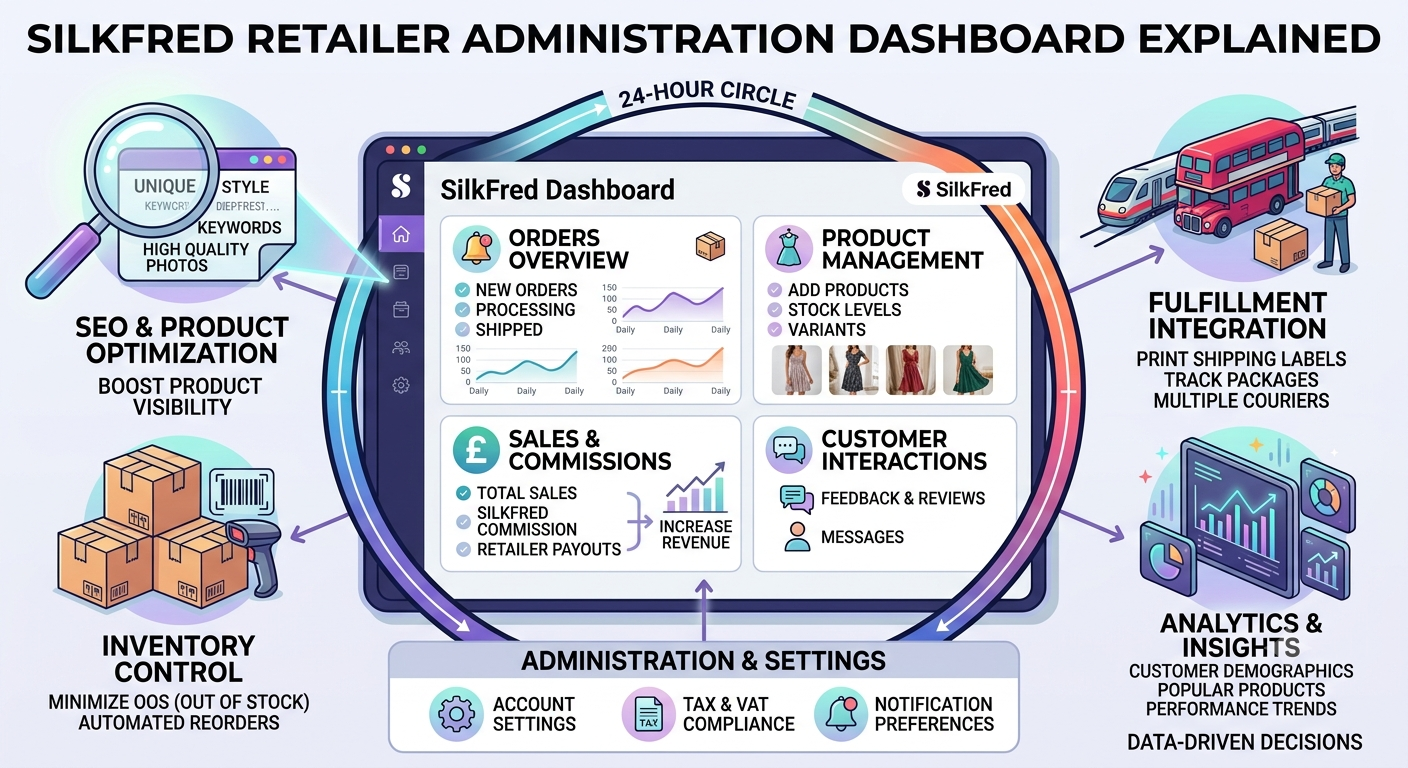
The Silkfred retailer administration dashboard combined simplicity with powerful tools. Here’s a detailed look at its core components:
1. Product Management and Catalog Upload
Brands could easily upload and manage their entire catalog. Features typically included:
- Bulk product uploads via CSV or integrated tools.
- Detailed fields for descriptions, sizing, materials, and high-quality images.
- Category and tag management optimized for Silkfred’s fashion-focused search and filters (dresses, tops, occasion wear, etc.).
- Inventory synchronization to prevent overselling.
This section helped maintain consistency across the marketplace while allowing brands to highlight unique selling points.
2. Order Management and Fulfillment
A dedicated orders section let retailers:
- View real-time orders from Silkfred customers.
- Process shipments and update tracking information.
- Handle returns and refunds according to platform policies.
- Access customer details for personalization (while respecting privacy rules).
Integration with shipping partners streamlined logistics for brands that might otherwise struggle with fulfillment at scale.
3. Analytics and Performance Insights
Data-driven decision-making was a strength. The dashboard provided:
- Sales reports by product, time period, and customer demographics.
- Traffic sources and conversion metrics.
- AI-powered insights on trending items or underperforming SKUs.
- Commission and payout summaries (Silkfred took a percentage per sale).
These analytics helped brands optimize pricing, stock levels, and marketing efforts within the platform.
4. Brand Profile and Marketing Tools
Retailers could customize their brand storefront within Silkfred:
- Update logos, banners, and about sections.
- Manage promotional campaigns or featured collections.
- Access styling tips integration or collaboration opportunities with Silkfred’s content team.
This fostered brand visibility and storytelling, key for independent fashion labels.
5. Account and Financial Settings
Secure sections for:
- Payment details and payout schedules.
- Tax and compliance documentation.
- User permissions for team members (e.g., granting access to inventory managers).
Comparison Table: Silkfred Retailer Dashboard vs. Typical Marketplace Tools
| Feature | Silkfred Retailer Admin | Generic Platforms (e.g., Shopify, Etsy) |
|---|---|---|
| Product Upload | Bulk + Fashion-specific fields | General e-commerce tools |
| AI Insights | Built-in personalization data | Often requires add-ons |
| Order Fulfillment | Marketplace-integrated | Self-managed or third-party |
| Analytics Depth | Sales + Marketplace traffic | Store-only metrics |
| Brand Customization | Strong visual storefront tools | Varies widely |
| Commission Handling | Automated deductions | Seller-set pricing |
| Support for Independents | Tailored for boutiques | Broad appeal |
This table highlights why the Silkfred system felt purpose-built for fashion retailers.
Benefits of Using the Silkfred Retailer Administration Dashboard
Efficiency for Small Brands: Independent retailers saved time and resources by avoiding the need for a standalone website. The dashboard centralized operations, allowing focus on design and sourcing rather than tech maintenance.
Scalability: As brands grew on Silkfred, the admin tools scaled with them handling increased order volumes and providing deeper insights without additional software costs.
Data-Driven Growth: Access to aggregated marketplace data helped brands spot trends faster than operating in isolation. For example, seeing which colors or styles performed well across Silkfred could inform future collections.
Community and Support: Many brands benefited from Silkfred’s induction sessions and admin support, creating a network effect for independent fashion.
Cost-Effectiveness: By leveraging Silkfred’s existing customer base and marketing, retailers reduced customer acquisition costs significantly compared to solo e-commerce.
How to Navigate and Maximize the Silkfred Retailer Administration Dashboard
- Login and Setup: Brands typically accessed the dashboard through a dedicated brand portal link provided upon partnership. Initial setup involved verifying business details and uploading initial inventory.
- Daily Routines:
- Check the orders tab first thing.
- Review analytics for performance trends.
- Update stock levels to avoid backorders.
- Advanced Tips:
- Use high-resolution images and detailed descriptions to boost visibility in Silkfred’s AI recommendations.
- Monitor competitor activity indirectly through category performance.
- Integrate with accounting software for seamless financial tracking.
- Leverage promotional tools during peak seasons like holidays or sales events.
Consistent use of the dashboard often correlated with higher sales velocity on the platform.
Challenges and Best Practices for Silkfred Retailers
While powerful, the dashboard required proactive management. Common challenges included:
- Adapting to platform-specific rules (e.g., commission rates, return policies).
- Managing inventory across multiple channels if selling elsewhere.
- Keeping up with platform updates or AI algorithm changes.
Best Practices:
- Regularly audit product listings for accuracy.
- Engage with Silkfred’s team for feedback on performance.
- Diversify marketing efforts beyond the marketplace.
- Maintain excellent customer service to build positive reviews.
These strategies helped many independent brands thrive on Silkfred before its challenges in 2025.
The Evolution and Current Status of Silkfred
Silkfred demonstrated strong growth in its early years, hitting milestones like two million customers and leveraging AI for personalization. However, like many independent online retailers, it faced headwinds from economic pressures, competition, and shifting consumer habits, leading to administration in late 2025.
Administrators allowed temporary access for brands to retrieve inventory and order data, underscoring the importance of the retailer administration tools even during transition.
For brands seeking similar opportunities today, platforms emphasizing independent fashion and robust seller dashboards remain valuable alternatives.
FAQ: Common Questions About Silkfred Retailer Administration Dashboard
1. What was the Silkfred retailer administration dashboard used for?
It was the backend portal for brands to manage products, orders, inventory, analytics, and brand profiles on the Silkfred marketplace.
2. How did brands access the Silkfred seller dashboard?
Partners received login credentials to a dedicated brand admin area, often linked from silkfred.com/brand_app or similar portals.
3. Did the Silkfred dashboard include AI features for sellers?
While customer-facing AI (like ‘Fred’) was prominent, the retailer side offered performance insights derived from platform data.
4. What happened to brand data after Silkfred entered administration?
Administrators facilitated limited access for data retrieval related to inventory and orders.
5. Is the Silkfred retailer administration dashboard still available?
As of late 2025, the platform ceased active trading, so new access is unavailable. Historical users may have retained exported data.
6. How did commissions work in the Silkfred admin?
The dashboard typically displayed automated commission deductions and net payouts for transparency.
7. Are there alternatives to Silkfred for independent fashion brands?
Yes, platforms like Not On The High Street, Etsy (fashion section), or dedicated marketplaces with strong seller dashboards offer similar opportunities.
Conclusion
The Silkfred retailer administration dashboard exemplified how technology can empower independent fashion brands in a crowded market. By providing intuitive tools for product management, order fulfillment, analytics, and more, it helped hundreds of boutiques reach wider audiences and grow sustainably.
Though the platform’s journey has paused, the lessons from its retailer tools emphasizing data, efficiency, and brand storytelling remain relevant for today’s e-commerce landscape. If you’re a fashion retailer exploring marketplaces, prioritize platforms with robust admin dashboards that align with your operational needs.