 11
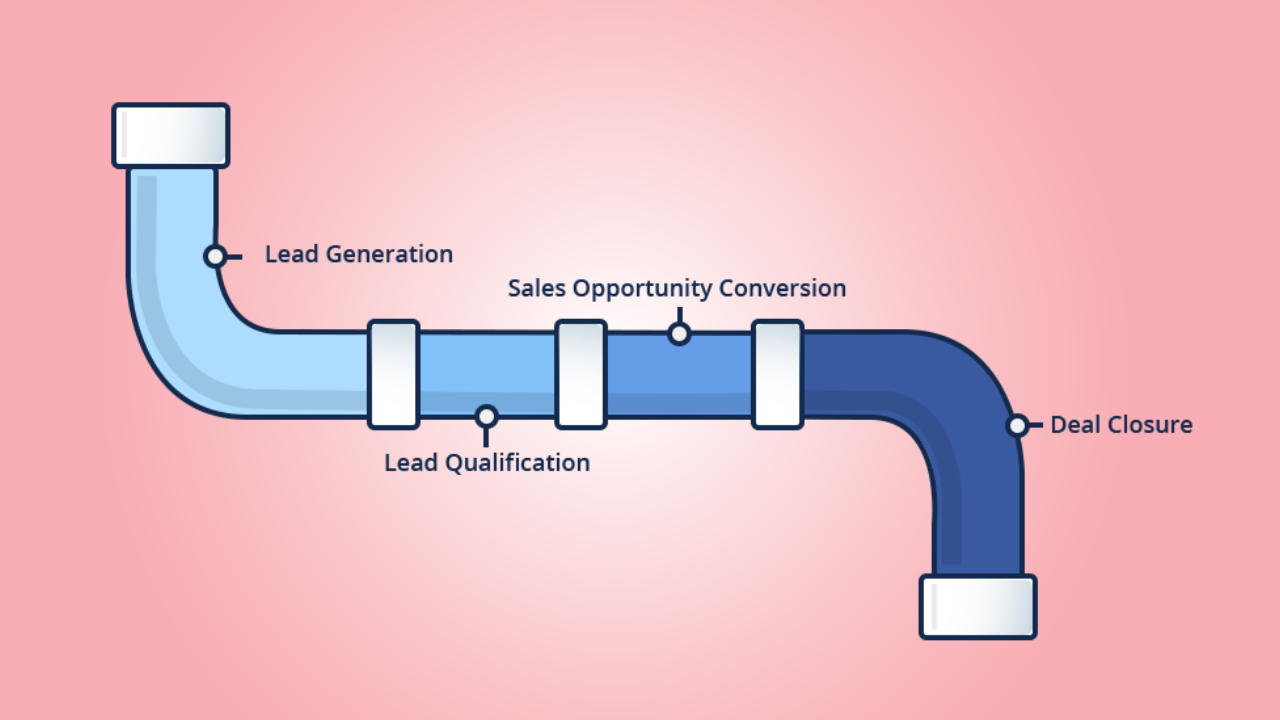
In today’s competitive business landscape, generating leads is just the beginning turning them into paying customers is where the real challenge lies. A well-structured lead pipeline serves as the backbone of any successful sales strategy, guiding potential customers from initial awareness to closed deals. But what exactly does lead pipeline meaning entail? At its core, it’s a systematic process for tracking and nurturing prospects through various lead pipeline stages, ensuring nothing falls through the cracks.
Why does this matter now more than ever? With digital channels overwhelming sales teams, businesses that ignore pipeline optimization risk losing up to 79% of leads due to poor follow-up, according to industry benchmarks. Building a high-converting lead pipeline not only boosts revenue predictability but also empowers teams to focus on high-value activities. In this guide, we’ll break down everything from foundational concepts to actionable steps, drawing on proven tactics to help you create a lead pipeline that drives results. Whether you’re a startup or scaling enterprise, mastering this will transform your sales game.
Before diving into construction, let’s clarify the basics. A lead pipeline is a visual and organized framework that maps out the journey of potential customers (leads) from first contact to conversion. Unlike scattered email lists or ad campaigns, it provides a clear snapshot of where each lead stands, allowing sales reps to prioritize efforts and forecast revenue accurately.
The lead pipeline meaning extends beyond mere tracking it’s a strategic tool for alignment between marketing and sales. Leads enter at the top (often unqualified prospects) and progress through defined stages based on their readiness to buy. This contrasts with ad-hoc lead management, where opportunities stagnate and teams chase ghosts.
In practice, a lead pipeline integrates with customer relationship management (CRM) systems to automate workflows, score leads, and trigger personalized outreach. For instance, tools like HubSpot’s lead pipeline HubSpot features allow seamless stage progression, from lead capture to qualification. Without it, sales cycles drag on, conversion rates plummet, and revenue becomes unpredictable. By centralizing efforts, businesses report up to 28% higher close rates.
A common point of confusion is the distinction between a lead pipeline and a sales pipeline. While they overlap, understanding their nuances is crucial for effective pipeline management.
A lead pipeline focuses on the early-to-mid stages: capturing, qualifying, and nurturing raw leads before they become viable opportunities. It’s marketing-heavy, emphasizing volume and engagement to build a healthy pool of prospects. On the flip side, a sales pipeline zooms in on revenue-generating deals qualified opportunities moving toward closure. It’s sales-oriented, tracking negotiations, proposals, and wins.
To illustrate, here’s a comparison table highlighting the core differences:
| Aspect | Lead Pipeline | Sales Pipeline |
|---|---|---|
| Focus | Lead generation and qualification | Deal progression and closure |
| Key Activities | Content marketing, email nurturing, scoring | Demos, proposals, negotiations |
| Typical Stages | Awareness, interest, consideration | Qualification, proposal, negotiation, close |
| Team Ownership | Primarily marketing | Primarily sales |
| Metrics | Lead volume, conversion to MQL/SQL | Win rate, deal velocity, revenue forecast |
| Tools | Landing pages, automation software | CRM deal boards, forecasting tools |
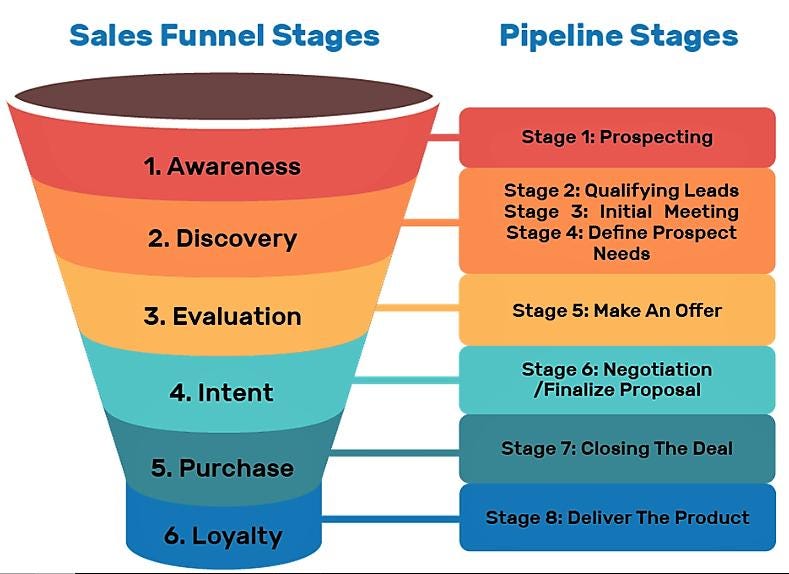
No lead pipeline thrives without clearly defined lead pipeline stages. These act as checkpoints, ensuring leads advance logically while allowing for data-driven tweaks. While the exact number varies by industry, most experts outline 4-7 core stages. Addressing the query “What are the 4 pipeline stages?”, a simplified model includes: Prospecting, Qualification, Nurturing, and Conversion. But for a high-converting setup, expand to seven for granularity.
Here’s a breakdown of the seven essential lead pipeline stages, inspired by frameworks from Salesforce and Pipedrive:
Visualizing these in a CRM dashboard prevents stage stagnation, where leads linger for weeks. For B2B, stages might extend to include “Referral” for long-term plays. Customize based on your average sales cycle shorter for SaaS, longer for enterprise.
Building a lead pipeline doesn’t require a massive budget, just a methodical approach. Follow these step-by-step instructions to craft one tailored to your business, answering “How to create a lead pipeline?” comprehensively.
Start with who, not how. Outline demographics, pain points, and behaviors. Example: For a SaaS tool, target mid-market CTOs facing scalability issues. This sharpens focus, reducing wasted efforts by 30%. Use surveys or analytics tools to refine.
Identify channels: Organic search, LinkedIn, webinars, or partnerships. Diversify relying on one source risks 40% pipeline volatility. Integrate forms on your site for seamless capture.
Choose a pipeline in CRM like HubSpot or Pipedrive. Create custom lead pipeline stages as boards or kanban views. HubSpot’s lead pipeline HubSpot shines here with drag-and-drop automation. Pro tip: Assign probabilities to stages (e.g., 10% at prospecting, 80% at proposal) for accurate forecasting.
Score leads on engagement (e.g., +5 for email opens). Automate progression e.g., nurture unqualified leads with targeted content. This scales efforts without burnout.
Run campaigns: SEO-optimized blogs, PPC ads, or guest posts. Track ROI with UTM parameters. Insight: Content-led generation yields 3x more leads than outbound cold calls.
Use pipeline management dashboards to spot drops (e.g., 20% qualification leak?). A/B test emails or stages quarterly. Tools like Google Analytics integrate for holistic views.
By month three, expect a 15-25% uplift in qualified leads if executed consistently. Remember, iteration is key treat your lead pipeline as a living entity.
Effective pipeline management is the engine of conversion, especially within a pipeline in CRM. CRMs like Salesforce or Zoho turn raw data into actionable intelligence, automating tedious tasks and surfacing insights.
Core practices include:
For software enthusiasts, note the parallel in ” pipeline in software ” development, where CI/CD pipelines automate code deployment much like CRMs automate lead flow. Visit Pipeline CRM (www.pipeline) for a dedicated sales tool. In HubSpot, leverage lead pipeline HubSpot automations to trigger stage-based emails, reducing manual work by 50%.
The rise of AI tools like ChatGPT has sparked curiosity: “Can ChatGPT generate leads?” Absolutely it’s a game-changer for efficiency, though not a silver bullet.
ChatGPT excels at:
Case in point: B2B firms using ChatGPT for cold email sequences report 2x lead volume. Prompt example: “Generate 10 tailored icebreakers for CTOs in fintech struggling with compliance.” However, pair it with human oversight AI lacks nuance in objections. Integrate via Zapier into your CRM for seamless lead pipeline flow. For more, check Podium’s guide on ChatGPT lead gen.
To elevate your setup:
Deep insight: Top performers audit pipelines monthly, adjusting for seasonality. This proactive stance turns a good lead pipeline into a revenue machine.
A lead pipeline is a structured process for managing prospects from initial contact to sale, visualized in stages to track progress and prioritize efforts.
Define your ICP, select a CRM, map stages, implement scoring, launch generation tactics, and optimize via analytics—start small and iterate.
Yes, ChatGPT can assist by creating content, researching prospects, and automating outreach, but combine it with human strategy for best results.
The core four are: Prospecting (lead gen), Qualification (fit assessment), Nurturing (engagement), and Conversion (closing).
It refers to the organized flow of potential customers through sales stages, optimizing for higher conversions and revenue predictability.
Lead pipeline handles early nurturing; sales pipeline focuses on closing qualified deals together, they form a complete funnel.
This involves tracking, analyzing, and optimizing lead flow in a CRM to shorten cycles and boost close rates.
Mastering a lead pipeline from scratch unlocks predictable growth, bridging the gap between leads and revenue. From defining stages to leveraging AI like ChatGPT, the key is consistency and data-driven refinement. Your business deserves a pipeline that converts not just collects.