







In the competitive UK business landscape, your name is often one of your most valuable assets. It builds recognition, trust, and customer loyalty. However, without proper protection, someone else could use a similar name, causing confusion, lost sales, or even damaging your reputation. This raises a common question for entrepreneurs, creatives, and small business owners: should I trademark my business name UK for legal protection?
The short answer is that it is not legally required, but it often makes strong business sense, especially if you plan to grow, sell online, or build long-term brand value. This guide explores the benefits, costs, process, and considerations to help you decide confidently in 2026.
Why Trademark Protection Matters for UK Businesses
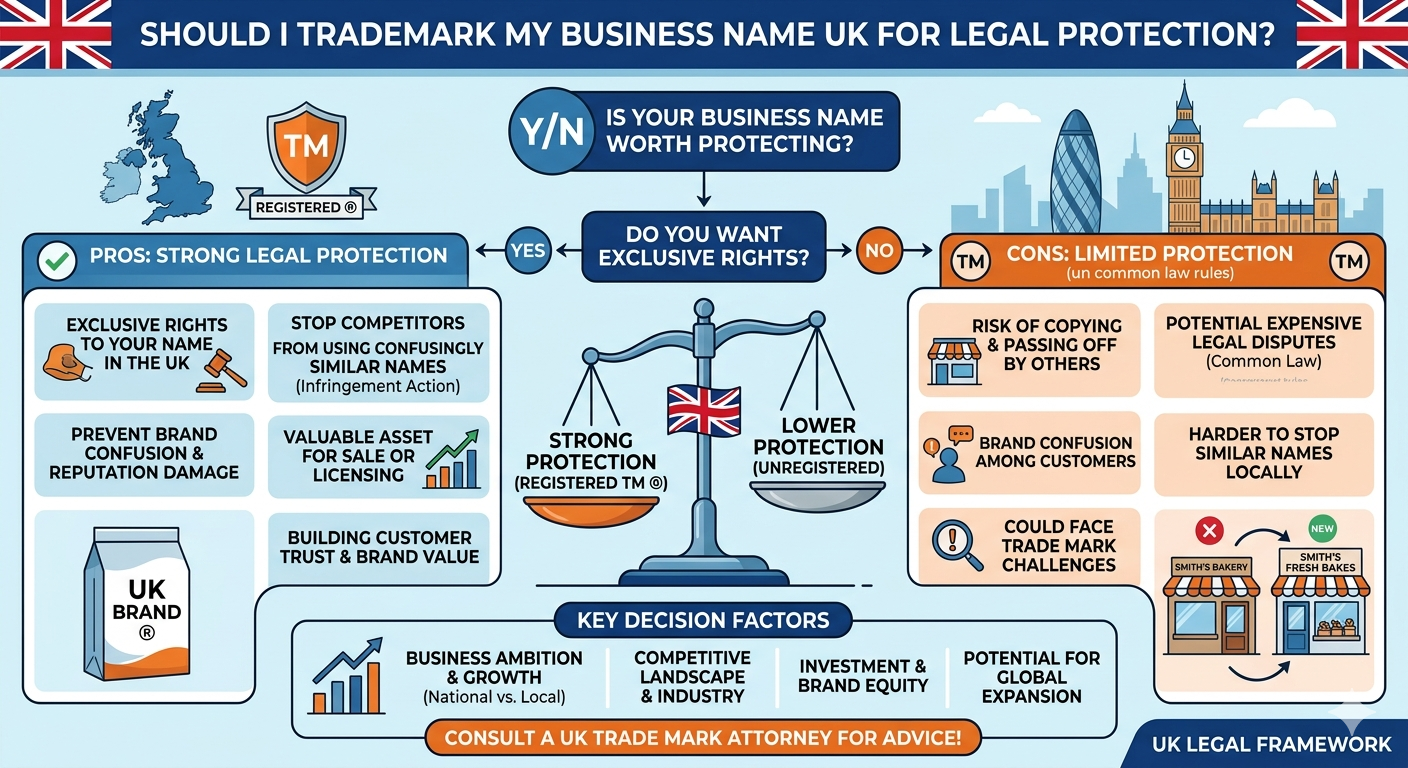
Registering a trademark with the UK Intellectual Property Office (UKIPO) gives you exclusive legal rights to use your name (or logo, slogan, etc.) in connection with specific goods or services. Without registration, you rely on common law rights, which are harder and more expensive to enforce.
Key advantages include:
- The ability to take legal action against infringers.
- Use of the ® symbol to deter copycats.
- Easier licensing, franchising, or selling the business.
- Stronger position in disputes or when seeking investment.
For e-commerce sellers, artists, bands, or service providers operating nationally, protection prevents others from riding on your marketing efforts.
Do You Need to Trademark a Business Name?
Do you need to trademark a business name? No, it is not mandatory. You can operate using an unregistered name, and basic company registration at Companies House offers some protection against identical names in the same legal structure. However, this does not stop others from using similar trading names.
Unregistered names rely on “passing off” claims in court, which require proving goodwill, misrepresentation, and damage a costly and uncertain process. A registered trademark provides a stronger, clearer monopoly in your chosen classes.
Benefits of Registering Your Trademark
A registered trademark offers:
- Nationwide Protection Across the UK.
- 10-Year Renewable Term With renewal every 10 years.
- Asset Value Registered marks add tangible value to your business balance sheet.
- Deterrence The public register warns potential infringers.
For creative professionals, trademark artist name UK or how to trademark a band name UK follows the same process. Many musicians and artists register to protect merchandise, streaming, and live event branding.
The Trademark Registration Process in the UK
- Search for Existing Marks Use the official trademark search UK tool on the UKIPO website to check for conflicts. Also search Companies House, Google, and social media.
- Choose Classes Select the right Nice Classification categories for your goods/services (e.g., Class 25 for clothing, Class 35 for business services).
- Apply Online Submit via the UKIPO portal. Include clear representations of the mark.
- Examination and Publication UKIPO examines and publishes for opposition (usually 2 months).
- Registration If no successful opposition, your mark registers.
The entire process typically takes 3–6 months if straightforward.
Gov UK trademark applications are straightforward for standard word marks.
How Much to Trademark a Name UK: Costs in 2026
How much to trademark a name UK depends on the route and number of classes. As of April 2026, official fees increased:
- Online standard application: £205 for one class.
- Each additional class: £60.
- Paper applications cost more (around £250+).
Register trademark UK professional help (solicitors or agents) typically adds £500–£2,000+ depending on complexity, searches, and handling oppositions. A comprehensive trademark search UK before filing is highly recommended to reduce risks.
Right Start service allows an initial check for lower upfront cost (£125 + £30 per extra class), with the balance paid later if you proceed.
International Protection: How to Trademark a Name Worldwide
A UK trademark only protects in the UK. For broader coverage:
- Use the Madrid Protocol through UKIPO for multiple countries.
- File separately in key markets (e.g., EU via EUIPO, US via USPTO).
Costs rise quickly for worldwide protection, so prioritise based on your export or online sales markets.
Trademark vs Company Name Registration
Many confuse Companies House registration with trademarking. Registering a company name only prevents identical company formations. It does not grant exclusive trading rights like a trademark does. You can have a registered company but still face trademark disputes if trading under an infringing name.
Special Considerations: Artists, Bands, and Creatives
Trademark artist name UK and how to trademark a band name UK are increasingly common. Protect against merchandise counterfeiters or similar acts. Search thoroughly, as common words or descriptive names are harder to register. Distinctive, invented names have stronger chances.
Risks of Not Trademarking
- Others registering your name first.
- Costly rebranding if forced to stop using it.
- Weak position in disputes or negotiations.
- Difficulty enforcing rights online (e.g., social media takedowns, Amazon Brand Registry).
When Trademarking Makes Most Sense
Consider registering if you:
- Plan national or international growth.
- Sell physical products or services where branding is key.
- Have invested significantly in marketing.
- Want to license or franchise.
- Operate in competitive sectors.
Early-stage startups on tight budgets may delay but should at least conduct searches and monitor their name.
Comparison Table: Registered Trademark vs Unregistered
| Aspect | Registered Trademark | Unregistered (Common Law) |
|---|---|---|
| Legal Protection | Strong monopoly in classes | Weaker “passing off” claims |
| Enforcement | Easier and cheaper to sue | Difficult and expensive |
| Symbol Use | Can use ® symbol | Only ™ symbol |
| Duration | 10 years, renewable | As long as in continuous use |
| Cost | £205+ initially | No upfront, but high legal risk |
| Asset Value | Registered business asset | Limited |
| Best For | Growing/scalable businesses | Very local, low-risk operations |
Practical Tips Before Applying
- Ensure your name is distinctive and not purely descriptive.
- Conduct comprehensive searches.
- Consider registering the name + logo as separate or series marks.
- Budget for ongoing renewal and monitoring.
- Seek professional advice for complex cases.
FAQ: Should I Trademark My Business Name UK
Should I trademark my business name UK for legal protection?
Yes, if your brand is important to your growth and you want strong, enforceable rights. It is not mandatory but highly recommended for most serious businesses.
How much to trademark a name UK in 2026?
Official fees start at £205 for one class online, plus £60 per additional class. Professional fees add extra.
How do I register trademark UK?
Search for conflicts, choose classes, and apply online via the UKIPO website (gov.uk).
Do you need to trademark a business name?
No legal requirement, but it provides significant advantages over relying on common law rights.
How to trademark a name worldwide?
File through the Madrid system or separately in target countries. A UK mark is a good starting point.
Can I trademark artist name UK or a band name?
Yes. The process is the same. Thorough searching is essential in the creative industries.
What is a trademark search UK and why do it?
A search on the UKIPO database (and others) checks for similar existing marks to reduce rejection or opposition risks.
Conclusion
Deciding should I trademark my business name UK for legal protection depends on your ambitions, budget, and risk tolerance. For most growing businesses, the relatively modest investment delivers valuable peace of mind, stronger legal standing, and long-term brand value.